



Wanna Buy a Car, Mate?
After a 10-year nap, Rip Van Cardealer awakens to a future in which dealer pricing, financing and reserve are a thing of the past.

Rip Van Cardealer nodded off for a short nap in 2010. As evidently happens with people named Rip, though, he didn’t wake up until 2020. Rip was a hardworking sort, so rather than puzzle over why his beard was two feet long, he shaved, took a shower and went to work at his dealership.
Luckily for Rip, his kids were in business with him, so while he’d been snoozing, the kids had been running the dealership for him. At first glance, Rip didn’t see that much had changed. On second glance, though, he noticed that all the cars had price tags on them, sort of like the ones you’d see on refrigerators at Sears.
”What’s the deal with the price tags?” he asked his daughter.
“Oh,” she replied, the Consumer Financial Protection Bureau and the Federal Trade Commission have decided that car dealers have to put a price tag on their cars and we cannot deviate from that price.”
“I remember the FTC, but what is this Consumer Financial Protection Bureau?” asked Rip.
About four hours later, Rip had the inside skinny on the CFPB. Then he asked, “What’s with these odd prices? They aren’t set at $9,995, $14,995 or any other ‘close-to-the-next-thousand’ number we used to use to make buyers think they were getting a bargain.”
“Oh,” said his son, “we can’t do that anymore. The CFPB says that we can’t mark up a car that we finance more than 20% above the amount we paid for it. Markups higher than that, they say, are ‘abusive.’ So in order to get all the profit we can, we just use a straight 20% markup, and that results in numbers that are all over the map.”
“Well, that’s no big deal,” Rip replied. “We’ll just goose the profit on our F&I products and make up for what we can’t make on the cars.”
“Sorry, Dad,” his daughter said. “The government says that we can’t keep part of the finance charge like we used to. We also can’t mark up our F&I products more than 20%, either, because, they say, that would be abusive. And some products we can no longer sell at all. The Bureau says there’s so little value in them that no consumer should have to pay for them. But that doesn’t matter much anyway. We aren’t selling enough in the F&I office to make a difference in the bottom line.”
“Why not?” asked Rip. “We used to get a substantial part of our profits from F&I.”
His son groaned. “Not anymore. We aren’t allowed to even mention things like service contracts, GAP, tire-and-wheel protection, dent repair and other products until 10 days after the sale of the vehicle has occurred. By that time, we aren’t face-to-face with the buyer, and that really cuts down on our penetration rate. The Bureau says that making us wait until the vehicle sale is completed eliminates the danger of payment packing.”
“I’ve never heard such socialistic tripe in my life!” Rip thundered. “We need to go right to the top of the federal government and raise hell!”
“You can try that, Dad, but I don’t think you’ll get much of a reception from President Warren,” said the son.
“Well, then, what are we going to do?” Rip asked. “And why are you two packing all these boxes?”
“Oh, that’s right, Dad,” said his daughter. “We forgot to mention that. We’re moving to Australia.”
Thomas B. Hudson is a partner in the firm of Hudson Cook LLP and the author of several widely read compliance manuals. CounselorLibrary.com 2014, all rights reserved. Based on an article from Spot Delivery. Single print publication rights only, to Auto Dealer Monthly (4/14). HC# 4818-3850-5497. THudson@AutoDealerMonthly.com
More Dealer Ops
How to Avoid Phone Scams | Dealer Debrief 09/10/2026
Are you taking the necessary steps to protect your dealership and customer data from phone-based scams? This week's Dealer Debrief breaks down how!
Read More →
Dealer Debrief: August Auto Sales
Gas-powered engines still dominate the U.S. vehicle market, but hybrids are gaining ground as consumers look for ways to cut their gas costs.
Read More →
Dealership Profits Decline
While new and used retail sales stagnated, dealerships have been particularly supported by fixed operations and finance-and-insurance profits, according to a new report.
Read More →
Dealer Debrief: Defection Data & EV Updates
In this week's debrief, host Lauren Lawrence discusses how to use defection data to your advantage and the latest on EV sales and charging infrastructure.
Read More →
How Defection Data is Bridging the Dealership Conversion Gap
Lead volume is flat, cross-shopping is up and brand loyalty is in retreat. As confident sales teams keep losing buyers they thought they had, daily industry sales data is showing dealers exactly where their funnel is breaking and how to fix it without buying a single new lead.
Read More →
Dealer Debrief: Where are you losing customers?
In this week's debrief, host Lauren Lawrence discusses the hidden leaks in dealerships where you might be losing customers without even realizing it.
Read More →
Dealer Debrief: Improving Your Inventory Management
In this week's debrief, host Lauren Lawrence covers a new survey that shows what service technicians really want and two launches that could help improve your inventory and vehicle life cycle management.
Read More →
Ladies and Gentlemen, This Is a Dealership: Why the Fundamentals Still Decide Who Wins
A teaching moment by a legendary football coach happens to apply perfectly in the auto retail space. Learn what it is and how to use it to your store’s advantage.
Read More →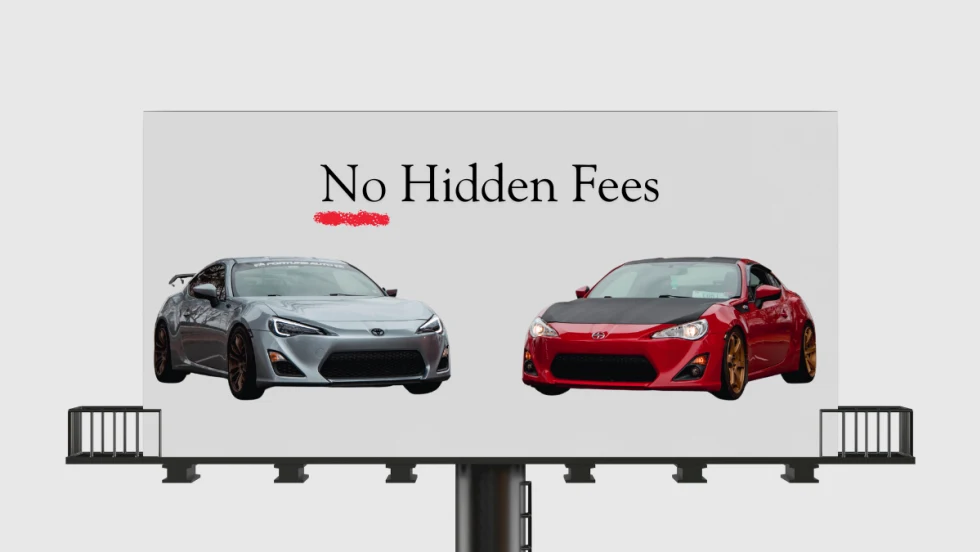
Dealer Ads and the FTC
The agency has made it clear in recent enforcement actions and warnings, in auto retail and other industries, that advertised prices must include all nonoptional costs to the consumer.
Read More →
Used Autos Supply Dwindles
The March shopping surge, despite high prices, cut into inventory by the most since the thick of the pandemic, Cox Automotive analysts calculated.
Read More →