
Industry
Auto Dealerships Can’t Afford to Ignore the 50+ Consumer
Younger generations may be all the buzz today when it comes to product marketing targets, but their older cohorts command a sizable share of purchasing power.


 MENU
MENU SEARCH
Service advisers represent dealerships’ foundation in fostering ongoing customer loyalty, and they must maintain certain standards to keep that foundation strong.
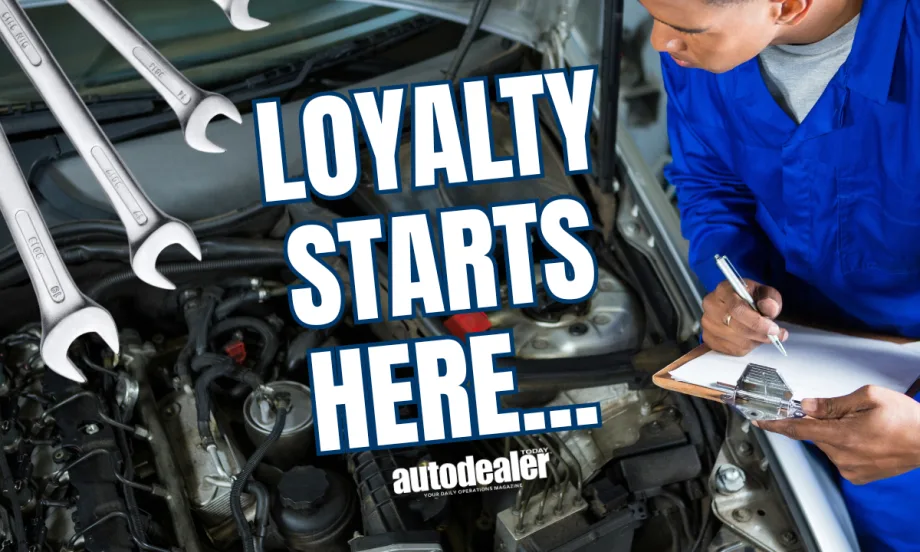
Service advisers are the primary point of contact between the customer and the service department, and often the source of the most frequent human interaction a customer has with the brand.
Auto Dealer Today
There is a long-standing truth in automotive retail that continues to define long-term success: While the sales department may deliver a customer’s first vehicle, it is the service department that earns his or her long-term loyalty.
Despite decades of change in vehicles, technology, and consumer expectations, this principle remains unchanged. Owner retention is not built in the showroom alone — it is earned in the service drive through consistent, professional interactions that build trust and keep customers coming back.
Today’s dealers operate in a highly competitive and increasingly complex environment. Margins are tighter, customer loyalty is harder to gain, and vehicle ownership cycles are longer. As new-vehicle sales start to decline, retaining customers is no longer a “nice to have.” It is essential for long-term profitability.
The good news is that dealers have more tools than ever to support retention—business development centers, appointment coordinators, digital marketing, artificial intelligence-driven communication tools, kiosks, and automated follow-up systems, to name a few.
Yet even with these advancements, technology alone is not the solution. At its core, owner retention still depends on well-trained service advisers executing consistent, customer-focused processes. Tools support the mission, but people deliver the experience.
Service advisers are the primary point of contact between the customer and the service department, and often the source of the most frequent human interaction a customer has with the brand.
Auto Dealer Today
Service advisers occupy a unique and influential position in the dealership. They are the primary point of contact between the customer and the service department and often the source of the customer's most frequent human interaction with the brand.
Their ability to build trust, educate customers, and communicate value directly impacts whether a customer returns or defects to an independent shop or another dealer.
To consistently drive retention, advisers must master four foundational processes:
Of these four processes, effective communication is the foundation. Without it, the remaining processes fail. This is why training must be ongoing, not episodic. Initial onboarding is important, but true professionalism is built through continuous development.
Continuous adviser training leads to stronger customer relationships, more consistent service experiences, and measurable gains in retention and profitability.
At the heart of service excellence is a simple mission: ensuring every customer leaves the dealership driving a safe and reliable vehicle. When advisers align around this purpose, selling becomes secondary to serving. Customers recognize this difference, and loyalty follows.
Owner retention may not be a new concept, but in today’s marketplace, it has never been more important. The dealers who win tomorrow will be those who invest today—in their people, their processes, and their commitment to the customer experience.
Loading data...
Industry
Younger generations may be all the buzz today when it comes to product marketing targets, but their older cohorts command a sizable share of purchasing power.








Industry
Despite the sophisticated techniques fraudsters often employ today to gain access to dealerships’ valuable information, they sometimes use a somewhat old-fashioned approach.
Digital
Car shoppers are asking the tools where to buy, service and trade. The question is whether your dealership is showing up as the answer.
Training
Data show where automotive dealers are losing buyers before the sale and how they can effectively stem the tide to increase business.
Dealer Ops
A teaching moment by a legendary football coach happens to apply perfectly in the auto retail space. Learn what it is and how to use it to your store’s advantage.
Compliance
The agency has made it clear in recent enforcement actions and warnings, in auto retail and other industries, that advertised prices must include all nonoptional costs to the consumer.
Dealer Ops
The variables influencing risk pricing have changed significantly over the past five years. Being proactive and responsive to emerging trends is not optional but essential.
Digital
Service advisers represent dealerships’ foundation in fostering ongoing customer loyalty, and they must maintain certain standards to keep that foundation strong.
Industry
The future of automotive was revealed (again) at the recently concluded CES consumer electronics show. Can anyone say futuristic?
Industry
As America turns 250, explore how the automotive industry shaped jobs, culture, innovation, and mobility from Detroit assembly lines to today’s EV era.