



ACC II Adoption Can Cut Consumer Costs, Slash Emissions
Policymakers must do their part and update building codes, improve utility planning and implement clean-energy standards to fully realize ACC II benefits.

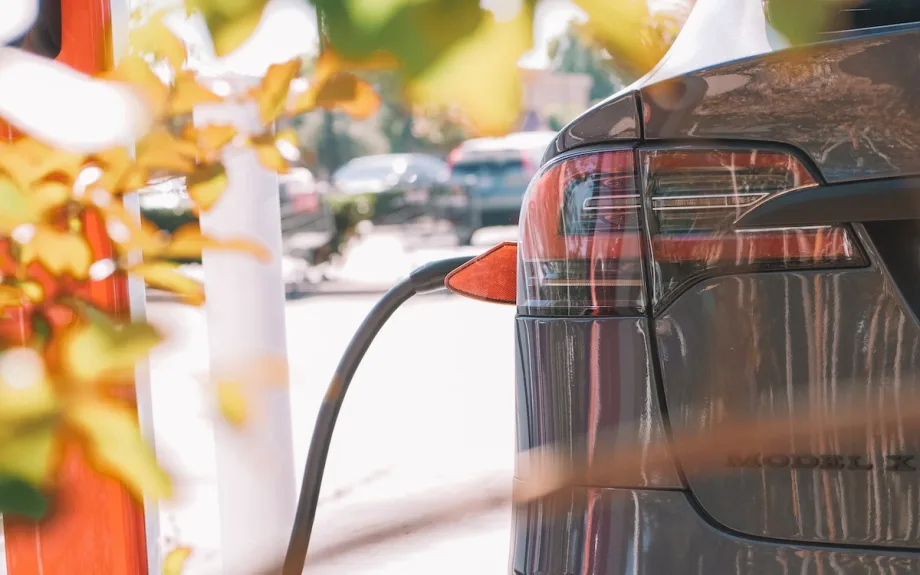
Kindel Media
California’s Advanced Clean Cars II, or ACC II, rule is expected to accelerate electric vehicle deployment, deliver hundreds of dollars in annual consumer savings, and cut U.S. greenhouse gas emissions, finds a recent Forbes article.
The publication reported that 17 states—nearly 38% of the U.S. car market—are contemplating or have already adopted ACC II standards. If all adopt ACC II standards, over 75% of U.S. cars could be EVs by 2050, according to New Energy Innovation Policy & Technology LLC modeling. The open-source Energy Policy Simulator model predicts how accelerated EV adoption might impact GHG emissions, the economy, and public health.
According to the modeling, ACC II adoption could:
Save households over $600 per year, depending on the state
Help the country avoid 1.3 billion tons of carbon pollution by 2050
Generate significant public health benefits, including preventing approximately 5,000 premature deaths from air pollution and 161,000 asthma attacks in 2050
Create nearly 300,000 additional jobs
Adopted by California in August, ACC II sets a gradually increasing requirement for sales of zero-emission vehicles up to 100% by 2035. The policy is expected to lead to nearly 100% of EV sales in any jurisdiction that applies it because of the expected lower cost of EVs compared to other ZEVs, such as plug-in hybrids and fuel cell vehicles.
Successful ACC II adoption will require states to do their part to ensure equitable access to EVs, particularly for low-income households. States also must continue to support charging infrastructure deployment, especially in underserved communities. According to the Forbes article, policymakers will need to ready their states for more EV adoption by:
Updating building codes
Improving utility planning
Implementing clean-energy standards
More Dealer Ops

How to Avoid Phone Scams | Dealer Debrief 09/10/2026
Are you taking the necessary steps to protect your dealership and customer data from phone-based scams? This week's Dealer Debrief breaks down how!
Read More →
Dealer Debrief: August Auto Sales
Gas-powered engines still dominate the U.S. vehicle market, but hybrids are gaining ground as consumers look for ways to cut their gas costs.
Read More →
Dealership Profits Decline
While new and used retail sales stagnated, dealerships have been particularly supported by fixed operations and finance-and-insurance profits, according to a new report.
Read More →
Dealer Debrief: Defection Data & EV Updates
In this week's debrief, host Lauren Lawrence discusses how to use defection data to your advantage and the latest on EV sales and charging infrastructure.
Read More →
How Defection Data is Bridging the Dealership Conversion Gap
Lead volume is flat, cross-shopping is up and brand loyalty is in retreat. As confident sales teams keep losing buyers they thought they had, daily industry sales data is showing dealers exactly where their funnel is breaking and how to fix it without buying a single new lead.
Read More →
Dealer Debrief: Where are you losing customers?
In this week's debrief, host Lauren Lawrence discusses the hidden leaks in dealerships where you might be losing customers without even realizing it.
Read More →
Dealer Debrief: Improving Your Inventory Management
In this week's debrief, host Lauren Lawrence covers a new survey that shows what service technicians really want and two launches that could help improve your inventory and vehicle life cycle management.
Read More →
Ladies and Gentlemen, This Is a Dealership: Why the Fundamentals Still Decide Who Wins
A teaching moment by a legendary football coach happens to apply perfectly in the auto retail space. Learn what it is and how to use it to your store’s advantage.
Read More →
Dealer Ads and the FTC
The agency has made it clear in recent enforcement actions and warnings, in auto retail and other industries, that advertised prices must include all nonoptional costs to the consumer.
Read More →
Used Autos Supply Dwindles
The March shopping surge, despite high prices, cut into inventory by the most since the thick of the pandemic, Cox Automotive analysts calculated.
Read More →