



Average New-Vehicle Prices Up 4% Year-Over-Year in May 2020
According to Kelley Blue Book, incentives, inventory levels, and pickup truck market share contribute to gain; however, these levels are not sustainable.

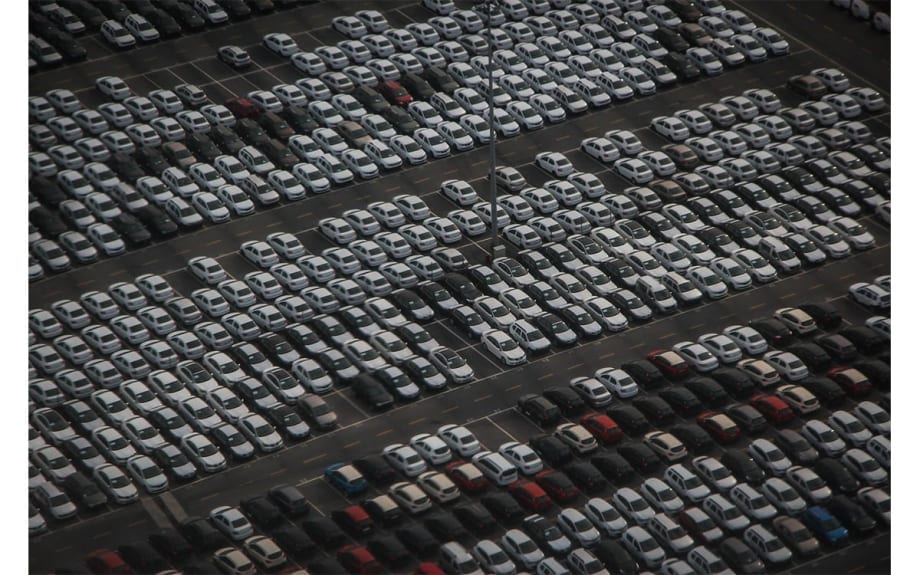
According to Kelley Blue Book, incentives, inventory levels, and pickup truck market share contribute to gain; however, these levels are not sustainable.
IRVINE, Calif. – The valuation analysts at Kelley Blue Book today reported the estimated average transaction price for a light vehicle in the United States was $38,940 in May 2020. New-vehicle prices increased $1,618 (up 4.3%) from May 2019, while prices dropped $244 (down 0.6%) from last month.
Inventory levels have tightened as the economic recovery has begun, but little new supply has arrived yet from the factories that restarted in May.
“Though new-car sales will be down significantly for the third month in a row, due to the COVID-19 pandemic, average transaction prices have actually strengthened over this period for several reasons,” said Tim Fleming, analyst for Kelley Blue Book. “Incentives, deferred payments, and low APR deals are helping consumers stretch out their monthly payments over longer terms. Inventory levels have tightened as the economic recovery has begun, but little new supply has arrived yet from the factories that restarted in May. Finally, the share of pickup trucks has spiked recently, reaching an all-time high in April.”
These factors all contributed to the 4% increase in transaction prices in May 2020; however, gains at these levels are not sustainable. If factories are slow to restart and new-vehicle inventories remain low, manufacturers will pare back their incentives, placing pressure on new-vehicle prices. While trucks have been remarkably resilient, their big spike in market share was the result of sales losses in mid-size cars, compact SUVs and minivans. When the market sees sales of these family haulers return will depend on the shape of the economic recovery, but in the meantime, truck manufacturers are likely pushing to get capacity back up quickly to restock their inventories.
Manufacturer | May 2020 Transaction Price (Avg.)* | April 2020 Transaction Price (Avg.)* | May 2019 Transaction Price (Avg.)* | Percent Change April 2020 to May 2020* | Percent Change May 2019 to May 2020* |
American Honda (Acura, Honda) | $29,155 | $29,206 | $28,542 | -0.2% | 2.1% |
$43,592 | $44,810 | $40,525 | -2.7% | 7.6% | |
Ford Motor Company (Ford, Lincoln) | $43,847 | $44,318 | $41,888 | -1.1% | 4.7% |
General Motors (Buick, Cadillac, Chevrolet, GMC) | $43,806 | $43,621 | $42,339 | 0.4% | 3.5% |
$28,339 | $28,232 | $26,674 | 0.4% | 6.2% | |
Nissan North America (Nissan, INFINITI) | $31,881 | $32,221 | $29,743 | -1.1% | 7.2% |
$31,301 | $31,433 | $30,102 | -0.4% | 4.0% | |
Toyota Motor Company (Lexus, Toyota) | $35,218 | $35,220 | $33,432 | 0.0% | 5.3% |
Volkswagen Group (Audi, Volkswagen, Porsche) | $40,698 | $40,576 | $43,649 | 0.3% | -6.8% |
Industry | $38,940 | $39,184 | $37,322 | -0.6% | 4.3% |
*Kelley Blue Book average transaction prices do not include applied consumer incentives | |||||
Fiat Chrysler led all automakers in May with average prices rising more than 7%. Much of the improvement is attributed to RAM, which has been capturing a growing share of the full-size truck market. In addition, Jeep rose by 5%, thanks largely to the Gladiator. Even though the Gladiator’s prices were down significantly from its launch last year, it still carries an average price premium of about $7,500 over the next closest competitor in the mid-size truck segment. The Dodge brand also showed big improvements of about 10% as Caravan sales fell, while its remaining models showed improvements in the 2 to 3% range.
For the second month in a row, prices for cars moved up the most and averaged more than 3% improvement. Solid gains were seen across all non-luxury car segments with subcompact cars gaining the most at 4%, led by the Nissan Versa. In contrast, luxury segments suffered again, making up four of the five segments with year-over-year price declines. Overall, the luxury market saw prices fall slightly while non-luxury brands saw prices rise upwards 5%. The large gains come mostly from the surge in trucks, which have seen a massive increase in share over the past couple of months.
Segment | May 2020 Transaction Price (Avg.)* | April 2020 Transaction Price (Avg.)* | May 2019 Transaction Price (Avg.)* | Percent Change April 2020 to May 2020* | Percent Change May 2019 to May 2020* |
Compact Car | $21,462 | $21,364 | $20,850 | 0.5% | 2.9% |
Compact SUV/Crossover | $30,108 | $29,975 | $29,472 | 0.4% | 2.2% |
Electric Vehicle | $47,975 | $49,255 | $48,568 | -2.6% | -1.2% |
Entry-level Luxury Car | $42,380 | $42,163 | $42,925 | 0.5% | -1.3% |
Full-size Car | $36,481 | $36,255 | $35,521 | 0.6% | 2.7% |
Full-size Pickup Truck | $51,240 | $50,980 | $50,592 | 0.5% | 1.3% |
Full-Size SUV/Crossover | $62,868 | $62,535 | $62,296 | 0.5% | 0.9% |
High Performance Car | $109,885 | $112,781 | $105,732 | -2.6% | 3.9% |
High-end Luxury Car | $97,979 | $96,000 | $99,523 | 2.1% | -1.6% |
Hybrid/Alternative Energy Car | $27,412 | $27,465 | $27,346 | -0.2% | 0.2% |
Luxury Car | $60,473 | $60,697 | $60,274 | -0.4% | 0.3% |
Luxury Compact SUV/Crossover | $46,755 | $46,756 | $46,475 | 0.0% | 0.6% |
Luxury Full-size SUV/Crossover | $86,243 | $85,926 | $88,277 | 0.4% | -2.3% |
Luxury Mid-size SUV/Crossover | $57,720 | $58,438 | $59,676 | -1.2% | -3.3% |
Luxury Subcompact SUV/Crossover | $39,632 | $39,143 | $39,222 | 1.2% | 1.0% |
Mid-size Car | $26,444 | $26,282 | $25,773 | 0.6% | 2.6% |
Mid-size Pickup Truck | $36,481 | $36,365 | $35,425 | 0.3% | 3.0% |
Mid-size SUV/Crossover | $40,424 | $40,587 | $38,792 | -0.4% | 4.2% |
Minivan | $36,172 | $36,582 | $34,716 | -1.1% | 4.2% |
Sports Car | $36,879 | $36,862 | $36,312 | 0.0% | 1.6% |
Subcompact Car | $17,275 | $17,092 | $16,587 | 1.1% | 4.1% |
Subcompact SUV/Crossover | $24,824 | $24,748 | $24,629 | 0.3% | 0.8% |
Van | $36,448 | $36,508 | $35,677 | -0.2% | 2.2% |
Grand Total | $38,940 | $39,184 | $37,322 | -0.6% | 4.3% |
*Kelley Blue Book average transaction prices do not include applied consumer incentives | |||||
Read: Momentum CRM Announces Integration With automotiveMastermind’s Market EyeQ Platform
Originally posted on F&I and Showroom
More Dealer Ops

Dealership Profits Decline
While new and used retail sales stagnated, dealerships have been particularly supported by fixed operations and finance-and-insurance profits, according to a new report.
Read More →
Dealer Debrief: Defection Data & EV Updates
In this week's debrief, host Lauren Lawrence discusses how to use defection data to your advantage and the latest on EV sales and charging infrastructure.
Read More →
How Defection Data is Bridging the Dealership Conversion Gap
Lead volume is flat, cross-shopping is up and brand loyalty is in retreat. As confident sales teams keep losing buyers they thought they had, daily industry sales data is showing dealers exactly where their funnel is breaking and how to fix it without buying a single new lead.
Read More →

Dealer Debrief: Where are you losing customers?
In this week's debrief, host Lauren Lawrence discusses the hidden leaks in dealerships where you might be losing customers without even realizing it.
Read More →
Dealer Debrief: Improving Your Inventory Management
In this week's debrief, host Lauren Lawrence covers a new survey that shows what service technicians really want and two launches that could help improve your inventory and vehicle life cycle management.
Read More →
Ladies and Gentlemen, This Is a Dealership: Why the Fundamentals Still Decide Who Wins
A teaching moment by a legendary football coach happens to apply perfectly in the auto retail space. Learn what it is and how to use it to your store’s advantage.
Read More →
What Market Timing Mistakes Mean for Your Reinsurance Program
When volatility hits, dealer-owned reinsurance programs face a familiar temptation: pull back and wait for calmer waters. New data from BOK Financial shows why that instinct can quietly cost you years of surplus growth.
Read More →
Dealer Ads and the FTC
The agency has made it clear in recent enforcement actions and warnings, in auto retail and other industries, that advertised prices must include all nonoptional costs to the consumer.
Read More →
Used Autos Supply Dwindles
The March shopping surge, despite high prices, cut into inventory by the most since the thick of the pandemic, Cox Automotive analysts calculated.
Read More →
Managing Risk Effectively Through Changing Times
The variables influencing risk pricing have changed significantly over the past five years. Being proactive and responsive to emerging trends is not optional but essential.
Read More →