



California Seeks Approval to End ICE Vehicle Sales
CARB seeks wavier under Clear Air Act to implement its new rules by 2035.

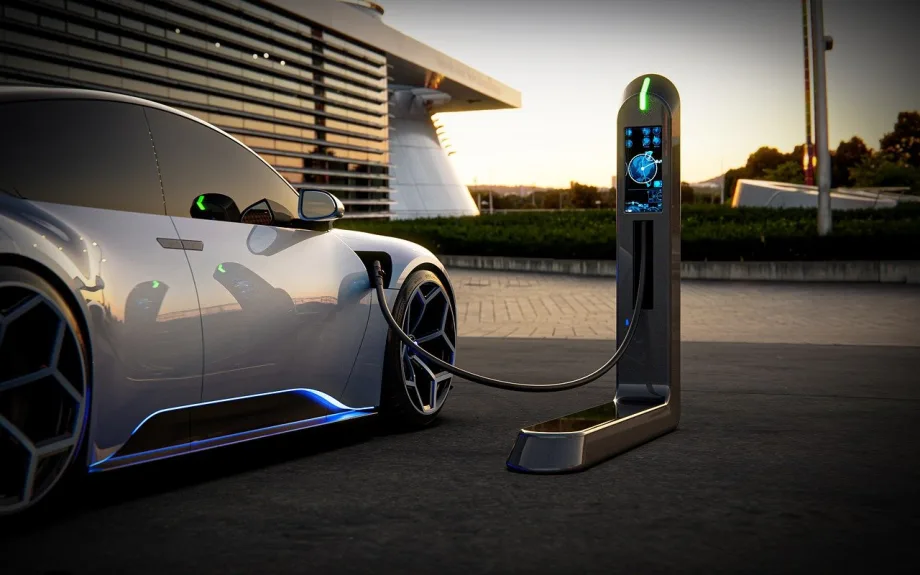
California aims to halt the sale of new gasoline-only powered vehicles in the state by 2035.
Pixabay
California has asked the Biden administration to OK a proposal for all new vehicles sold to be electric or plug-in hybrids by 2035, according to a letter seen by Reuters.
The California Air Resources Board approved the plan in August. The state now has approached the U.S. Environmental Protection Agency to secure a waiver under the Clean Air Act. The waiver would enable new regulations that establish escalating zero-emission vehicle standards starting in 2026. The goal is to cease the sale of new gasoline-only powered vehicles in California by 2035.
CARB Executive Officer Steven Cliff told Automotive News that zero-emission vehicles would effectively replace emissions generated by conventional vehicles, as motor vehicles and other mobile sources are the primary contributors to pollution in California.
Despite California’s efforts, the Biden administration has repeatedly declined to endorse a specific timeline for phasing out gasoline-only vehicle sales. EPA Spokesperson Tim Carroll told Automotive News that the agency would thoroughly consider California's waiver request through an open public process, as is customary.
An EPA proposal unveiled in April forecasted automakers will need to manufacture 60% electric vehicles by 2030 and 67% by 2032 to fulfill the requirements aimed at reducing vehicle emissions by 2032. EVs still accounted for just 5.8% of total U.S. vehicle sales in 2022.
California's zero-emission regulations are expected to curtail smog-causing pollution from light-duty vehicles by 25% by 2037. The rules stipulate that, by 2026, 35% of new-car sales must be comprised of plug-in hybrid electric vehicles, EVs or hydrogen fuel cell vehicles. That figure will increase to 68% by 2030 and reach 100% by 2035.
A 60-page waiver request submitted by California and viewed by Reuters outlined the projected costs and benefits of the state's zero-emission regulations. It estimates that between 2021 and 2040, the rules will result in a cost of $210.35 billion but yield overall benefits amounting to $301.41 billion.
An increasing number of states, including Rhode Island, Washington, Virginia, Vermont, Oregon, New York and Massachusetts, have adopted California's more stringent EV regulations, surpassing the proposals put forth by the Biden administration.
Under CARB's regulation, automakers could sell up to 20% plug-in hybrid electric vehicles by 2035. However, by that time, those vehicles would need to possess a minimum all-electric range of 50 miles.
More Dealer Ops

How to Avoid Phone Scams | Dealer Debrief 09/10/2026
Are you taking the necessary steps to protect your dealership and customer data from phone-based scams? This week's Dealer Debrief breaks down how!
Read More →
Dealer Debrief: August Auto Sales
Gas-powered engines still dominate the U.S. vehicle market, but hybrids are gaining ground as consumers look for ways to cut their gas costs.
Read More →
Dealership Profits Decline
While new and used retail sales stagnated, dealerships have been particularly supported by fixed operations and finance-and-insurance profits, according to a new report.
Read More →
Dealer Debrief: Defection Data & EV Updates
In this week's debrief, host Lauren Lawrence discusses how to use defection data to your advantage and the latest on EV sales and charging infrastructure.
Read More →
How Defection Data is Bridging the Dealership Conversion Gap
Lead volume is flat, cross-shopping is up and brand loyalty is in retreat. As confident sales teams keep losing buyers they thought they had, daily industry sales data is showing dealers exactly where their funnel is breaking and how to fix it without buying a single new lead.
Read More →
Dealer Debrief: Where are you losing customers?
In this week's debrief, host Lauren Lawrence discusses the hidden leaks in dealerships where you might be losing customers without even realizing it.
Read More →
Dealer Debrief: Improving Your Inventory Management
In this week's debrief, host Lauren Lawrence covers a new survey that shows what service technicians really want and two launches that could help improve your inventory and vehicle life cycle management.
Read More →
Ladies and Gentlemen, This Is a Dealership: Why the Fundamentals Still Decide Who Wins
A teaching moment by a legendary football coach happens to apply perfectly in the auto retail space. Learn what it is and how to use it to your store’s advantage.
Read More →
Dealer Ads and the FTC
The agency has made it clear in recent enforcement actions and warnings, in auto retail and other industries, that advertised prices must include all nonoptional costs to the consumer.
Read More →
Used Autos Supply Dwindles
The March shopping surge, despite high prices, cut into inventory by the most since the thick of the pandemic, Cox Automotive analysts calculated.
Read More →