



Dealer Poll: Tariffs Are Bad for Business
A recent Cox Automotive poll finds a majority of franchised U.S. auto dealers believe new tariffs on imported vehicles would negatively affect their businesses and lead to higher prices for all new vehicles.
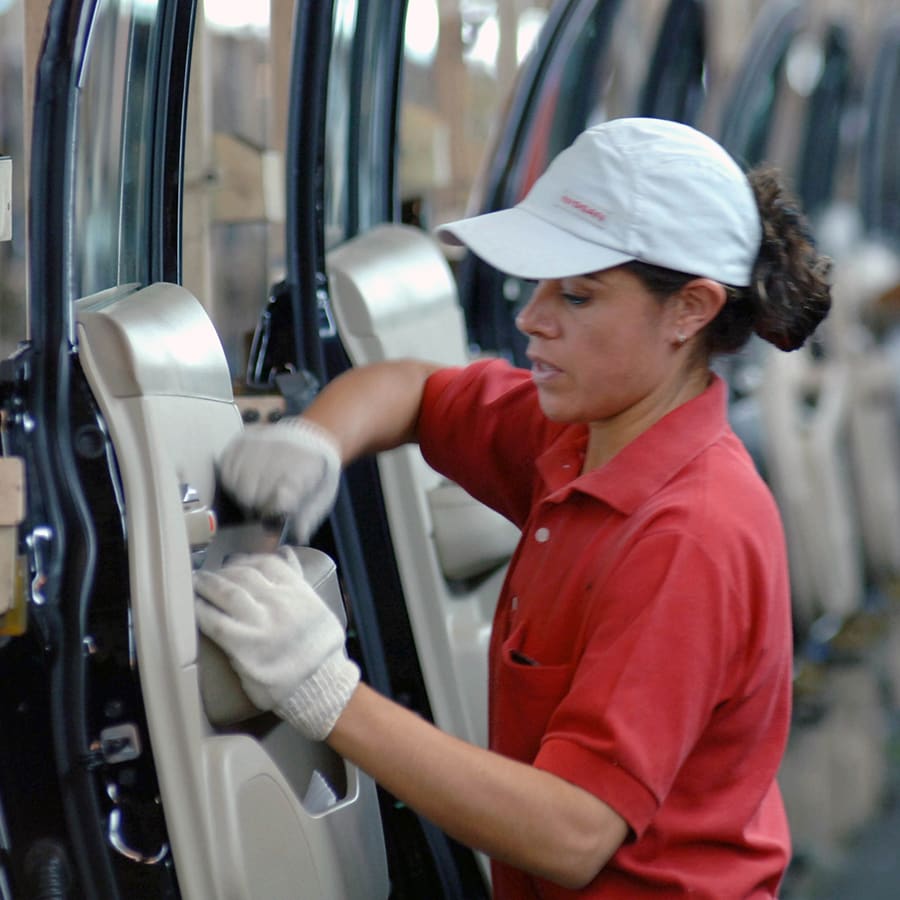
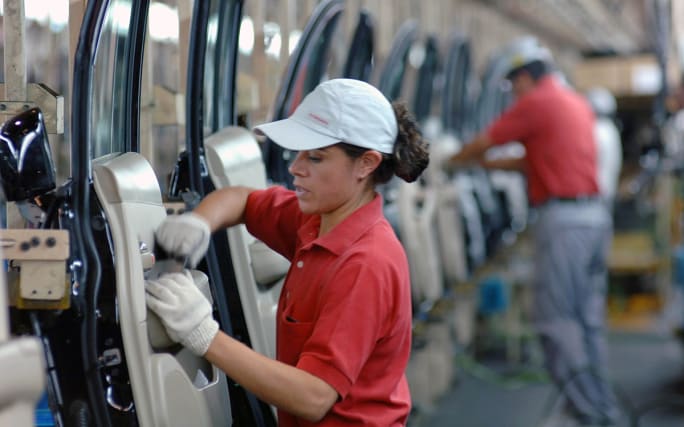
More than half (56%) of franchised U.S. auto dealers say tariffs on imported vehicles would hurt their businesses, according to Cox Automotive’s most recent Dealer Sentiment Index. Photo courtesy Nissan USA
ATLANTA — According to data from the Q3 2018 Cox Automotive Dealer Sentiment Index, U.S. automobile dealers are more positive than negative in describing the current market in the third quarter but are fearful that proposed auto tariffs could hurt profitability. The results are based on a poll of 1,276 dealer respondents conducted from July 31 to August 18.
Only 11% of dealers believe auto tariffs on imported vehicles and parts would have a positive impact on their business, while 38% anticipate a negative impact. Fifty-one percent of dealers believe tariffs would have no impact. Franchised auto dealers are more pessimistic, with 56% suggesting new auto tariffs would impact their business negatively. Of the franchised dealers who feel negatively toward tariffs, 66% believe consumers will face higher prices on all new vehicles, not solely imports, as the market adjusts.
“Dealers continue to report strong market conditions in the third quarter, with few material changes in key performance indicators from the spring, when we reported record-high sentiment,” said Cox Automotive Chief Economist Jonathan Smoke. “While they are positive on today’s business, the new looming threat is the negative impact of proposed tariffs on imported autos and parts. And, for the first time, dealers indicate that limited inventory is the No. 1 obstacle holding back business.”
Derived from a survey Cox Automotive issues to a representative sample of franchised and independent auto dealers, the CADSI measures U.S. dealer perceptions of current retail auto sales and sales expectations for the next three months as “strong,” “average,” or “weak.” The quarterly survey also asks dealers to rate new-car sales and used-car sales separately, with a variety of key drivers including consumer traffic and inventory levels. Responses are used to calculate an index where any number over 50 indicates that more dealers view conditions as strong rather than weak. In the Q3 2018 survey, Cox Automotive also explored dealer expectations on the impact of proposed auto import tariffs on business profitability.
Originally posted on F&I and Showroom
More Dealer Ops

How to Avoid Phone Scams | Dealer Debrief 09/10/2026
Are you taking the necessary steps to protect your dealership and customer data from phone-based scams? This week's Dealer Debrief breaks down how!
Read More →
Dealer Debrief: August Auto Sales
Gas-powered engines still dominate the U.S. vehicle market, but hybrids are gaining ground as consumers look for ways to cut their gas costs.
Read More →
Dealership Profits Decline
While new and used retail sales stagnated, dealerships have been particularly supported by fixed operations and finance-and-insurance profits, according to a new report.
Read More →
Dealer Debrief: Defection Data & EV Updates
In this week's debrief, host Lauren Lawrence discusses how to use defection data to your advantage and the latest on EV sales and charging infrastructure.
Read More →
How Defection Data is Bridging the Dealership Conversion Gap
Lead volume is flat, cross-shopping is up and brand loyalty is in retreat. As confident sales teams keep losing buyers they thought they had, daily industry sales data is showing dealers exactly where their funnel is breaking and how to fix it without buying a single new lead.
Read More →
Dealer Debrief: Where are you losing customers?
In this week's debrief, host Lauren Lawrence discusses the hidden leaks in dealerships where you might be losing customers without even realizing it.
Read More →
Dealer Debrief: Improving Your Inventory Management
In this week's debrief, host Lauren Lawrence covers a new survey that shows what service technicians really want and two launches that could help improve your inventory and vehicle life cycle management.
Read More →
Ladies and Gentlemen, This Is a Dealership: Why the Fundamentals Still Decide Who Wins
A teaching moment by a legendary football coach happens to apply perfectly in the auto retail space. Learn what it is and how to use it to your store’s advantage.
Read More →
Dealer Ads and the FTC
The agency has made it clear in recent enforcement actions and warnings, in auto retail and other industries, that advertised prices must include all nonoptional costs to the consumer.
Read More →
Used Autos Supply Dwindles
The March shopping surge, despite high prices, cut into inventory by the most since the thick of the pandemic, Cox Automotive analysts calculated.
Read More →