



EV Startups Adopt New Approach to Manufacturing
EV companies, Arrival and Fisker, embark on paths designed to circumvent production challenges experienced by Tesla.
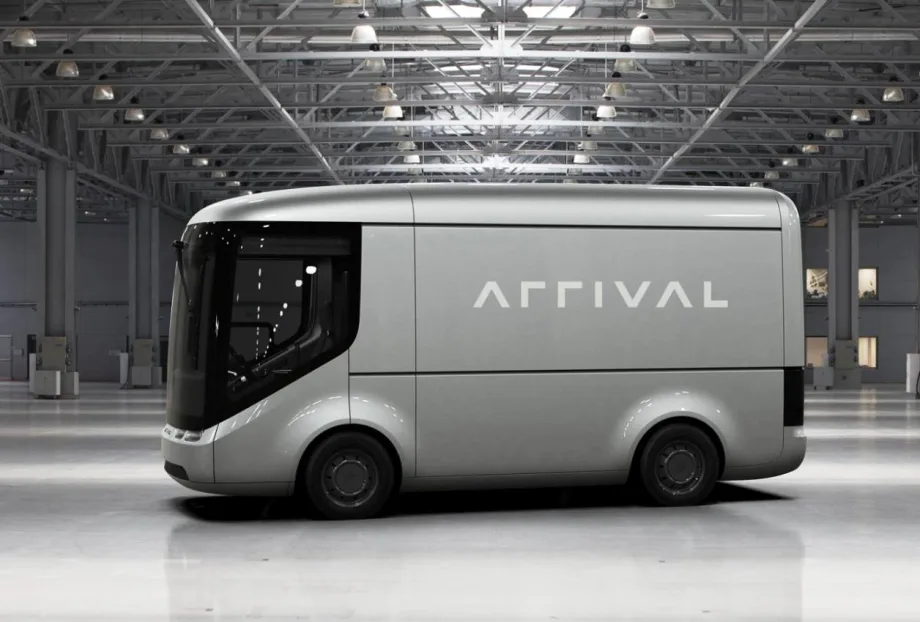
Arrival has decided to build electric van and bus "microfactories" to produce its vehicles.
Arrival
Electric car and van startups seek to avoid Tesla’s manufacturing troubles by taking very different approaches to mass production.
During 2017 and 2018, Tesla struggled to ramp up volume production for its Model 3 sedan. The automaker contended with automation troubles, battery issues and other bottlenecks, and even had to construct a new line in a tent outside its facility to meet production targets. The issues nearly broke the company.
New entrants in the EV game have found better ways to deal with these challenges.
Some companies found investors willing to fork over billions to fund production. Rivian, for instance, raised about $10.5 billion from Amazon, Ford Motor Co. and others to ramp up production of electric vans, pickups and SUVs.
Startups lacking investor support identified other inexpensive paths to mass production.
Usually, automakers spend over $2 billion to build a factory big enough to manufacture 240,000 vehicles or more annually. EV startup, Arrival, has decided to build electric van and bus “micro-factories” instead. These small plants cost $50 million and do not use expensive equipment. Arrival makes its vans out of lightweight colored plastic composite, eliminating the need for paint shops.
Arrival raised around $660 million in a public offering in March. The company used the funds to build two U.S. plants, one in North Carolina devoted to building vans for the United Parcel Service and another in South Carolina producing buses. The company also plans to build a factory in Spain. Arrival’s first micro-factory in Bicester, England, acts as a blueprint for the other plants.
The lack of a paint shop is just one way Arrival keeps production costs down. Its engineers also build molds for plastic body panels. These molds cost thousands of dollars versus millions for traditional metal dies. Engineers have also designed custom molding machines.
The company needs around 70 robots per micro-factory. Arrival purchases commonly used, generic robots from auto industry suppliers like Kuka and Italy’s Comau, which is owned by automaker Stellantis, to do the work.
Arrival’s micro-factory will have one adhesive station and the autonomous wheeled robots will carry a chassis back and forth throughout the assembly process.
The smaller manufacturing facilities can produce 10,000 vans annually per plant rather than 100,000. Each micro-factory will create around 250 jobs.
Electric vehicle maker Canoo has adopted a similar strategy. The company plans to build a mega micro-factory that serves as a hub for smaller future factories.
Electric Last Mile Solutions will launch a small electric van production facility later this year. The company plans to reassemble pre-finished vehicles made in China at a former GM plant in Mishawaka, Indiana, adding new seatbelts and other safety features to meet U.S. regulations. Over time, the company will incorporate more American parts into the vehicles.
Other startups plan to outsource manufacturing to trim production costs. Contract manufacturing deals reduce upfront costs with partnering companies later taking a cut of revenue and potential profits.
REE Automotive Holding entered agreements with American Axle and Mitsubishi Motors to build its electric platforms for delivery vehicles and people movers at scale. While REE and Fisker have teamed up with Magna International to build EVs. Fisker also has a similar agreement with Foxconn Technology.
More Dealer Ops

How to Avoid Phone Scams | Dealer Debrief 09/10/2026
Are you taking the necessary steps to protect your dealership and customer data from phone-based scams? This week's Dealer Debrief breaks down how!
Read More →
Dealer Debrief: August Auto Sales
Gas-powered engines still dominate the U.S. vehicle market, but hybrids are gaining ground as consumers look for ways to cut their gas costs.
Read More →
Dealership Profits Decline
While new and used retail sales stagnated, dealerships have been particularly supported by fixed operations and finance-and-insurance profits, according to a new report.
Read More →
Dealer Debrief: Defection Data & EV Updates
In this week's debrief, host Lauren Lawrence discusses how to use defection data to your advantage and the latest on EV sales and charging infrastructure.
Read More →
How Defection Data is Bridging the Dealership Conversion Gap
Lead volume is flat, cross-shopping is up and brand loyalty is in retreat. As confident sales teams keep losing buyers they thought they had, daily industry sales data is showing dealers exactly where their funnel is breaking and how to fix it without buying a single new lead.
Read More →
Dealer Debrief: Where are you losing customers?
In this week's debrief, host Lauren Lawrence discusses the hidden leaks in dealerships where you might be losing customers without even realizing it.
Read More →
Dealer Debrief: Improving Your Inventory Management
In this week's debrief, host Lauren Lawrence covers a new survey that shows what service technicians really want and two launches that could help improve your inventory and vehicle life cycle management.
Read More →
Ladies and Gentlemen, This Is a Dealership: Why the Fundamentals Still Decide Who Wins
A teaching moment by a legendary football coach happens to apply perfectly in the auto retail space. Learn what it is and how to use it to your store’s advantage.
Read More →
Dealer Ads and the FTC
The agency has made it clear in recent enforcement actions and warnings, in auto retail and other industries, that advertised prices must include all nonoptional costs to the consumer.
Read More →
Used Autos Supply Dwindles
The March shopping surge, despite high prices, cut into inventory by the most since the thick of the pandemic, Cox Automotive analysts calculated.
Read More →