



Fed Leaves Rates Unchanged
While the industry welcomed the Fed’s 7-3 decision not to raise interest rates a quarter point, market watchers say even a full percentage-point increase wouldn’t impact the current pace of auto sales. The Fed is still expected to raise rates a quarter point by the end of the year.
WASHINGTON, D.C. — In a 7-3 decision, the Federal Reserve elected to keep interest rates at the 0.25% to 0.50% level it has maintained since the last interest rate hike in December of 2015.
In a statement following its decision, the Federal Open Market Committee noted that although job gains have been solid and household spending has been growing, business fixed investments have remained soft. The committee also cited inflation running below expected levels as a contributing factor to its decision.
“The committee judges that the case for an increase in the federal funds rate has strengthened, but decided, for the time being, to wait for further evidence of continued progress toward its objectives,” the statement read.
A matter of when to increase the federal interest rate was the root of the 7-3 split, according to the statement. The three dissenters, Esther L. George, Loretta J. Mester, and Eric Rosengren, wanted to hike the federal interest rate to 0.50% to 0.75% during this week’s meeting. However, the seven committee members who voted in favor of maintaining the current interest rate — Janet L. Yellen; William C. Dudley; Lael Brainard; James Bullard; Stanley Fischer; Jerome H. Powell; and Daniel K. Tarullo — said they wanted to wait until the economy was more in line with their expectations.
The Fed is still expected to increase the federal interest rate by a quarter of a percentage by the end of the year. One economist believes that although the committee’s next meeting will be in November, it will wait until its final meeting of the year in December to raise the federal funds rate.
“The committee expects that economic conditions will evolve in a manner that will warrant only gradual increases in the federal funds rate; the federal funds rate is likely to remain, for some time, below levels that are expected to prevail in the longer run,” the Fed’s statement read. “However, the actual path of the federal funds rate will depend on the economic outlook as informed by incoming data.”
When the Fed raised interest rates last December, J.D. Power surveyed consumers on whether they believed an interest rate hike would be good for the economy. Third-six percent of respondents — the majority of which were from older generations that have seen firsthand what interest rate hikes mean — believed an interest rate hike would be good for the economy. Respondents from younger generations, however, were not so positive about the increase.
In August, Steven Szakaly, the National Automobile Dealers Association’s chief economist, said he didn’t believe even a 50 basis-point increase would do much to stunt auto sales, noting that automakers would likely roll out additional finance incentives to keep cars affordable for car buyers.
Alec Guitierrez, senior market analyst of automotive insights for Kelley Blue Book, said even a full percentage-point increase would have a negligible effect. “The Fed’s decision to keep rates steady is welcome news to potential car shoppers who have relied on longer term loans and low interest rates to offset the rising cost of new vehicles,” he said in a statement issued to F&I and Showroom, noting that the average new car sells for more than $33,000.
“Although the Fed indicated that rates could rise by a quarter point by year end, this will likely have a negligible effect on the current pace of sales,” he added. “Even an interest rate increase of a full percentage point only increases the monthly payment on a $33,000 vehicle financed for 60 months by around $10 to $15, so a quarter-point increase should not scare the average consumer away. We expect to see 17.3 million new cars sold this year, and we don’t expect the Fed decision to meaningfully impact our forecast.”
Originally posted on F&I and Showroom
More Dealer Ops
How to Avoid Phone Scams | Dealer Debrief 09/10/2026
Are you taking the necessary steps to protect your dealership and customer data from phone-based scams? This week's Dealer Debrief breaks down how!
Read More →
Dealer Debrief: August Auto Sales
Gas-powered engines still dominate the U.S. vehicle market, but hybrids are gaining ground as consumers look for ways to cut their gas costs.
Read More →
Dealership Profits Decline
While new and used retail sales stagnated, dealerships have been particularly supported by fixed operations and finance-and-insurance profits, according to a new report.
Read More →
Dealer Debrief: Defection Data & EV Updates
In this week's debrief, host Lauren Lawrence discusses how to use defection data to your advantage and the latest on EV sales and charging infrastructure.
Read More →
How Defection Data is Bridging the Dealership Conversion Gap
Lead volume is flat, cross-shopping is up and brand loyalty is in retreat. As confident sales teams keep losing buyers they thought they had, daily industry sales data is showing dealers exactly where their funnel is breaking and how to fix it without buying a single new lead.
Read More →
Dealer Debrief: Where are you losing customers?
In this week's debrief, host Lauren Lawrence discusses the hidden leaks in dealerships where you might be losing customers without even realizing it.
Read More →
Dealer Debrief: Improving Your Inventory Management
In this week's debrief, host Lauren Lawrence covers a new survey that shows what service technicians really want and two launches that could help improve your inventory and vehicle life cycle management.
Read More →
Ladies and Gentlemen, This Is a Dealership: Why the Fundamentals Still Decide Who Wins
A teaching moment by a legendary football coach happens to apply perfectly in the auto retail space. Learn what it is and how to use it to your store’s advantage.
Read More →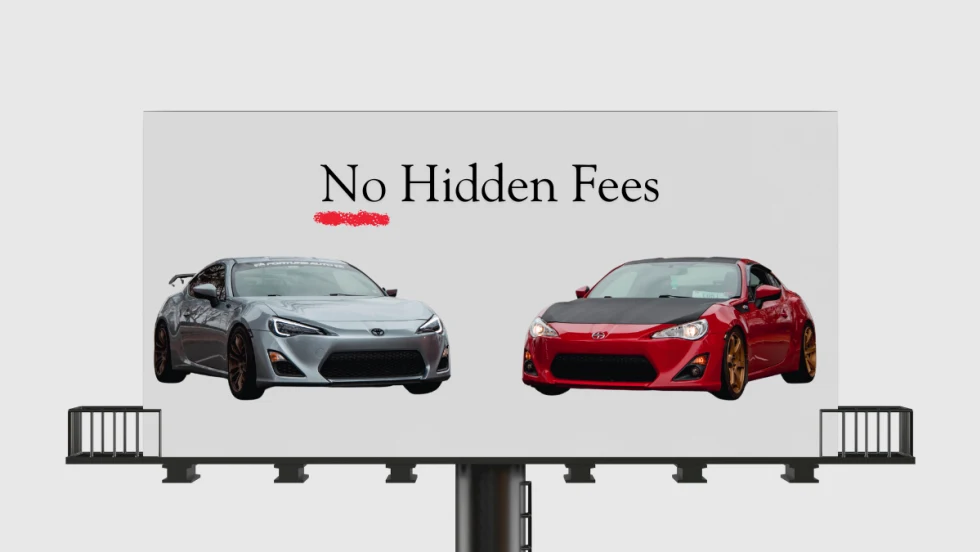
Dealer Ads and the FTC
The agency has made it clear in recent enforcement actions and warnings, in auto retail and other industries, that advertised prices must include all nonoptional costs to the consumer.
Read More →
Used Autos Supply Dwindles
The March shopping surge, despite high prices, cut into inventory by the most since the thick of the pandemic, Cox Automotive analysts calculated.
Read More →