



Ford Enters Agreement to Boost Chip Supplies
Ford Motor Co. partners with chip maker GlobalFoundries to address the auto industry’s semiconductor supply shortfalls.

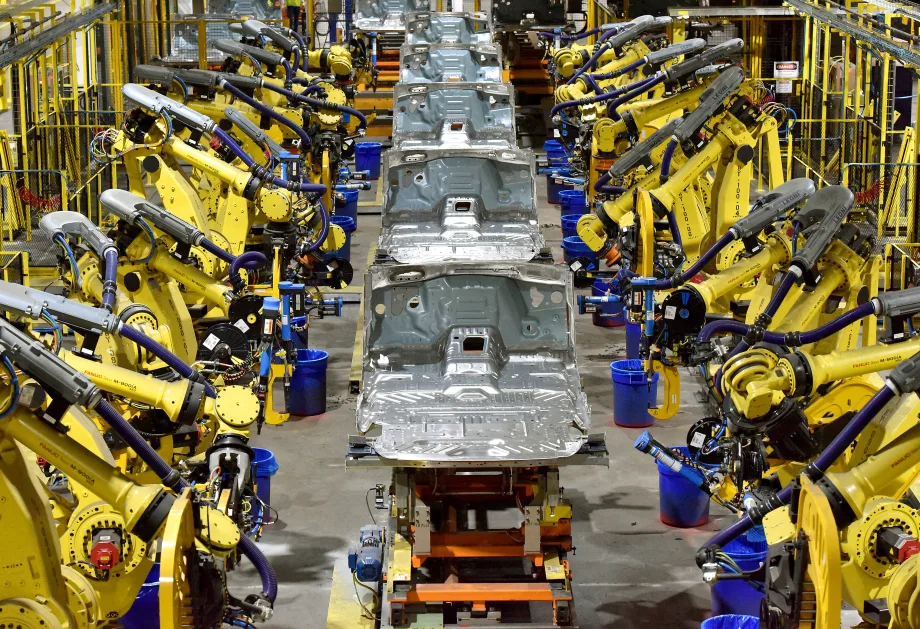
Ford entered an agreement with GlobalFoundries to access more semiconductor chips the entire U.S. auto industry.
Creative Commons
Ford Motor Co. has partnered with chip maker GlobalFoundries to address the auto industry's semiconductor supply shortfalls.
The Detroit-based automaker entered an agreement with the U.S. manufacturer of semiconductor chips to access more semiconductor chips for Ford's vehicle lineup and the entire U.S. auto industry.
“It's critical that we create new ways of working with suppliers to give Ford—and America—greater independence in delivering the technologies and features our customers will most value in the future,” said Jim Farley, Ford president and CEO, in a statement about the contract.
He added, “This agreement is just the beginning, and a key part of our plan to vertically integrate key technologies and capabilities that will differentiate Ford far into the future.”
Ford hasn’t specified the details of the agreement, but indicates it may include semiconductors for ADAS, battery management systems, and in-vehicle networking for electric vehicles.
The agreement spans beyond Ford. The agreement will boost chip supplies for both Ford and the U.S. automotive industry and will advance semiconductor manufacturing and technology development within the United States.
Ford production slowed over the semiconductor shortage, with the automaker reporting latest sales dropped 27% in the third quarter compared to 2020 because of missing components.
The chip crisis arose during the pandemic. When demand fell during shutdowns, automakers responded by lowering their orders for semiconductor chips. When manufacturing resumed, automakers scrambled to access chips that companies had diverted to the electronics industry.
Chip makers place a higher value on the more expensive chips for computers and smartphones that use new manufacturing processeses. The auto industry, in contrast, relies on cheaper chips manufactured with older production techniques.
GlobalFoundries CEO Tom Caulfield told CNBC in October that it focuses on “legacy nodes” used for lower-powered things suitable to the auto industry, versus smartphones.
“That's where the bigger part of the shortage is, because there's been underinvestment in that," he said.
European lawmakers also seek opportunities that will help them regain control of semiconductor supply chains that are dominated by Asia, in particular Taiwan. The EC unveiled its Digital Compass plan in March, which aims to raise its share of the world’s semiconductor supply from 9% today to 20%—or slightly less than half its share in the 1990s.
It is estimated that the semiconductor shortage has cost the auto industry as estimated $210 billion in lost revenue in 2021.
More Dealer Ops

How to Avoid Phone Scams | Dealer Debrief 09/10/2026
Are you taking the necessary steps to protect your dealership and customer data from phone-based scams? This week's Dealer Debrief breaks down how!
Read More →
Dealer Debrief: August Auto Sales
Gas-powered engines still dominate the U.S. vehicle market, but hybrids are gaining ground as consumers look for ways to cut their gas costs.
Read More →
Dealership Profits Decline
While new and used retail sales stagnated, dealerships have been particularly supported by fixed operations and finance-and-insurance profits, according to a new report.
Read More →
Dealer Debrief: Defection Data & EV Updates
In this week's debrief, host Lauren Lawrence discusses how to use defection data to your advantage and the latest on EV sales and charging infrastructure.
Read More →
How Defection Data is Bridging the Dealership Conversion Gap
Lead volume is flat, cross-shopping is up and brand loyalty is in retreat. As confident sales teams keep losing buyers they thought they had, daily industry sales data is showing dealers exactly where their funnel is breaking and how to fix it without buying a single new lead.
Read More →
Dealer Debrief: Where are you losing customers?
In this week's debrief, host Lauren Lawrence discusses the hidden leaks in dealerships where you might be losing customers without even realizing it.
Read More →
Dealer Debrief: Improving Your Inventory Management
In this week's debrief, host Lauren Lawrence covers a new survey that shows what service technicians really want and two launches that could help improve your inventory and vehicle life cycle management.
Read More →
Ladies and Gentlemen, This Is a Dealership: Why the Fundamentals Still Decide Who Wins
A teaching moment by a legendary football coach happens to apply perfectly in the auto retail space. Learn what it is and how to use it to your store’s advantage.
Read More →
Dealer Ads and the FTC
The agency has made it clear in recent enforcement actions and warnings, in auto retail and other industries, that advertised prices must include all nonoptional costs to the consumer.
Read More →
Used Autos Supply Dwindles
The March shopping surge, despite high prices, cut into inventory by the most since the thick of the pandemic, Cox Automotive analysts calculated.
Read More →