



Headwinds of Change in New-Vehicle Market
Analysts say industry is slowly returning to historically normal conditions.

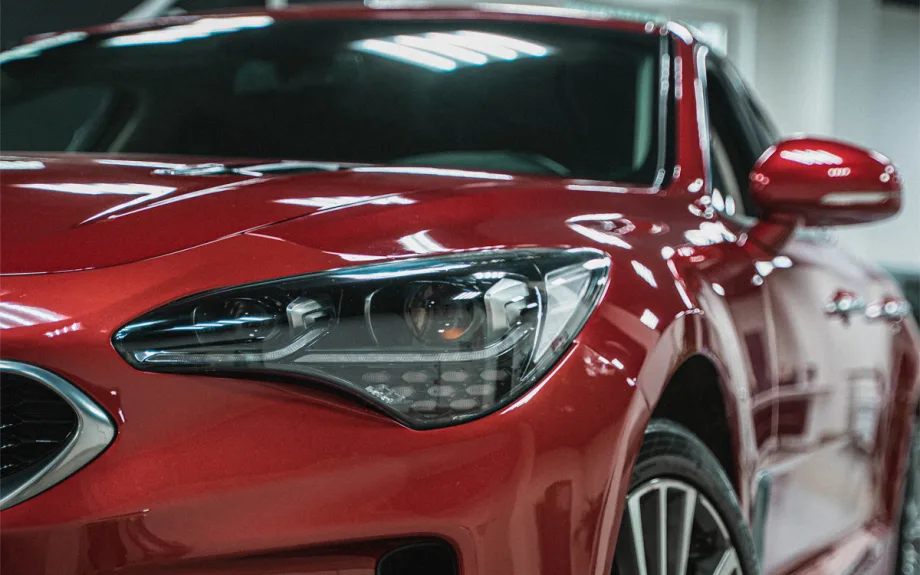
As sales slow, incentives will pickup, say analysts.
Alex Urezkov
New-vehicle sales picked up in February as fleet business grew and customers finally had access to the models they wanted. The renewed pace kept transaction prices high and incentives low as inventory shortages ease.
However, the higher-pace news is tempered by analysts' opinions that the industry is slowly returning to more historically normal conditions.
New-vehicle sales were a mixed bag among automakers in February. Ford Motor Co. and Hyundai-Kia saw double-digit gains. Mazda North America, Subaru of America and Volvo Car USA also posted sales increases. However, sales fell 2.4% at Toyota North America despite Lexus seeing its first year-over-year increase since January 2022.
Motor Intelligence estimates February’s seasonally adjusted, annualized sales rate at 15.19 million, up from 13.96 million a year ago. January’s rate was 16.21 million.
LMC Automotive reported February sales rose 9.5% industrywide to 1.14 million vehicles. The climb in February sales, along with strong demand from fleet customers, led the company to boost its 2023 outlook from 14.9 million to 15 million.
“There was a bit of a surprise on the upside; the industry did a little better than expected,” said Jeff Schuster, executive vice president for automotive at GlobalData, parent of LMC Automotive. “Still, a 15 million SAAR isn’t lighting the world on fire.”
The supplier disruptions that plagued the industry in 2022 remain, “but they’re down considerably from where they were," Schuster said. Strong fleet demand is making up for any softening consumer demand at the retail level, he added.
“As we saw in January, things are still gaining steam and we’re seeing availability increasing “as inventory levels recover, said Tyson Jominy, vice president of data and analytics at J.D. Power. Jominy noted demand remains very strong and that transaction prices set a record in February, growing another 5% to top $46,000.
Dealers are maintaining their pricing power, he said. In February about 31% of retail sales were above MSRP, showing demand continues to outpace supply. Still, that figure is about half of what it was over the summer, he said.
“Automakers aren’t going to start incentivizing sales until that number gets a lot closer to zero, or at least in single digits. So, things are going the right way, but they’re still not there,” Jominy added.
J.D. Power estimated February’s average incentive per new vehicle at $1,335, up from $1,275 over a year ago. Incentive spending as a percentage of average sticker remained nearly flat year-over-year at 2.8%, down 0.1 percentage point. TrueCar estimates incentives fell $135 from February 2022 to $1,522 in February but rose 9% from January’s $1,396.
Schuster predicts incentives will rise slowly this year.
“I think we will start to see incentives creep back in, but it may take a few months. We’re going to see a little more balancing from automakers and the discipline holding to not overbuild. But that balancing means the manufacturers are likely to start enticing consumers to come back in; I don’t think it’s tomorrow, but certainly within the next six months.”
Schuster points out that North American factory utilization is at about 65%, which means assembly plants are not operating at peak efficiency. Automakers may feel pressured to “open the valves on production,” he says, to maximize profits while fleet and retail demand remains high and prices are strong.
“It appears, at least as of now, that everyone will accept a smaller overall market” to keep profits strong for as long as possible, he said. “It suggests the automotive world is different now. Some trends that were accelerated by the pandemic have validated the model that you can be really profitable on lower volumes, and that’s OK.”
More Dealer Ops

How to Avoid Phone Scams | Dealer Debrief 09/10/2026
Are you taking the necessary steps to protect your dealership and customer data from phone-based scams? This week's Dealer Debrief breaks down how!
Read More →
Dealer Debrief: August Auto Sales
Gas-powered engines still dominate the U.S. vehicle market, but hybrids are gaining ground as consumers look for ways to cut their gas costs.
Read More →
Dealership Profits Decline
While new and used retail sales stagnated, dealerships have been particularly supported by fixed operations and finance-and-insurance profits, according to a new report.
Read More →
Dealer Debrief: Defection Data & EV Updates
In this week's debrief, host Lauren Lawrence discusses how to use defection data to your advantage and the latest on EV sales and charging infrastructure.
Read More →
How Defection Data is Bridging the Dealership Conversion Gap
Lead volume is flat, cross-shopping is up and brand loyalty is in retreat. As confident sales teams keep losing buyers they thought they had, daily industry sales data is showing dealers exactly where their funnel is breaking and how to fix it without buying a single new lead.
Read More →
Dealer Debrief: Where are you losing customers?
In this week's debrief, host Lauren Lawrence discusses the hidden leaks in dealerships where you might be losing customers without even realizing it.
Read More →
Dealer Debrief: Improving Your Inventory Management
In this week's debrief, host Lauren Lawrence covers a new survey that shows what service technicians really want and two launches that could help improve your inventory and vehicle life cycle management.
Read More →
Ladies and Gentlemen, This Is a Dealership: Why the Fundamentals Still Decide Who Wins
A teaching moment by a legendary football coach happens to apply perfectly in the auto retail space. Learn what it is and how to use it to your store’s advantage.
Read More →
Dealer Ads and the FTC
The agency has made it clear in recent enforcement actions and warnings, in auto retail and other industries, that advertised prices must include all nonoptional costs to the consumer.
Read More →
Used Autos Supply Dwindles
The March shopping surge, despite high prices, cut into inventory by the most since the thick of the pandemic, Cox Automotive analysts calculated.
Read More →