



High Vehicle Prices Expected to Hold Their Grip on Auto Industry
Consumers seeking lower prices on dealership lots must wait until 2023, reported auto-industry leaders at the New York International Auto Show.


Quoteinspector.com
Consumers seeking lower prices on dealership lots must wait until 2023, reported auto-industry leaders at the New York International Auto Show.
They say inventory constraints will continue to affect new and used car inventories throughout 2022, in turn driving prices up.
Car prices remain higher than normal, albeit lower than record levels. But depleted car lots, strong consumer demand and lower factory output will keep prices higher than normal.
Even if the computer-chip shortage and other supply-chain problems correct themselves, the backlog of consumer demand will keep car inventories near historic lows, analysts predict.
“It could take years” before dealership stocks recover, said Steve Center, operations chief for Kia’s U.S. business. “You won’t see incentives, because we’re still going to be selling everything we can make.”
Soaring car prices point to broader inflationary pressure on U.S. consumers. In March, U.S. inflation surged to a four-decade high of 8.5%, driven by higher energy and food costs, supply constraints and strong consumer demand, according to the U.S. Labor Department.
But after reaching record highs, vehicle prices are starting to level off. In March, the average transaction price declined slightly for the third straight month, to about $43,700, according to J.D. Power. Even so, this figure is 26% higher than before the pandemic. The average transaction price hit $34,600 at the end of 2019, the research firm reports.
Used-vehicle prices also remain at near record highs. But vehicle leases have become less attractive as car companies pull back promotional terms.
For now, auto executives and dealers report new-vehicle demand remains strong, despite rising interest rates and higher gasoline prices. So many people seek new cars that auto companies expect buyers for every vehicle they can produce throughout 2022, auto executives and dealers said.
Dealers now sell vehicles into the pipeline with buyers ordering vehicles and waiting weeks or months for delivery. Meanwhile, consumers snatch up cars that arrive without a buyer as salespeople keep lists of vehicle shoppers, according to dealers.
Dealer markups or charges beyond the manufacturer’s suggested retail price will continue in 2022, they say.
Car shoppers with vehicles to trade in benefit from record-high used-car valuations. In the first quarter, buyers got an average of $9,300 for their trade-ins, 81% more than the average from a year earlier, according to J.D. Power.
The average dealership profit on a new car, including financing and insurance products related to the sale, averaged $5,000 in the first quarter, more than double 2021 levels, according to J.D. Power.
“It’s a tough time to buy a car,” said Toyota Motor Corp.’s North America sales chief, Bob Carter. “But it’s a great time to be in the car business.”
More Dealer Ops

How to Avoid Phone Scams | Dealer Debrief 09/10/2026
Are you taking the necessary steps to protect your dealership and customer data from phone-based scams? This week's Dealer Debrief breaks down how!
Read More →
Dealer Debrief: August Auto Sales
Gas-powered engines still dominate the U.S. vehicle market, but hybrids are gaining ground as consumers look for ways to cut their gas costs.
Read More →
Dealership Profits Decline
While new and used retail sales stagnated, dealerships have been particularly supported by fixed operations and finance-and-insurance profits, according to a new report.
Read More →
Dealer Debrief: Defection Data & EV Updates
In this week's debrief, host Lauren Lawrence discusses how to use defection data to your advantage and the latest on EV sales and charging infrastructure.
Read More →
How Defection Data is Bridging the Dealership Conversion Gap
Lead volume is flat, cross-shopping is up and brand loyalty is in retreat. As confident sales teams keep losing buyers they thought they had, daily industry sales data is showing dealers exactly where their funnel is breaking and how to fix it without buying a single new lead.
Read More →
Dealer Debrief: Where are you losing customers?
In this week's debrief, host Lauren Lawrence discusses the hidden leaks in dealerships where you might be losing customers without even realizing it.
Read More →
Dealer Debrief: Improving Your Inventory Management
In this week's debrief, host Lauren Lawrence covers a new survey that shows what service technicians really want and two launches that could help improve your inventory and vehicle life cycle management.
Read More →
Ladies and Gentlemen, This Is a Dealership: Why the Fundamentals Still Decide Who Wins
A teaching moment by a legendary football coach happens to apply perfectly in the auto retail space. Learn what it is and how to use it to your store’s advantage.
Read More →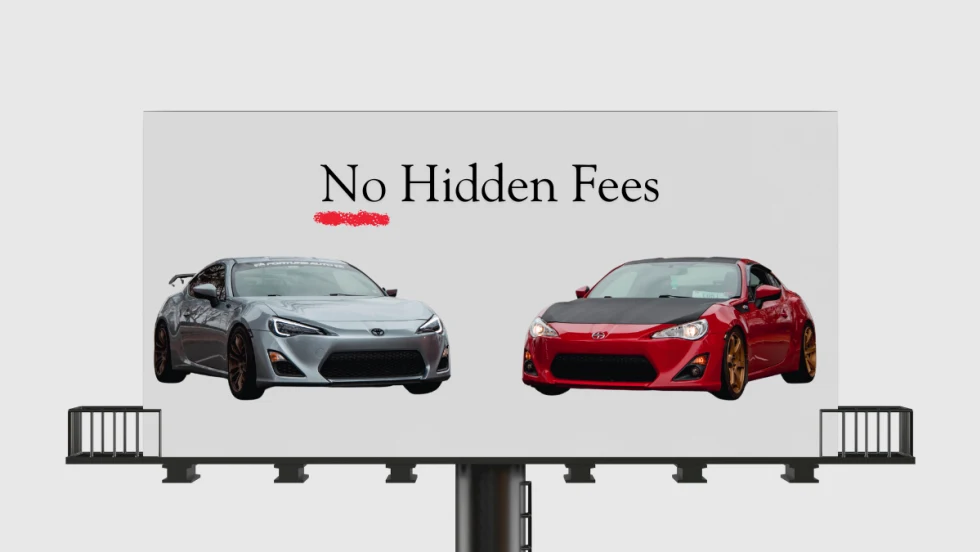
Dealer Ads and the FTC
The agency has made it clear in recent enforcement actions and warnings, in auto retail and other industries, that advertised prices must include all nonoptional costs to the consumer.
Read More →
Used Autos Supply Dwindles
The March shopping surge, despite high prices, cut into inventory by the most since the thick of the pandemic, Cox Automotive analysts calculated.
Read More →