



J.D. Power: Social Media Impacting Purchase Decisions for All Generations
According to the J.D. Power’s 2014 Social Media Benchmark Study, customers are more likely to repurchase from the same brand if their social media and marketing experiences with that brand are positive.
WESTLAKE VILLAGE, Calif. — Social media plays a critical role in driving consumer purchase and service decisions across all generational groups in the automotive marketplace, according J.D. Power and Associates’ recently released 2014 Social Media Benchmark Study.
Now in its second year, the study measures the overall consumer experience in engaging with companies through their social media platforms for both marketing and servicing needs across 30 U.S. automotive brands.
Marketing engagements include connecting with consumers to build brand awareness and affinity, as well as communicating about products and promotions. Servicing engagements include answering specific consumer questions or resolving problems. The study establishes quantitative performance benchmarks and industry best practices that provide automakers and dealers with insights to help them maximize their social media efforts.
“Auto manufacturers that focus just on reaching Millennials through social media are missing a tremendous opportunity, as social media is a channel that reaches all generations of consumers,” said Arianne Walker, senior director of automotive media & marketing at J.D. Power. “Today, for the first time, we have an in-depth understanding of what helps drive satisfaction in social media interactions across generations, and not just among consumers who are highly engaged in social media, but also those who are more casually engaged with a brand through this channel. It is important to provide a satisfying social media experience for all consumers because it helps drive current and future business.”
According to the study’s findings, consumers who are delighted with their servicing and marketing experiences (satisfaction scores of 901-1,000 on a 1,000-point scale) have a positive impression of the automotive brand and an increased likelihood to repurchase from the same brand in the future. The same goes for consumers delighted with their social media servicing experience and those delighted with their marketing experience.
Additionally, consumers delighted with their social media servicing experience indicate they are more likely to return to the automotive brand dealer for service.
The study also found that one-fifth (20%) of consumers use social media as their primary source of information about automotive brands, while nearly one-third (29%) of social media users get recommendations about a product or service from friends and family exclusively through social media.
The most frequently used social media marketing channel is Facebook (29%), followed by YouTube (19%) and Twitter (11%). The most frequently used social media servicing channel is Facebook (84%), followed by Twitter (34%) and YouTube (25%).
Toyota ranked highest among automotive brands, with a score of 845. Ford ranked second with a score of 842, followed by Chevrolet at 838. The industry average was 824.
The 2014 Social Media Benchmark Study is based on responses from more than 9,800 U.S. online consumers who have interacted with a company via that its social media channel. The study was fielded from Nov. 18, 2013, through Feb. 9, 2014.
The overall Social Media Benchmark Index is comprised of the Social Media Marketing Index and the Social Media Servicing Index, each representing 50 percent of the overall score. The overall index measures consumers’ social media experiences across marketing and servicing interactions.
Originally posted on F&I and Showroom
More Dealer Ops
How to Avoid Phone Scams | Dealer Debrief 09/10/2026
Are you taking the necessary steps to protect your dealership and customer data from phone-based scams? This week's Dealer Debrief breaks down how!
Read More →
Dealer Debrief: August Auto Sales
Gas-powered engines still dominate the U.S. vehicle market, but hybrids are gaining ground as consumers look for ways to cut their gas costs.
Read More →
Dealership Profits Decline
While new and used retail sales stagnated, dealerships have been particularly supported by fixed operations and finance-and-insurance profits, according to a new report.
Read More →
Dealer Debrief: Defection Data & EV Updates
In this week's debrief, host Lauren Lawrence discusses how to use defection data to your advantage and the latest on EV sales and charging infrastructure.
Read More →
How Defection Data is Bridging the Dealership Conversion Gap
Lead volume is flat, cross-shopping is up and brand loyalty is in retreat. As confident sales teams keep losing buyers they thought they had, daily industry sales data is showing dealers exactly where their funnel is breaking and how to fix it without buying a single new lead.
Read More →
Dealer Debrief: Where are you losing customers?
In this week's debrief, host Lauren Lawrence discusses the hidden leaks in dealerships where you might be losing customers without even realizing it.
Read More →
Dealer Debrief: Improving Your Inventory Management
In this week's debrief, host Lauren Lawrence covers a new survey that shows what service technicians really want and two launches that could help improve your inventory and vehicle life cycle management.
Read More →
Ladies and Gentlemen, This Is a Dealership: Why the Fundamentals Still Decide Who Wins
A teaching moment by a legendary football coach happens to apply perfectly in the auto retail space. Learn what it is and how to use it to your store’s advantage.
Read More →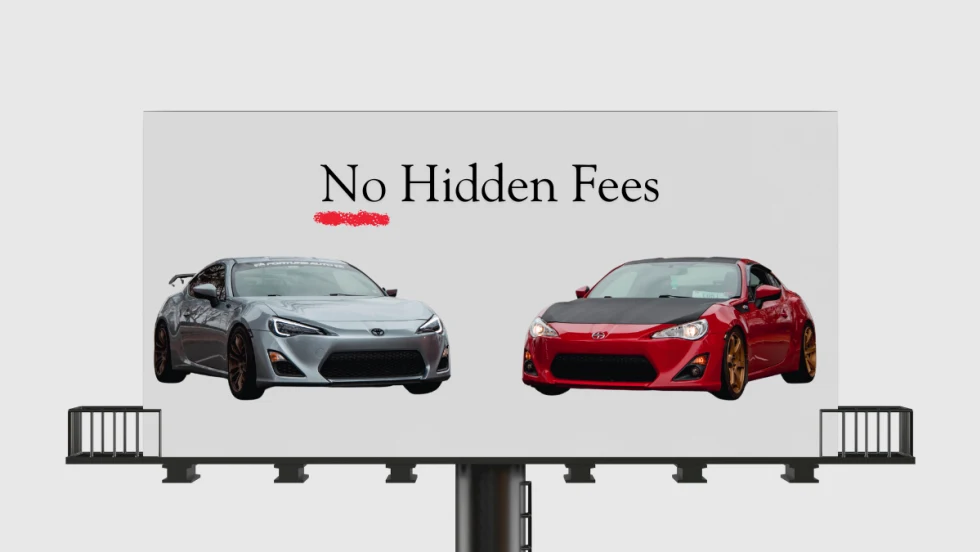
Dealer Ads and the FTC
The agency has made it clear in recent enforcement actions and warnings, in auto retail and other industries, that advertised prices must include all nonoptional costs to the consumer.
Read More →
Used Autos Supply Dwindles
The March shopping surge, despite high prices, cut into inventory by the most since the thick of the pandemic, Cox Automotive analysts calculated.
Read More →