



Manheim: Used-Car Reports Signal Stability
Despite declining wholesale values in March, first-quarter pricing for used vehicles showed a year-over-year increase from the first quarter of 2016.
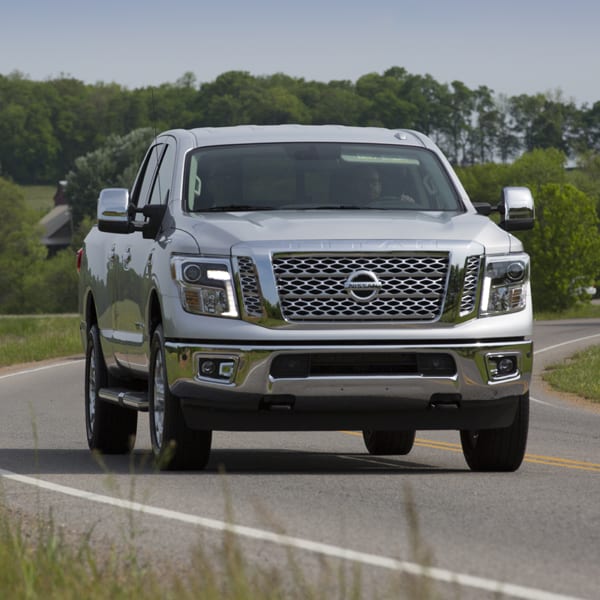
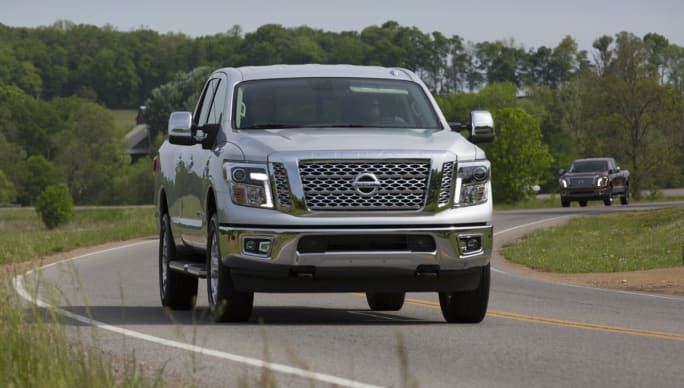
Prices for pre-owned pickups showed a year-over-year increase of 6.7% in the first quarter, leading all segments and helping to stabilize the used-car market. Photo courtesy Nissan USA
ATLANTA — Analysis of first-quarter sales reports signals stability in used-car values heading into the second quarter of 2017, according to Manheim. While wholesale used-vehicle prices declined by 0.5% in March, the Manheim Used Vehicle Value Index — a measure of wholesale prices adjusted for mix, mileage and season — came to a reading of 124.1. This is an increase of 1.3% from a year ago.
“While used-vehicle values have declined in five of the last six months, it has not been the collapse that many analysts have warned [of] for more than a year due to increasing wholesale supplies,” said Tom Webb, chief economist for Cox Automotive. “On the contrary, the used-vehicle market remains healthy while any weakness we’ve witnessed is overall due to an excessive new-vehicle inventory — not used.”
Pointing to the continued stability of the market regarding used-vehicle retail sales, total used retail sales in January and February — including private-party transactions — were up 5%. Growing on this strength, franchised dealer sales were up 6% and independent sales were up 7%, according to the National Automobile Dealers Association (NADA). Additionally, the credit and lending environment remains favorable.
Despite the continued overall stability, the new-vehicle environment continues to pressure used-vehicle values, and franchise dealers started both February and March with more than four million new units in stock. A variety of major incentives were applied to that inventory in February and the industry achieved a seasonally adjusted annual selling rate (SAAR) of 17.5 million. Available incentives were just as large in March, but sales slowed and resulted in a SAAR of 16.5 million — the lowest in just over two years.
For used-vehicle pricing trends, all car segments — except for truck segments — were down from a year ago. First quarter wholesale pricing for all vehicle segments included:
Compact car prices, typically one of the weakest segments, experienced some relative strength in comparison to the other car classes and were down a modest 0.9%.
Midsize cars once again surfaced as one of the weaker segments compared with last year and had a decline of 1.6%.
SUVs and CUVs increased 1.4% from last March and again remain weaker than the overall market.
Pickups had the most significant increase of all car classes with an increase of 6.7% over a year ago, while vans saw a more modest increase of 3.9%.
Luxury cars represented the biggest decrease of all classes, dipping 1.8% over last year.
A straight average of auction pricing for rental risk units in March was up 3.5% from a year ago, reflecting a better mix of market classes and lower mileage. Representing a 10% decrease from this time last year, average mileage came in at 33,600 for rental risk units. SUVs and CUVs accounted for 33% of rental risk sales in March versus only 25% last year. The share accounted for compact cars fell from 29% to 25%.
“Even when compared to last year’s high level, rental risk volumes sold at auction in the first quarter were up considerably,” Webb said. “This year’s off-rental volume was primarily due to fleet rationalization unlike last year’s high number of new units entering the fleet and, as such, off-rental auction volumes may weaken later in the year.”
Originally posted on F&I and Showroom
More Dealer Ops

How to Avoid Phone Scams | Dealer Debrief 09/10/2026
Are you taking the necessary steps to protect your dealership and customer data from phone-based scams? This week's Dealer Debrief breaks down how!
Read More →
Dealer Debrief: August Auto Sales
Gas-powered engines still dominate the U.S. vehicle market, but hybrids are gaining ground as consumers look for ways to cut their gas costs.
Read More →
Dealership Profits Decline
While new and used retail sales stagnated, dealerships have been particularly supported by fixed operations and finance-and-insurance profits, according to a new report.
Read More →
Dealer Debrief: Defection Data & EV Updates
In this week's debrief, host Lauren Lawrence discusses how to use defection data to your advantage and the latest on EV sales and charging infrastructure.
Read More →
How Defection Data is Bridging the Dealership Conversion Gap
Lead volume is flat, cross-shopping is up and brand loyalty is in retreat. As confident sales teams keep losing buyers they thought they had, daily industry sales data is showing dealers exactly where their funnel is breaking and how to fix it without buying a single new lead.
Read More →
Dealer Debrief: Where are you losing customers?
In this week's debrief, host Lauren Lawrence discusses the hidden leaks in dealerships where you might be losing customers without even realizing it.
Read More →
Dealer Debrief: Improving Your Inventory Management
In this week's debrief, host Lauren Lawrence covers a new survey that shows what service technicians really want and two launches that could help improve your inventory and vehicle life cycle management.
Read More →
Ladies and Gentlemen, This Is a Dealership: Why the Fundamentals Still Decide Who Wins
A teaching moment by a legendary football coach happens to apply perfectly in the auto retail space. Learn what it is and how to use it to your store’s advantage.
Read More →
Dealer Ads and the FTC
The agency has made it clear in recent enforcement actions and warnings, in auto retail and other industries, that advertised prices must include all nonoptional costs to the consumer.
Read More →
Used Autos Supply Dwindles
The March shopping surge, despite high prices, cut into inventory by the most since the thick of the pandemic, Cox Automotive analysts calculated.
Read More →