



March New-Vehicle Sales Don’t Reflect War
Cox Automotive data shows Americans doubled down on big-is-better despite price increases. Slightly higher incentives helped fuel the demand.

The manufacturer’s suggested retail price rose about 4% year-over-year to $51,456, its 12th straight month eclipsing $50,000.
Ford
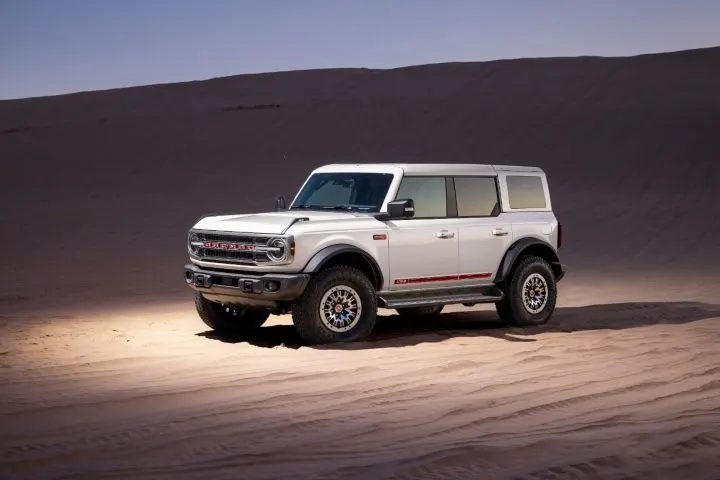
In a trend made ironic in March as gas prices surged, Americans scooped up full-size SUVs and pickups to make four straight months of annual new-vehicle price gains.
Cox Automotive noted about a 4% average transaction price bump in the midst of the U.S.-Israel war in the Middle East to $49,275. It said the ATP was essentially flat month-over-month, though the sales pace increased 18% from February due to elevated incentives.
Though the war started on Feb. 28, almost immediately sending gas prices to new heights, the March compact and subcompact sales share fell as SUV and truck deliveries headed in the other direction, Cox reported.
“Buying behavior does not change quickly, and most Americans have ridden the gas-price rollercoaster before. They know where the ride ends,” said Cox Executive Analyst Erin Keating.
“The numbers this month also show that the industry’s near-$50,000 ATP is reflective of a market that favors large, expensive vehicles. While affordable vehicles still exist, the demand continues to be concentrated in higher-priced segments.”
The manufacturer’s suggested retail price rose about 4% year-over-year to $51,456, its 12th straight month eclipsing $50,000. Incentives, which inched up from 6.9% of the ATP in February to 7.2%, helped fuel sales.
Electric-vehicle prices continued their fall in March after the Oct. 1 end of federal purchase and lease incentives, their ATP down about 3% year-over-year to $54,508 as they close in on gas models in price parity.
The war could bring a reversal of the EV sales decline following the pullback of adoption support, though, as demand increased in most European countries, as well as in India and New Zealand, after the war started, according to data provider Benchmark Mineral Intelligence.
DIG DEEPER: Solving Affordability and Negative-Equity Challenges
More Industry

U.S. EV Market Update | Dealer Debrief
The U.S. electric vehicle market is slowly recovering from the loss of the federal EV tax credit last fall. Learn more in this week's Dealer Debrief!
Read More →
Auto Finance Numbers Set Records
Third-quarter data show how consumers are adapting to ongoing affordability challenges facing the new- and-used-vehicle markets.
Read More →
Auto Dealerships Can’t Afford to Ignore the 50+ Consumer
Younger generations may be all the buzz today when it comes to product marketing targets, but their older cohorts command a sizable share of purchasing power.
Read More →
Savings Seekers Boost U.S. Automakers’ Rivals
As consumers here look for ways to curb inflation’s affect on their budgets, brands offering plenty of alternative powertrains are closing in on home-grown OEMs.
Read More →
The Slow Electric Ascent
Second-quarter data show that the electric-vehicle market in the U.S. is inching up, the majority of states seeing a month-over-month increase.
Read More →
Safer Rides & Cyberattacks
Vehicle crash testing is getting a virtual boost, but auto dealerships are facing increased cyberattacks. Learn more in this week's Dealer Debrief!
Read More →
Affordability Angst | Dealer Debrief
August saw little relief for car buyers, whether they were shopping new or used. Take a look at the month's breakdown in this week's Dealer Debrief!
Read More →
Virtual Crash Testing in the Works
A company's platform works alongside physical crash testing to gather insights into occupant response and injury mechanisms, with the idea of helping automakers develop safer vehicles.
Read More →
Tariff Tiff Examined
Some auto industry leaders are taking a relaxed view of the U.S.-Canada trade war while others worry that a dramatically adjusted playing field could mean too much collateral damage.
Read More →
EV Consideration Climbs
Despite the loss of federal EV incentives, interest has grown in the U.S., largely thanks to charging infrastructure improvements.
Read More →