



Supreme Court Upholds Disparate Impact
In a 5-4 vote, the Supreme Court held that disparate impact claims are cognizable under the Fair Housing Act, dashing the hopes of industry insiders who believed a ruling against the controversial legal theory would put a kibosh on the CFPB’s actions in auto lending.


Source: Wikipedia
[UPDATED] WASHINGTON — The Supreme Court on Thursday morning upheld the use of disparate impact in a fair housing case out of Texas, dashing the hopes of industry insiders who believed a ruling against the controversial legal theory would put a kibosh on the Consumer Financial Protection Bureau (CFPB)’s actions in auto lending. But one trade group representing auto finance sources said the ruling wasn't a complete loss.
The case, Texas Department of Housing and Community Affairs v. The Inclusive Communities Project, alleged that the Texas Department of Housing and Community Affairs caused segregated housing by allocating too many low-income housing tax credits to black inner-city neighborhoods and too few to predominantly white neighborhoods. The suit, filed in 2008, claimed that the department’s policies had a disproportionately adverse effect on minorities. Under the disparate impact legal theory, those policies could be in violation of the Fair Housing Act even if their effects were unintentional.
In a 5-4 vote, the Supreme Court held that disparate impact claims “are cognizable under the Fair Housing Act,” according to the court opinion written by Justice Anthony Kennedy, along with Justices Ruth Bader Ginsburg, Stephen Breyer, Sonia Sotomayor and Elena Kagan.
“A disparate-impact claim relying on a statistical disparity must fail if the plaintiff cannot point to a defendant’s policy or policies causing that disparity,” Justice Kennedy wrote. “Courts should avoid interpreting disparate-impact liability to be so expansive as to inject racial considerations into every housing decision. These limitations are also necessary to protect defendants against abusive disparate-impact claims.”
The auto finance industry has been closely following the Texas housing case in recent months in hopes that it might put the validity of disparate impact in question. The CFPB has been using the legal theory to allege that auto lenders like Ally Financial — which the bureau fined $98 million in 2013 — are engaging in patterns of discrimination. At issue are policies that allow dealers to mark up the interest rates on retail installment sales contracts as compensation for arranging a customer’s vehicle financing.
In a statement issued to F&I and Showroom, Chris Stinebert, president and CEO of the American Financial Services Association (AFSA), said that while the Supreme Court upheld the use of disparate impact in the Texas housing case, it did significantly narrow how the legal theory can be used. "While important for the housing market, the ruling does not extend to other areas of consumer lending such as vehicle finance," he said.
"Several important distinctions exist between the Fair Housing Act (FHA) and the Equal Credit Opportunity Act (ECOA), the statute under which the [CFPB] has authority to oversee auto lenders," Stinebert added. "Specifically, the ECOA does not contain 'effects' language contained in other anti-discrimination statutes. The Supreme Court determined that the language contained in the FHA is equivalent to language found in other civil statutes that recognize disparate impact."
The Supreme Court's decision comes the same week the CFPB announced that consumers allegedly harmed by Ally’s dealer markup policies between April 2011 and December 2013 will begin receiving reimbursement — more than two years after the finance source reached a settlement with the CFPB and the U.S. Department of Justice. Those consumers have been identified via the CFPB’s much-disputed Bayesian Improved Surname Geocoding (BISG) proxy methodology, which the bureau uses to determine disparate impact to legally protected groups.
“The Settlement Administrator will send packages to certain Ally auto finance customers with an auto contract dated between April 2011 and December 2013 who were identified by the CFPB and DOJ as likely to be African American, Hispanic, Asian or Pacific Islander according to the BISG methodology,” said Ally in a statement obtained by F&I and Showroom. “Many customers will first be asked to confirm that they are part of the affected groups since the CFPB’s BISG methodology often yields inaccurate results.”
Originally posted on F&I and Showroom
More Dealer Ops

How to Avoid Phone Scams | Dealer Debrief 09/10/2026
Are you taking the necessary steps to protect your dealership and customer data from phone-based scams? This week's Dealer Debrief breaks down how!
Read More →
Dealer Debrief: August Auto Sales
Gas-powered engines still dominate the U.S. vehicle market, but hybrids are gaining ground as consumers look for ways to cut their gas costs.
Read More →
Dealership Profits Decline
While new and used retail sales stagnated, dealerships have been particularly supported by fixed operations and finance-and-insurance profits, according to a new report.
Read More →
Dealer Debrief: Defection Data & EV Updates
In this week's debrief, host Lauren Lawrence discusses how to use defection data to your advantage and the latest on EV sales and charging infrastructure.
Read More →
How Defection Data is Bridging the Dealership Conversion Gap
Lead volume is flat, cross-shopping is up and brand loyalty is in retreat. As confident sales teams keep losing buyers they thought they had, daily industry sales data is showing dealers exactly where their funnel is breaking and how to fix it without buying a single new lead.
Read More →
Dealer Debrief: Where are you losing customers?
In this week's debrief, host Lauren Lawrence discusses the hidden leaks in dealerships where you might be losing customers without even realizing it.
Read More →
Dealer Debrief: Improving Your Inventory Management
In this week's debrief, host Lauren Lawrence covers a new survey that shows what service technicians really want and two launches that could help improve your inventory and vehicle life cycle management.
Read More →
Ladies and Gentlemen, This Is a Dealership: Why the Fundamentals Still Decide Who Wins
A teaching moment by a legendary football coach happens to apply perfectly in the auto retail space. Learn what it is and how to use it to your store’s advantage.
Read More →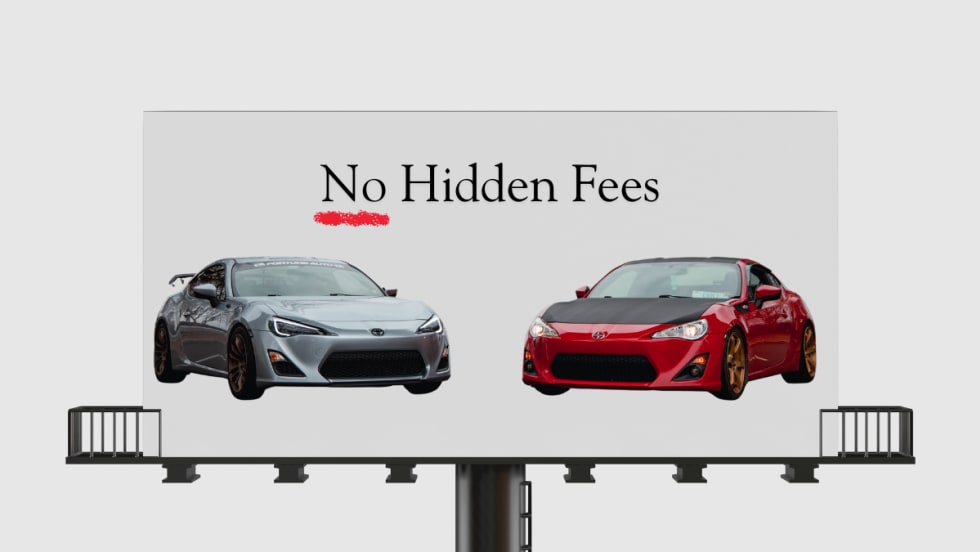
Dealer Ads and the FTC
The agency has made it clear in recent enforcement actions and warnings, in auto retail and other industries, that advertised prices must include all nonoptional costs to the consumer.
Read More →
Used Autos Supply Dwindles
The March shopping surge, despite high prices, cut into inventory by the most since the thick of the pandemic, Cox Automotive analysts calculated.
Read More →