



Toyota to Pay $1.2 Billion for Acceleration Issues
Toyota will pay a $1.2 billion financial penalty — the largest penalty ever imposed on an automotive company — for concealing and making deceptive statements about two safety issues affecting its vehicles in 2009, the U.S. Department of Justice announced last week.
WASHINGTON — The Department of Justice has announced a deferred prosecution agreement with Toyota, under which the company admits that it misled U.S. consumers by concealing and making deceptive statements about two safety issues affecting its vehicles, each of which caused a type of unintended acceleration.
The agreement, which is subject to judicial review, requires Toyota pay a $1.2 billion financial penalty — the largest penalty of its kind ever imposed on an automotive company — and imposes on Toyota an independent monitor to review and assess policies, practices and procedures related to Toyota’s safety-related public statements and reporting obligations. Toyota agreed to pay the penalty under a Final Order of Forfeiture in a parallel civil action filed today in the Southern District of New York.
The company was charged with criminal wire fraud for defrauding consumers in the fall of 2009 and early 2010 by issuing misleading statements about safety issues in Toyota and Lexus vehicles. If Toyota abides by all the terms of the agreement, the government will defer prosecution for three years and then seek to dismiss the charge.
“Rather than promptly disclosing and correcting safety issues they were aware of, Toyota made misleading public statements to consumers and gave inaccurate facts to members of Congress,” said Attorney General Eric Holder. “When car owners get behind the wheel, they have a right to expect that their vehicle is safe. If any part of the automobile turns out to have safety issues, the car company has a duty to be upfront about them, to fix them quickly, and to immediately tell the truth about the problem and its scope.
“Toyota violated that basic compact. Other car companies should not repeat Toyota’s mistake: a recall may damage a company’s reputation, but deceiving your customers makes that damage far more lasting.”
Originally posted on F&I and Showroom
More Dealer Ops
How to Avoid Phone Scams | Dealer Debrief 09/10/2026
Are you taking the necessary steps to protect your dealership and customer data from phone-based scams? This week's Dealer Debrief breaks down how!
Read More →
Dealer Debrief: August Auto Sales
Gas-powered engines still dominate the U.S. vehicle market, but hybrids are gaining ground as consumers look for ways to cut their gas costs.
Read More →
Dealership Profits Decline
While new and used retail sales stagnated, dealerships have been particularly supported by fixed operations and finance-and-insurance profits, according to a new report.
Read More →
Dealer Debrief: Defection Data & EV Updates
In this week's debrief, host Lauren Lawrence discusses how to use defection data to your advantage and the latest on EV sales and charging infrastructure.
Read More →
How Defection Data is Bridging the Dealership Conversion Gap
Lead volume is flat, cross-shopping is up and brand loyalty is in retreat. As confident sales teams keep losing buyers they thought they had, daily industry sales data is showing dealers exactly where their funnel is breaking and how to fix it without buying a single new lead.
Read More →
Dealer Debrief: Where are you losing customers?
In this week's debrief, host Lauren Lawrence discusses the hidden leaks in dealerships where you might be losing customers without even realizing it.
Read More →
Dealer Debrief: Improving Your Inventory Management
In this week's debrief, host Lauren Lawrence covers a new survey that shows what service technicians really want and two launches that could help improve your inventory and vehicle life cycle management.
Read More →
Ladies and Gentlemen, This Is a Dealership: Why the Fundamentals Still Decide Who Wins
A teaching moment by a legendary football coach happens to apply perfectly in the auto retail space. Learn what it is and how to use it to your store’s advantage.
Read More →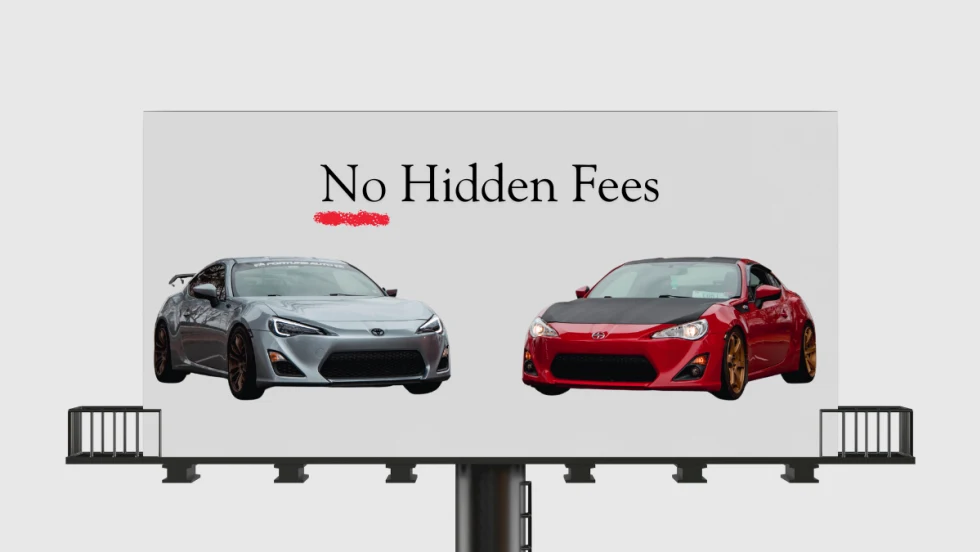
Dealer Ads and the FTC
The agency has made it clear in recent enforcement actions and warnings, in auto retail and other industries, that advertised prices must include all nonoptional costs to the consumer.
Read More →
Used Autos Supply Dwindles
The March shopping surge, despite high prices, cut into inventory by the most since the thick of the pandemic, Cox Automotive analysts calculated.
Read More →