



Trump Wins China Auto Tariff Standoff
China has agreed to reduce import taxes on U.S.-built vehicles from 40% to 15% for the duration of a 90-day countdown to a new trade deal between the world’s two largest economies.

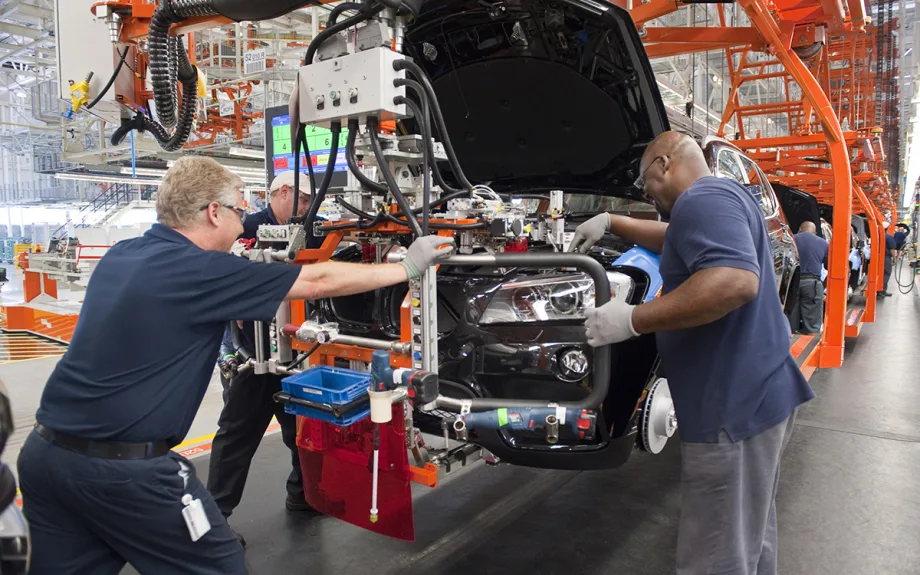
Vehicles exported to China from BMW’s Spartanburg, S.C., plant and other U.S. factories will no longer be subject to an additional 25% import tax as of Jan. 1.
Photo courtesy BMW of North America
WASHINGTON — China will suspend the additional 25% tariff imposed on U.S. auto imports for three months starting Jan. 1, the Chinese Finance Ministry announced Friday. The concession follows a Dec. 1 meeting between President Donald Trump and President Xi Jinping at the G20 summit in Buenos Aires. The ministry described the move as a “concrete action” that will lead to a “mutually beneficial new Sino-U.S. trade order.”
The announcement makes official unconfirmed reports from Bloomberg, other media outlets, and Trump himself that the import tax would be lifted. The 25% hike was enacted in April in retaliation for new levies on steel and aluminum imported to the U.S., bringing the total import tax on U.S.-built vehicles to 40%. Days earlier, China had reduced from 25% to 15% its tariff on all imported vehicles; the U.S. charges an import tax of 27.5% on vehicles made in China.
In the December meeting, Xi agreed to purchase a “very substantial” quantity of American goods to help reduce the nations’ trade imbalance. In return, Trump agreed to back off a threat to raise tariffs from 10% to 25% on $200 billion worth of Chinese exports. The leaders will now work under a self-imposed deadline of April 1 to reach a new, permanent trade deal.
The principal beneficiaries of China’s concession are BMW and Daimler, which owns Mercedes-Benz. The German automakers produce six of China’s 10 most popular imports, many of which are built in American plants. In a statement that followed Trump and Xi’s Buenos Aires meeting, factory executives singled out the pivotal role of BMW’s Spartanburg, S.C., plant in its global operations.
“Free trade has made the success story of BMW in the U.S. possible. In 2017, the Spartanburg plant exported more than 70% of its total production volume of 371,316 units to more than 120 countries,” the statement read, in part. “China is the No. 1 export destination, followed by Germany. According to the U.S. Department of Commerce, the BMW Group is the largest vehicle exporter from the U.S. in terms of value.”
Sales of all U.S. vehicles in China, including those built in Chinese plants operated by General Motors and other manufacturers, were down 1% for the first nine months of the year. In the same span, exports of vehicles to China from the U.S. fell by 30%, a $2.4 billion loss.
More Dealer Ops

How to Avoid Phone Scams | Dealer Debrief 09/10/2026
Are you taking the necessary steps to protect your dealership and customer data from phone-based scams? This week's Dealer Debrief breaks down how!
Read More →
Dealer Debrief: August Auto Sales
Gas-powered engines still dominate the U.S. vehicle market, but hybrids are gaining ground as consumers look for ways to cut their gas costs.
Read More →
Dealership Profits Decline
While new and used retail sales stagnated, dealerships have been particularly supported by fixed operations and finance-and-insurance profits, according to a new report.
Read More →
Dealer Debrief: Defection Data & EV Updates
In this week's debrief, host Lauren Lawrence discusses how to use defection data to your advantage and the latest on EV sales and charging infrastructure.
Read More →
How Defection Data is Bridging the Dealership Conversion Gap
Lead volume is flat, cross-shopping is up and brand loyalty is in retreat. As confident sales teams keep losing buyers they thought they had, daily industry sales data is showing dealers exactly where their funnel is breaking and how to fix it without buying a single new lead.
Read More →
Dealer Debrief: Where are you losing customers?
In this week's debrief, host Lauren Lawrence discusses the hidden leaks in dealerships where you might be losing customers without even realizing it.
Read More →
Dealer Debrief: Improving Your Inventory Management
In this week's debrief, host Lauren Lawrence covers a new survey that shows what service technicians really want and two launches that could help improve your inventory and vehicle life cycle management.
Read More →
Ladies and Gentlemen, This Is a Dealership: Why the Fundamentals Still Decide Who Wins
A teaching moment by a legendary football coach happens to apply perfectly in the auto retail space. Learn what it is and how to use it to your store’s advantage.
Read More →
Dealer Ads and the FTC
The agency has made it clear in recent enforcement actions and warnings, in auto retail and other industries, that advertised prices must include all nonoptional costs to the consumer.
Read More →
Used Autos Supply Dwindles
The March shopping surge, despite high prices, cut into inventory by the most since the thick of the pandemic, Cox Automotive analysts calculated.
Read More →