



Understanding High Speed Communications
Jeff Smelley - One of the most confusing decisions a dealership can make is choosing an Internet broadband service. Let’s simplify the decision by looking at price, speed, availability and reliability with respect to your needs.

One of the most confusing decisions a dealership can make is choosing an Internet broadband service. Everyone you talk to promotes their particular product and speaks in a language akin to alphabet soup. Should you choose ADSL, SDSL, ISDN, cable, dial up, T1 or satellite? How much speed do you need and in which direction? What is the reliability, equipment cost and installation fees? What do they mean by “self install”? It’s enough to give you a headache, especially when you get seven different answers from five different people.
Let’s simplify the decision by looking at price, speed, availability and reliability with respect to your needs.
Reliability should normally be your biggest concern and will be determined by two factors, distance and line quality. Distance refers to the length of cable, in feet, from the closest switching station to your dealership. If you are within the distance requirement then the service should be available. However, line quality (the clarity of phone signal) is not guaranteed just because the service is available. You will be wise to check with other businesses close to you to see what service they use and what their experience has been. A service that is inexpensive but unreliable is no bargain.
DSL (Digital Subscriber Line) service is one of the most prevalent and least expensive of broadband services. DSL comes in essentially two formats ADSL (asymmetrical DSL) and SDSL (symmetrical DSL). These two services, while similar, differ in two significant ways. ADSL will have a slower upload speed than download speed (i.e. 384 k bits up and 1.5 megabits down) and ADSL can be added to an existing voice phone line. Since ADSL can coexist on your voice line it is typically less expensive than SDSL. The best check for line quality for ADSL is to note the amount of static or fluctuation in volume and clarity when talking on your phone. The clearer the line, the better your ADSL service should be. SDSL, unlike ADSL, cannot coexist over voice phone lines and it will have the same upload and download speed (i.e. 384/384). DSL service of either type is subject to an 18000 feet distance limitation. I have seen reliability problems increase as you approach that distance limit. Most DSL providers will prequalify your phone number for DSL service, which is merely checking to see if you are within the allowable distance. This pre-qualification may not assure you service due to line quality.
Cable internet service is the next most prominent service. Cable is faster than DSL, priced competitively and does not have a distance limitation. However, cable is not available everywhere. Installation charges for cable internet are typically greater than for DSL services, especially if your building does not already have cable access. Cable internet speeds tend to slow down during heavy usage but with their higher initial speeds this should not be a problem.
ISDN (Integrated Services Digital Network) is often available when DSL and cable are not. ISDN has a maximum service distance of 26000 feet and a maximum speed of 128k bps (bits per second). While much slower than DSL, ISDN can coexist over your existing phone lines and may provide a reliable service when DSL is not available. ISDN is more expensive than DSL but less expensive than other methods like T1 or T3.
T1/T3 (Tier One) broadband lines are typically the most expensive, but they are the most reliable. T1/T3 lines are a point to point dedicated connection with speeds up to 45 mbps. The installation and monthly fee are determined by the distance of the connection and the speed required. Your voice phone lines can be integrated into your T1/T3 circuit by allocating a portion of your bandwidth (total transmission capability) to voice traffic while reserving the remainder for data transmission.
In conclusion, DSL and cable are the most readily available broadband options. ISDN and T1/T3 are typically more costly but may be available when DSL and cable are not. Speed, price and reliability are your three qualifiers, reliability being the most important. Oh, by the way, if you are thinking about satellite/dish network, don’t. Good luck. ˜ADM˜
Vol 3, Issue 3
More Dealer Ops

Ladies and Gentlemen, This Is a Dealership: Why the Fundamentals Still Decide Who Wins
A teaching moment by a legendary football coach happens to apply perfectly in the auto retail space. Learn what it is and how to use it to your store’s advantage.
Read More →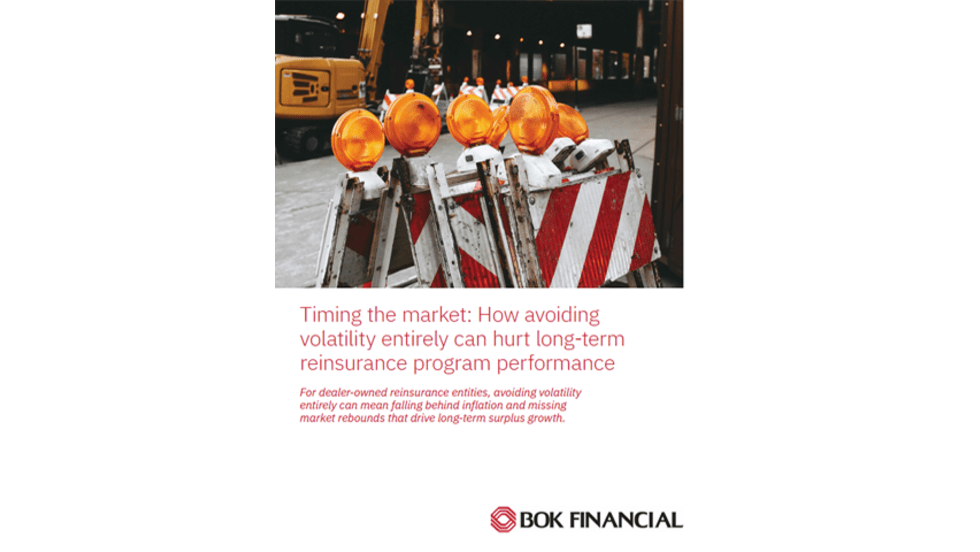
Timing the Market Can Hurt Long-Term Program Performance
For dealer-owned reinsurance entities, avoiding volatility entirely can mean falling behind inflation and missing market rebounds that drive long term surplus growth. Missing just a handful of strong market days can materially impact cumulative returns—an important reminder for long horizon trust and investment strategies.
Read More →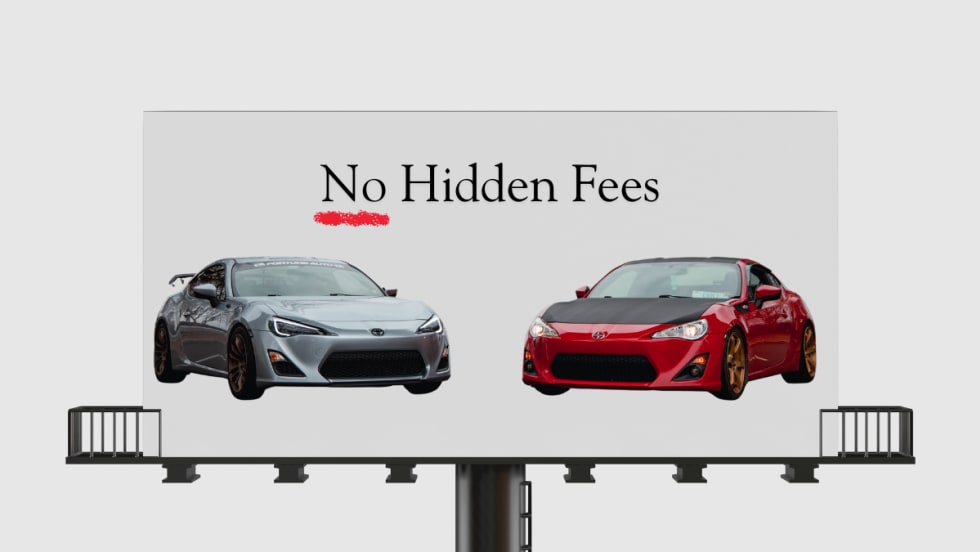
Dealer Ads and the FTC
The agency has made it clear in recent enforcement actions and warnings, in auto retail and other industries, that advertised prices must include all nonoptional costs to the consumer.
Read More →
Used Autos Supply Dwindles
The March shopping surge, despite high prices, cut into inventory by the most since the thick of the pandemic, Cox Automotive analysts calculated.
Read More →
Managing Risk Effectively Through Changing Times
The variables influencing risk pricing have changed significantly over the past five years. Being proactive and responsive to emerging trends is not optional but essential.
Read More →
Survey Reveals What Won't Fix What's Breaking Car Sales
AutoPayPlus says extra-long auto loans are trapping consumers and threatening the dealer trade-in cycle, and that the industry is leveraging the wrong tools to combat high MSRPs.
Read More →
IA American Appoints Two Execs
Senior vice presidents of the company's agent and dealer channels chosen to support general agents and help auto dealers with sales and performance.
Read More →
Cox Automotive Acquires Inspection Firm
Full ownership of Alliance Inspection Management, or AiM, meant to unlock growth for Manheim inspection capabilities
Read More →
Assurant Expands Partnership With Holman
Extended collaboration delivers training, products and performance development to 30 newly acquired Holman dealerships
Read More →
Franchises, Throughput Down in First Half
A handful of states see franchise growth through June, while EV sales per store boost overall business in U.S.
Read More →