



Analyzing Inventory - Deja Vu 1980
Tom Herald - When it comes to the car business, 2009 is not much different than 1980. The details, circumstances and causes for the recession were different but the end effect on the car dealer was basically the same. Credit was very limited if not non-existent. Thirty years ago Chrysler, led by Lee Iacocca, was pleading in front of Congress for some sort of financial relief. Unemployment was ...

I was reminded last week why I love the car business. Visiting a small, local dealership was refreshing and much like going back in time to when independent dealers were not concerned about financing customers using outside finance sources because they didn’t exist. Basically, if a customer did not have stellar credit, the local bank or credit union was not going to finance them. It was that simple. Instead, the dealer would negotiate some sort of agreeable terms, tote a small portion of the balance, and both parties were happy.
That pretty much describes our client on Cape Cod. He’s a 15-year veteran of the business who dove headfirst into BHPH last year, out of necessity. Although his methods are rudimentary, they are effective. He tracks customer payments on a hand-written paper he carries in his briefcase and gauges his cash flow by the balance of his checkbook. However, the business is thriving and better than 90 percent of his customers are paying. The average term financed is less than 10 months and his average cash-in-deal is less than $2,500.
He keeps things simple and instead of worrying about the recession, Chrysler, GM or the finance companies, he keeps his focus on his customers and buying and selling cars. He leaves the rest to the wizards on Wall Street, Detroit and the Washington bureaucrats. And there are a lot of inspiring and positive things to say about his methods. They reminded me of the old KISS principle and how dealers abided by it 30 years ago.
When it comes to the car business, 2009 is not much different than 1980. The details, circumstances and causes for the recession were different but the end effect on the car dealer was basically the same. Credit was very limited if not non-existent. Thirty years ago Chrysler, led by Lee Iacocca, was pleading in front of Congress for some sort of financial relief. Unemployment was over 10 percent. The economy was in a deep recession and domestic new car sales were in the tank. However, people still purchased cars, just like they are doing today.
If a dealer found affordable vehicles that ran well, cleaned them up and proudly displayed them on the front row of a small lot, customers would inevitably come in and negotiate a deal. The dealer didn’t advertise and he kept overhead as low as possible. And when he needed inventory, he closed up shop, put a note on the door and headed for the auction. The simplicity of the operation was the most attractive feature of the business model. It made sound business sense and appealed to local prospects who just wanted a good deal from someone they trusted. The same notion holds true today.
People need safe and reliable transportation. People need purchasing options. And, people need to feel like a respectable customer, regardless of their credit score. There are several small-town dealers who understand these simple concepts and when you visit their stores.
These dealers don’t need to buy third-party Internet leads. In fact, they don’t like to advertise at all. They have plenty of traffic. They also don’t need a Taj Mahal facility with tremendous overhead from which to sell cars. If you ask them, what they really need are more hours in the day and more money for financing customers—their two most limiting factors.
They pride themselves as used car experts and thoroughly understand the integral role inventory plays in the ultimate success of their business. Good dealers realize and capitalize on the profit opportunities that best fit their market and abilities, and regardless of the size of the dealership or the price of the cars they sell, they find a way to make it happen. There is a niche for every car and every budget. It’s up to the management team to determine what inventory provides the most stable source of revenue and profitability.
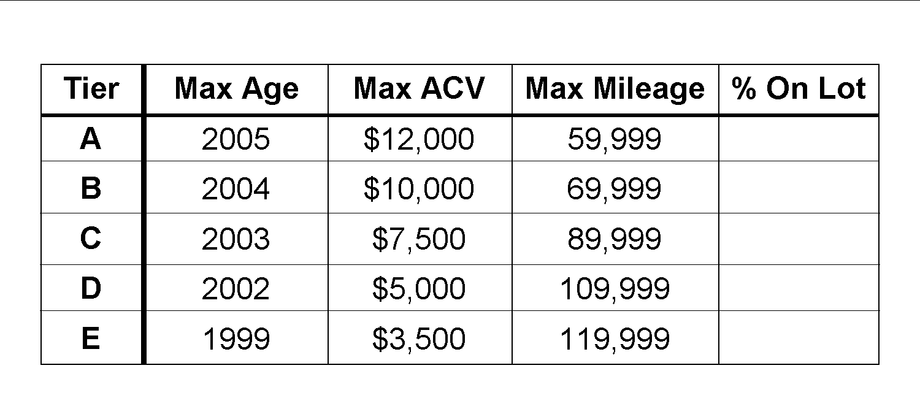
An excellent and simple tool that will help any management team stock the lot with what sells best and generates the greatest profit is an inventory analysis worksheet. This worksheet allows the dealership team to take an analytical look at their inventory and stock the lot based on current sales trends and profitability.
The following tables comprise a simple inventory analysis:
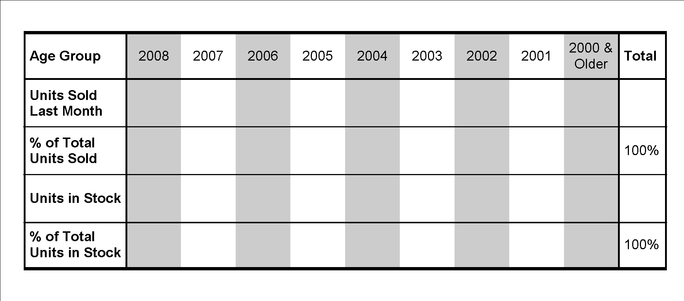
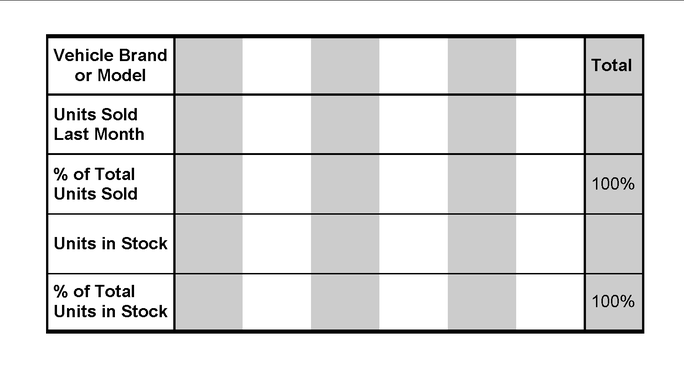
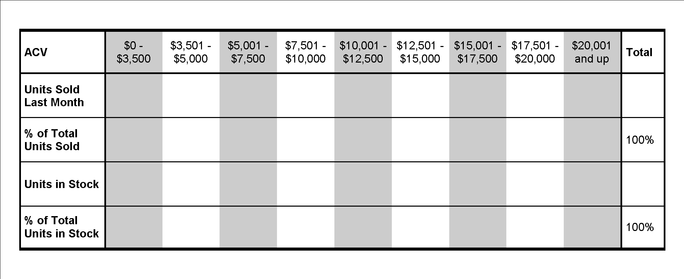

Every car dealer takes pride in their ability to locate, purchase, recondition, market and sell pre-owned inventory. It is a fundamental of our business, but it is also one economic variable that is completely within our control. As the conditions in the market continue to evolve, so must our abilities to adjust the inventory to meet demand and still generate a stable profit.
Vol. 6, Issue 7
More Dealer Ops

Ladies and Gentlemen, This Is a Dealership: Why the Fundamentals Still Decide Who Wins
A teaching moment by a legendary football coach happens to apply perfectly in the auto retail space. Learn what it is and how to use it to your store’s advantage.
Read More →
Timing the Market Can Hurt Long-Term Program Performance
For dealer-owned reinsurance entities, avoiding volatility entirely can mean falling behind inflation and missing market rebounds that drive long term surplus growth. Missing just a handful of strong market days can materially impact cumulative returns—an important reminder for long horizon trust and investment strategies.
Read More →
Dealer Ads and the FTC
The agency has made it clear in recent enforcement actions and warnings, in auto retail and other industries, that advertised prices must include all nonoptional costs to the consumer.
Read More →
Used Autos Supply Dwindles
The March shopping surge, despite high prices, cut into inventory by the most since the thick of the pandemic, Cox Automotive analysts calculated.
Read More →
Managing Risk Effectively Through Changing Times
The variables influencing risk pricing have changed significantly over the past five years. Being proactive and responsive to emerging trends is not optional but essential.
Read More →
Survey Reveals What Won't Fix What's Breaking Car Sales
AutoPayPlus says extra-long auto loans are trapping consumers and threatening the dealer trade-in cycle, and that the industry is leveraging the wrong tools to combat high MSRPs.
Read More →
IA American Appoints Two Execs
Senior vice presidents of the company's agent and dealer channels chosen to support general agents and help auto dealers with sales and performance.
Read More →
Cox Automotive Acquires Inspection Firm
Full ownership of Alliance Inspection Management, or AiM, meant to unlock growth for Manheim inspection capabilities
Read More →
Assurant Expands Partnership With Holman
Extended collaboration delivers training, products and performance development to 30 newly acquired Holman dealerships
Read More →
Franchises, Throughput Down in First Half
A handful of states see franchise growth through June, while EV sales per store boost overall business in U.S.
Read More →