



Compliance in the Digital Age
The growth of digital marketing, social media and online reputation management has invited new regulations and created additional legal challenges for dealers. Compliance Expert Jim Radogna looks at six areas that dealers should pay close attention to in 2012.

Six Areas to Pay Close Attention to in 2012
Dealership compliance concerns have traditionally focused primarily on the sales and finance processes. However, the unprecedented growth of digital marketing, social media and online reputation management has invited new regulations and created additional legal challenges for dealers to contend with. Following are six areas that dealers should pay close attention to in 2012:
Advertising Online
Internet advertising may be handled by any number of people in the dealership, such as a used car manager, Internet manager or marketing director, or perhaps by an outside vendor. The Federal Trade Commission (FTC) and state regulators have been taking a much more aggressive stance in examining and challenging Internet advertising. It’s vital that anyone who is responsible for writing and posting advertisements online be well aware of state and federal advertising regulations.
A particular area of concern is social media. Despite the fact that social networking tends to be a low-key, casual type of communication, advertising regulations still apply. For instance, if inventory is posted or prices/payments are quoted on a social media site, it’s likely that the posts will be deemed advertisements and subject to disclosure and truth-in-advertising regulations. A good rule of thumb is to have any information that could possibly be construed as advertising reviewed by upper management or a qualified professional before it is posted online. Remember, advertising violations can be easy for regulators to identify and difficult to defend against.
Online Reviews
The FTC’s updated Endorsement and Advertising Guidelines require companies to ensure that their posts are completely accurate and not misleading, and planting or allowing fake reviews is a violation. Reviewers must never endorse a product or service that they have not used personally or create any other form of false endorsement.
Dealers may also face liability if employees or vendors use social media to comment on the company’s services or products without disclosing the employment or business relationship. The FTC has indicated that companies are fully responsible and liable for all inappropriate actions of their employees and their vendors.
Regulations also require that any reviewer provided with any form of compensation for posting a review must fully disclose the source and nature of any compensation received. So, if a dealer gives away free oil changes or gas cards for reviews and the reviewers fail to disclose their compensation, the dealership may face liability.
Social Media Policies
Social media applications have soared in popularity and it’s important that dealers control the information that’s coming out of their business. Policies and procedures should be put in place to spell out how employees are expected to conduct themselves within social media. A social media policy can help take the guesswork out of what is appropriate for employees to post about a company to their social networks.
In addition, there are a number of legal considerations that every company should be aware of when establishing their social media policies and procedures, such as social media use in employment decisions; potential overtime claims; harassment, discrimination and defamation claims; and copyright and privacy issues. Beyond legal risks, employees can harm a company’s reputation by disseminating controversial or inappropriate comments.
Contests and Sweepstakes
Sweepstakes, contests and giveaways have become increasingly popular among dealerships, especially on sites such as Facebook. These promotions can be a great way to get word out about your company, increase your social media presence and develop leads. However, entry into a poorly considered sweepstakes or contest can be a trap for the unwary dealer. These promotions are governed by a variety of federal and state laws as well as social networking sites’ terms of service. Failure to follow pertinent statutes and regulations regarding promotions can lead to government inquiries, civil enforcement actions, adverse publicity and even criminal penalties.
Text Message Marketing
A recent high-profile lawsuit involving a large dealer group that allegedly failed to honor text message opt-out requests ended in a $2.5 million settlement. Text messaging is subject to a number of federal and state restrictions, and the rules are extremely confusing. These regulations can be much more difficult to deal with than regulations pertaining to telemarketing or email, primarily because many consumers are charged for text messages and the government feels that they should be afforded additional protection against unwanted solicitations. It’s wise to always consult knowledgeable legal counsel before launching a text marketing campaign.
Online Privacy
Dealerships typically collect a great deal of personal information from their website visitors through contact forms, online credit applications, etc. What many businesses fail to realize is how vitally important it is to properly handle any personally identifiable information (PII) collected from consumers through their sites. The potential penalties are substantial. It’s important for dealers to examine their policies for handling consumer privacy online and to review the policies with their employees and vendors to ascertain their understanding. The FTC has penalized a number of companies for failing to follow their own published privacy statements.
Vol. 9, Issue 1
More Dealer Ops

Ladies and Gentlemen, This Is a Dealership: Why the Fundamentals Still Decide Who Wins
A teaching moment by a legendary football coach happens to apply perfectly in the auto retail space. Learn what it is and how to use it to your store’s advantage.
Read More →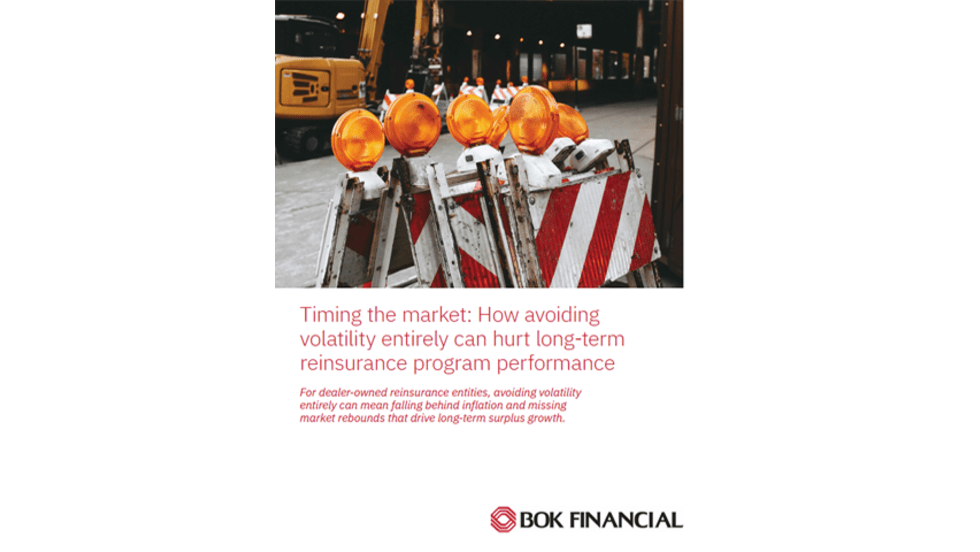
Timing the Market Can Hurt Long-Term Program Performance
For dealer-owned reinsurance entities, avoiding volatility entirely can mean falling behind inflation and missing market rebounds that drive long term surplus growth. Missing just a handful of strong market days can materially impact cumulative returns—an important reminder for long horizon trust and investment strategies.
Read More →
Dealer Ads and the FTC
The agency has made it clear in recent enforcement actions and warnings, in auto retail and other industries, that advertised prices must include all nonoptional costs to the consumer.
Read More →
Used Autos Supply Dwindles
The March shopping surge, despite high prices, cut into inventory by the most since the thick of the pandemic, Cox Automotive analysts calculated.
Read More →
Managing Risk Effectively Through Changing Times
The variables influencing risk pricing have changed significantly over the past five years. Being proactive and responsive to emerging trends is not optional but essential.
Read More →
Survey Reveals What Won't Fix What's Breaking Car Sales
AutoPayPlus says extra-long auto loans are trapping consumers and threatening the dealer trade-in cycle, and that the industry is leveraging the wrong tools to combat high MSRPs.
Read More →
IA American Appoints Two Execs
Senior vice presidents of the company's agent and dealer channels chosen to support general agents and help auto dealers with sales and performance.
Read More →
Cox Automotive Acquires Inspection Firm
Full ownership of Alliance Inspection Management, or AiM, meant to unlock growth for Manheim inspection capabilities
Read More →
Assurant Expands Partnership With Holman
Extended collaboration delivers training, products and performance development to 30 newly acquired Holman dealerships
Read More →
Franchises, Throughput Down in First Half
A handful of states see franchise growth through June, while EV sales per store boost overall business in U.S.
Read More →