



NADA: CFPB’s Actions Detrimental to Consumers
The NADA and the National Association of Minority Automobile Dealers say the CFPB’s actions in regards to dealer participation will have an opposite effect on consumers, claiming their cost of credit will go up.
MCLEAN, Va. — Last Thursday, the National Automobile Dealers Association (NADA) and the National Association of Minority Automobile Dealers (NAMAD) issued statements denouncing the Consumer Financial Protection Bureau (CFPB)’s recent actions against lending institutions and dealer participation programs.
The trade groups claimed the bulletin the CFPB issued last week “attempts to force auto finance sources into changing the way they compensate dealers without any indication that the bureau has examined the effect this change could have on the cost of credit for consumers.”
The bulletin, which applies to all indirect auto lenders within the agency’s jurisdiction, said lenders that offer auto loans through dealerships will be held responsible for unlawful, discriminatory pricing. The CFPB issued the bulletin following a report that the agency alerted several banking institutions that they could face lawsuits under the Equal Credit Opportunity Act (ECOA).
According to reports, the CFPB is targeting bank policies which allow auto dealers to mark up the interest rates on retail installment sale transactions in exchange for services rendered. The bureau alleges these policies have caused a disparate impact and caused members of minority groups to pay higher rates.
“The NADA and the NAMAD strongly oppose any form of discrimination in auto lending, and the CFPB guidance appropriately explains that unlawful discrimination has no place in the marketplace,” the statement from NADA read. “However, it is relying on a theory of discrimination that is based on a statistical analysis of past transactions — not intentional conduct — and the CFPB has not provided any information about how it is conducting its analysis.
“Without such basic information as how the CFPB is identifying different groups of consumers, how it is controlling for factors that can affect finance rates but are unrelated to the consumer’s background, and what constitutes a finding of disparate impact, one can have little confidence that the CFPB is conducting its analysis in a statistically-reliable manner.”
On March 1, Ally Financial confirmed in its filing with the Securities and Exchange Commission (SEC) that it is one of the finance sources warned by the CFPB that it could face lawsuits under the ECOA. “The CFPB has recently advised us that they are investigating certain [parts] of our retail financing practices,” read the filing. “It is possible that this could result in actions against us.”
The CFPB’s attempt to eliminate the dealer’s ability to discount the APR will weaken the ability of consumers to secure financing at the lowest possible cost, according to the NADA. “Consumers overwhelmingly choose optional dealer-assisted financing because it’s convenient and competitive,” the statement read. “This anti-competitive approach is not in the interests of consumers and should not be accomplished through guidance and enforcement actions that lack transparency, the opportunity for public comment, and the benefits of a data driven analysis into the effects they would have on consumers and the automobile financing marketplace.”
In 2011, the Federal Trade Commission hosted three roundtables to discuss perceived issues within the automotive retail business. The roundtables brought together industry reps, attorneys and consumer advocates. To illustrate the benefits of dealer participation, the NADA presented an analysis of new-vehicle loans originated between 2008 and 2010.
Using date collected by the Federal Reserve Board and transaction data collected by J.D. Power and Associates, the association showed that consumers who chose the indirect channel vs. direct saved, on average, $635.40 in 2008. In 2009, the average savings climbed to $779.40, then again to $1,162.20 in 2010. In total, dealers helped consumers save $21 billion on new-vehicle financing during that period.
The NADA suggested in its statement issued last Thursday that the CFPB’s approach should not be completed without full participation of the Federal Reserve Board and the Federal Trade Commission.
“Regrettably, no one is well served by such an opaque process,” stated the NADA. “While the NADA and the NAMAD stand ready to work with all of the federal agencies with responsibilities in this area, the NADA and the NAMAD encourage the CFPB to approach this issue in a more considered, transparent and coordinated manner.”
More Dealer Ops

Ladies and Gentlemen, This Is a Dealership: Why the Fundamentals Still Decide Who Wins
A teaching moment by a legendary football coach happens to apply perfectly in the auto retail space. Learn what it is and how to use it to your store’s advantage.
Read More →
Timing the Market Can Hurt Long-Term Program Performance
For dealer-owned reinsurance entities, avoiding volatility entirely can mean falling behind inflation and missing market rebounds that drive long term surplus growth. Missing just a handful of strong market days can materially impact cumulative returns—an important reminder for long horizon trust and investment strategies.
Read More →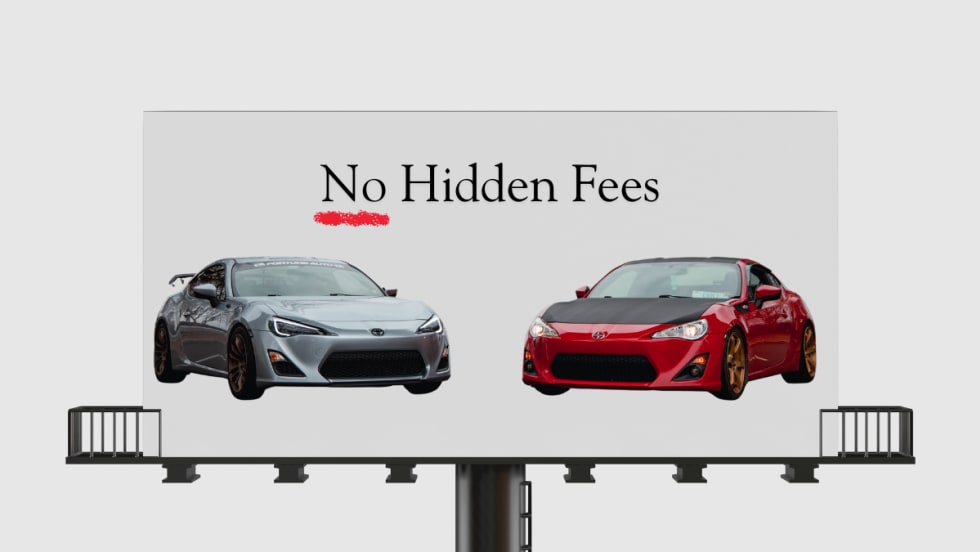
Dealer Ads and the FTC
The agency has made it clear in recent enforcement actions and warnings, in auto retail and other industries, that advertised prices must include all nonoptional costs to the consumer.
Read More →
Used Autos Supply Dwindles
The March shopping surge, despite high prices, cut into inventory by the most since the thick of the pandemic, Cox Automotive analysts calculated.
Read More →
Managing Risk Effectively Through Changing Times
The variables influencing risk pricing have changed significantly over the past five years. Being proactive and responsive to emerging trends is not optional but essential.
Read More →
Survey Reveals What Won't Fix What's Breaking Car Sales
AutoPayPlus says extra-long auto loans are trapping consumers and threatening the dealer trade-in cycle, and that the industry is leveraging the wrong tools to combat high MSRPs.
Read More →
IA American Appoints Two Execs
Senior vice presidents of the company's agent and dealer channels chosen to support general agents and help auto dealers with sales and performance.
Read More →
Cox Automotive Acquires Inspection Firm
Full ownership of Alliance Inspection Management, or AiM, meant to unlock growth for Manheim inspection capabilities
Read More →
Assurant Expands Partnership With Holman
Extended collaboration delivers training, products and performance development to 30 newly acquired Holman dealerships
Read More →
Franchises, Throughput Down in First Half
A handful of states see franchise growth through June, while EV sales per store boost overall business in U.S.
Read More →