



6 Ways Your Dealership Can Benefit by Switching to AP Automation
Forward-thinking dealerships are turning to AP automation solutions that are powered by artificial intelligence to help process and pay invoices more efficiently.


Forward-thinking dealerships are turning to AP automation solutions that are powered by artificial intelligence to help process and pay invoices more efficiently.
IMAGE: Yooz
According to a Cox Automotive Dealership Staffing Study, more than 70% of franchised dealers are finding it challenging to find and hire the right employees—and that include accounts payable (AP) professionals.
But staffing isn’t the only challenge facing the automotive industry when it comes to AP. Indeed, processing stacks of purchases orders, entering hundreds if not thousands of invoices, and hoping that those invoices are received and approved in a timely fashion has been the standard operating procedure at most automobile dealerships for decades.
But it doesn’t have to be. Some forward-thinking dealerships are turning to AP automation solutions that are powered by artificial intelligence (AI) to help process and pay invoices more efficiently. Once the subject of science fiction movies, AI can resolve a multitude of issues experienced by a dealership’s AP department. While many of these issues regularly bog down businesses of any type, some are exclusive to dealerships in the automotive industry.
Auto dealerships present a unique set of AP challenges .
While any business can benefit from a more streamlined approach to AP, auto dealerships present a unique set of challenges that can be easily resolved with the use of automation.
Decentralized AP processing
Dealerships with multiple locations can find processing AP a nightmare. Most dealerships require multiple levels of approvals for invoices, but manual approvals often require sending invoices to multiple locations, often resulting in lost or misplaced documents, delayed approvals, and late payments. Even more painful is the need to collect paper invoices each month from multiple locations and departments—either requiring someone to physically drive around to each one or incurring charges for express shipping them “overnight” at the last minute.
Chronic inventory shortages
Many dealerships earn a considerable percentage of their profit from their parts and service department. Delayed invoice approvals and late payments can result in inventory shortages, which can drive customers elsewhere—a negative impact to a critical revenue stream.
Large stacks of paperwork
Excessive paperwork is commonplace in automobile dealerships, where a single dealership can regularly process thousands of documents each month, making it difficult to stay current. And even after being processed, dealerships must maintain and make accessible copies of all that paperwork for tax and other legal purposes for years to come.
Excessive errors
The more manual data entry you do, the more potential for error exists, especially if dealing with handwritten invoices. Invoices keyed for the wrong amount, duplicate invoices entered for payment, and inaccurate reporting are common when using manual data entry.
Late payments
Everyone likes to be paid on time. But when you cut more than 2,500 checks to vendors and suppliers every month, as auto dealerships frequently do, it’s nearly impossible to pay invoices on time.
What manual processing can cost a dealership.
Levvel Research estimates it can cost more than $15 to process one invoice manually. From the initial processing to the time it takes to obtain the necessary approvals, to payment processing itself, each one of these steps can cost dealerships money.
On the other hand, processing an invoice using an automated AP system costs little more than $2 per invoice. But along with these direct costs, manually processing invoices can cost your dealership and your employees valuable time, with a manual invoice taking as long as 45 days to completely process, whereas AP automation could reduce that time to around five days.
Perhaps one area impacted most by manual AP processing is your parts and services department, which can account for significant portion of your dealership’s revenue. Lost invoices and data entry errors can not only wreck professional relationships with your suppliers and vendors but can delay the shipment of much-needed inventory. And if you don’t have the part a customer wants in stock, they will find a dealership that does.
Other indirect costs of using manual systems can include overworked and overwhelmed employees which often leads to employee burnout. Couple that with the nationwide labor shortage, and you can quickly find your dealership buried under mounds of paperwork, with no one available to process it.
6 ways AP automation can help.
Turning to an AP automation platform powered by AI or help in processing AP offers a lot of benefits for auto dealerships. Depending on the size of the organization, Levvel Research estimates that car dealerships can save as much as 75% of AP costs by switching to an automated system. But the benefits don’t stop at processing invoices. For complete automation, dealerships should consider a payment automation solution as well. The solution should offer hands-off workflows that allows you to select invoices for payment, pay them individually or as a batch, on your own schedule. Your payment solution should also offer multiple payment options including ACH transfer, electronic checks, and even a paper check if you wish. Check out these six ways auto dealerships can benefit from automation.
Better inventory management: Automated AP processing can reduce, or eliminate a variety of issues, such as lost purchase orders, late vendor payments, and invoices paid for the wrong amount, all of which can directly impact inventory.
Reduction in the amount of manual data entry: Mistakes will happen, but the more data an employee is required to enter, the more likely they will make an error. Reducing manual data entry will eliminate most of those mistakes while ensuring that your AP is processed timely and accurately.
Automation of the approval process from start to finish: Manual processes rely on timely availability of key personnel. But when a global pandemic forced dealerships to switch to a remote workforce, those using automated AP processing were able to keep business workflows moving smoothly, thanks in part to the ability to approve and pay invoices remotely.
Reduction in the amount of paper: The pandemic forced many dealerships to look closely at AP automation options, particularly since the ability to process stacks of paperwork in person became nearly impossible. By using AP automation, dealerships were able to process invoices on time and keep their dealership running smoothly.
Simplified location of and access to important documents: One common casualty of manual processing is the high frequency of lost documents. Using an automated AP system allows dealerships to store all their essential documents safely and securely in the cloud while providing easy access to those documents whenever and wherever they need them.
Improved retention of accounting staff: As we said, one of the indirect costs of manual AP processes is the strain they put on overworked AP staff. With nationwide staffing shortages, adopting AP automation can reduce this stress and strain and help dealerships retain the talented staff they already have.
Take control of your dealership with AP automation.
Even with the obvious benefits of AP automation, change is hard, and resistance to change is to be expected. But taking even the first steps towards AP automation can pay dividends sooner than you may think, particularly with staffing.
AP automation can significantly reduce the number of hours your staff spends on busy work such as data entry and filing, freeing them up for more important tasks. Then you’ll be able to say goodbye to missing documents, data entry errors, and late payments for good.
Cody Manning is vice president, sales North America, Yooz Inc
More Digital

Reynolds and RockEd Team Up
Via structured learning journeys and certifications, dealership personnel can get up to speed fast, a key component for success in rapidly changing retail automotive.
Read More →
Dealer Debrief: AI is Judging Your Website
In this week's debrief, host Lauren Lawrence talks about the importance of optimizing your website for AI-powered search as well as SEO.
Read More →
Your Dealership Is Being Judged by AI Search
Car shoppers are asking the tools where to buy, service and trade. The question is whether your dealership is showing up as the answer.
Read More →
Cox Automotive Tool to Streamline Dealership Workflows
The new Navigator offering is designed to work for dealers across the company's technology solutions for time savings and more.
Read More →
DAS Technology Earns Multiple Industry Honors
The company's Power AI Search was recognized for automotive artificial intelligence as .
Read More →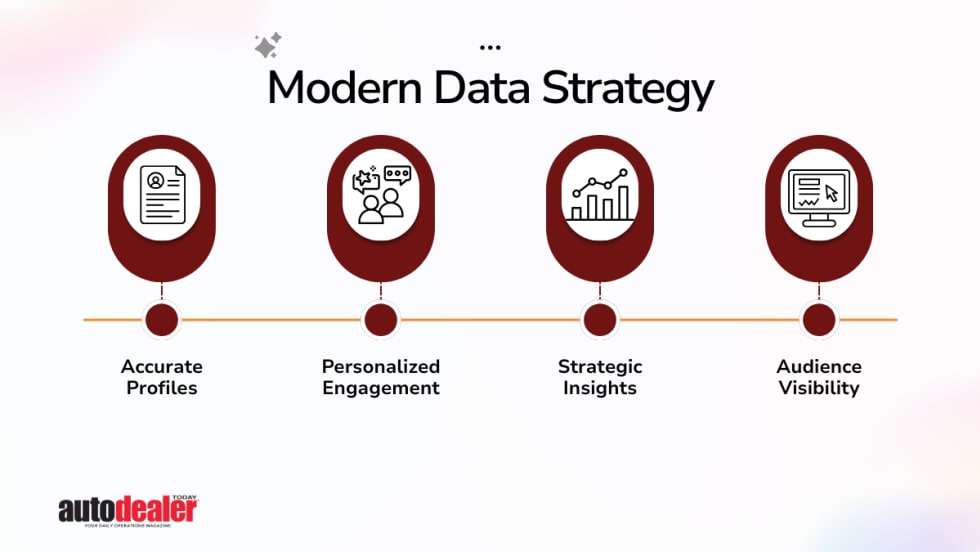
Reduce Fragmentation, Connect Customer Data
Automotive dealerships have the opportunity to reach more consumers by putting their customer data into a unified system, according to a new report.
Read More →
Dealer Debrief: Service Tech Recognition
In this week's debrief, host Lauren Lawrence covers a change to Automotive Service Professionals Month, a dealership acquisition, and a new Lexus rooftop!
Read More →
Dealer Debrief: Manufacturing Meets Demand
In this week's debrief, host Lauren Lawrence covers shifting strategies in the U.S. auto industry and how they reflect the current consumer demand.
Read More →
Trust of Autonomous Cars Not Automatic
A poll of U.S. consumers finds more awareness of the technology but no movement when it comes to relying on it for transportation.
Read More →
Dealer Debrief: New Technician Credential & Vehicles for Change
In this week's debrief, host Lauren Lawrence covers a new ADAS technician credential that is in the works and a partnership between NADA and Vehicles for Change.
Read More →