



Advantages Of Selling Your Receivables v. Holding The Paper
By selling the notes ... dealers receive a discounted amount of the original note and can reinvest it in more inventory...

Why would you consider selling your hard earned BHPH notes? Is there any benefit to selling your notes? Billy Peskin of United Acceptance shared several dealer benefits with us regarding the sale of BHPH notes.
It allows dealers to turn their money faster.
It is a prudent way to solve capitalization issues.
It allows a dealer to focus on selling vehicles not collecting payments.
Reporting customer credit to the bureaus.
It allows dealers to turn their money faster.
The typical BHPH dealer sells a vehicle and waits years to collect his money. By selling the notes after they have seasoned for a few months, dealers receive a discounted amount of the original note and can reinvest it in more inventory.
It is a prudent way to solve capitalization issues.
Capitalization for what? Expanding your operation, investing in your facility, upgrading technology, or even buying out a partner. There are several times in the life cycle of a dealership when cash flow becomes an issue. It’s no different than selling any other asset you own.

It allows a dealer to focus on selling vehicles; not on collecting payments.
Oftentimes dealers are very good at selling, but lack the experience to collect their accounts effectively. Sometimes it is just a factor of growth, too many accounts to collect on for your staff. Companies like United Acceptance have more experience in collecting accounts, knowing what they can and can’t do legally in many states. Dealers selling their aged notes often see a better yield than if they collected the accounts, especially when you factor in the cost of man-power for collection efforts.
Reporting customer credit to the bureaus
Some dealers think this is a benefit; others would disagree. Regardless of which side of the fence you are on, it is a benefit for the customer so there is some value to the dealer that has the availability to provide this service to his best customers. For a small dealer reporting direct is just too much of a hassle. By selling your notes to a company that provides that service, you have an added customer benefit that your competition may not be able to provide.
What would a company like United review in evaluating your portfolio for sale?
Aging – Notes that are 90+ days are optimal, with a 36-month term remaining.
Sold at fair price with legal interest rates
Value of the vehicle compared to the outstanding note is reasonable
Notes are evaluated on a deal-by-deal basis. Dealers tend to be very skeptical the first time through the process, but once they have completed one cycle they are very likely to do it again and again.
Vol 2, Issue 10
More Dealer Ops
How to Avoid Phone Scams | Dealer Debrief 09/10/2026
Are you taking the necessary steps to protect your dealership and customer data from phone-based scams? This week's Dealer Debrief breaks down how!
Read More →
Dealer Debrief: August Auto Sales
Gas-powered engines still dominate the U.S. vehicle market, but hybrids are gaining ground as consumers look for ways to cut their gas costs.
Read More →
Dealership Profits Decline
While new and used retail sales stagnated, dealerships have been particularly supported by fixed operations and finance-and-insurance profits, according to a new report.
Read More →
Dealer Debrief: Defection Data & EV Updates
In this week's debrief, host Lauren Lawrence discusses how to use defection data to your advantage and the latest on EV sales and charging infrastructure.
Read More →
How Defection Data is Bridging the Dealership Conversion Gap
Lead volume is flat, cross-shopping is up and brand loyalty is in retreat. As confident sales teams keep losing buyers they thought they had, daily industry sales data is showing dealers exactly where their funnel is breaking and how to fix it without buying a single new lead.
Read More →
Dealer Debrief: Where are you losing customers?
In this week's debrief, host Lauren Lawrence discusses the hidden leaks in dealerships where you might be losing customers without even realizing it.
Read More →
Dealer Debrief: Improving Your Inventory Management
In this week's debrief, host Lauren Lawrence covers a new survey that shows what service technicians really want and two launches that could help improve your inventory and vehicle life cycle management.
Read More →
Ladies and Gentlemen, This Is a Dealership: Why the Fundamentals Still Decide Who Wins
A teaching moment by a legendary football coach happens to apply perfectly in the auto retail space. Learn what it is and how to use it to your store’s advantage.
Read More →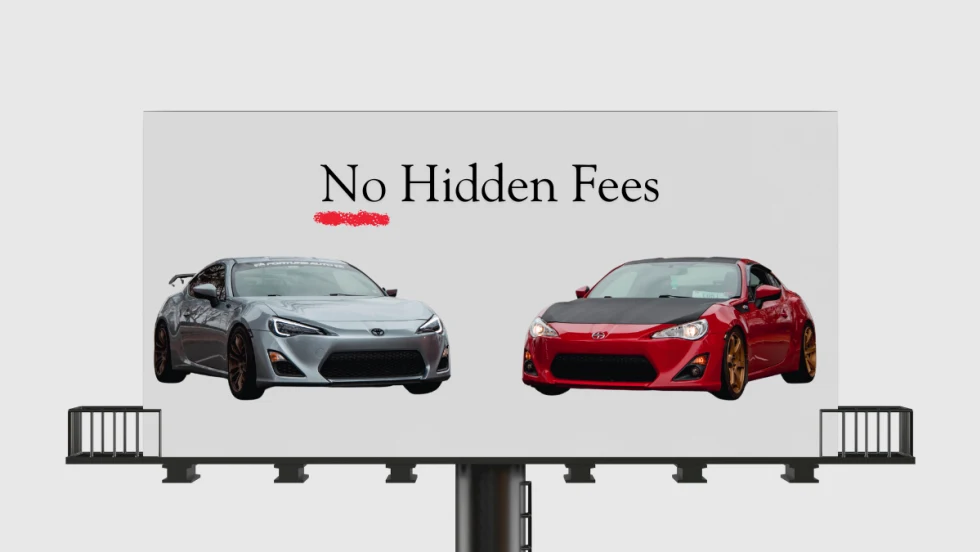
Dealer Ads and the FTC
The agency has made it clear in recent enforcement actions and warnings, in auto retail and other industries, that advertised prices must include all nonoptional costs to the consumer.
Read More →
Used Autos Supply Dwindles
The March shopping surge, despite high prices, cut into inventory by the most since the thick of the pandemic, Cox Automotive analysts calculated.
Read More →