



Class Certification Motion Defeated in "Unauthorized Practice of Law" Case
Thomas B. Hudson, Esq. - In several jurisdictions around the country, dealers have been hit with class action lawsuits alleging that the dealers’ actions in completing legal forms such as buyer’s orders and retail installment contracts constitute...

In several jurisdictions around the country, dealers have been hit with class action lawsuits alleging that the dealers’ actions in completing legal forms such as buyer’s orders and retail installment contracts constitute the practice of law and that, because the dealers and/or their employees are not lawyers, the actions constitute the unauthorized practice of law.
In the world of class action lawsuits, a defendant usually files a motion to dismiss the lawsuit, arguing that the plaintiff hasn’t stated a sufficient claim, and the plaintiff files a motion asking the court to certify that the matter can proceed as a class action. If the dealer defendant can win the first motion, the matter goes away. If the dealer defendant wins the second motion, the lawsuit continues, but not as a class action, making it much less dangerous to the dealer. If the dealer defendant loses both motions, usually the only question left is how many zeroes will appear on the check the dealer writes to settle the case. In this case, the dealer won the second motion.
Robert and Stacy Baker bought a vehicle from Go Toyota Scion Arapahoe and agreed to pay a “dealer handling fee” which represented, according to the retail installment sales contract, “costs and additional profits to the seller for items such as inspections, cleaning, and adjusting new and used vehicles and preparing documents related to the sale.” The contract also included a provision for mandatory arbitration with a class action waiver, but the Bakers did not sign that provision.
The Bakers sued Go Toyota Scion and other dealerships, alleging that the defendants charged them and other car buyers “an illegal fee for preparing legal documents necessary to effectuate the sale of a motor vehicle and that the [d]efendants engaged in the unauthorized practice of law in connection with the purchase or lease of the motor vehicle,” in violation of the Colorado Consumer Credit Code, the Colorado Consumer Protection Act and common law.
The Bakers moved to certify a class of Colorado consumers that financed their vehicle purchases and paid a dealer handling fee to any of the defendants through a retail installment sales contract. The U.S. District Court for the District of Colorado denied the motion for class certification.
The court first concluded that the plaintiffs did not satisfy the “numerosity requirement” (class action rules require that there be enough potential class members to justify proceeding as a class) for class certification. The court stated that the plaintiffs could not use the defendants’ sales volume alone to support numerosity.
The court also found that the plaintiffs did not have standing to contest the provisions of the arbitration agreement and class action waiver because they did not sign that provision in their contract. In other words, the plaintiffs couldn’t represent others unless their experiences reflected the experiences of the others.
Next, the court concluded that the plaintiffs did not satisfy the “commonality requirement” (the situations of the class members needed to be similar) for class certification. With respect to the unauthorized practice of law claim, the court found that each consumer would have to be contacted to determine whether the consumer sought independent legal advice, whether the dealership provided the legal advice, and whether each consumer relied on the advice.
With respect to the arbitration agreement, the court found that it would have to examine each transaction to determine which consumers signed the agreement, and therefore, individual issues of fact existed that precluded class certification. The court also found that certain class members were not eligible for inclusion in the class because they were not “consumers” under the Colorado Consumer Credit Code. Finally, the court concluded that the plaintiffs did not assert sufficient evidence showing that their claims were typical of the proposed class members’ claims and that the plaintiffs were not adequate class representatives.
Dealers in other jurisdictions in which these unauthorized practice of law claims have been filed should find this opinion very helpful.
Vol 6, Issue 1
More Dealer Ops
How to Avoid Phone Scams | Dealer Debrief 09/10/2026
Are you taking the necessary steps to protect your dealership and customer data from phone-based scams? This week's Dealer Debrief breaks down how!
Read More →
Dealer Debrief: August Auto Sales
Gas-powered engines still dominate the U.S. vehicle market, but hybrids are gaining ground as consumers look for ways to cut their gas costs.
Read More →
Dealership Profits Decline
While new and used retail sales stagnated, dealerships have been particularly supported by fixed operations and finance-and-insurance profits, according to a new report.
Read More →
Dealer Debrief: Defection Data & EV Updates
In this week's debrief, host Lauren Lawrence discusses how to use defection data to your advantage and the latest on EV sales and charging infrastructure.
Read More →
How Defection Data is Bridging the Dealership Conversion Gap
Lead volume is flat, cross-shopping is up and brand loyalty is in retreat. As confident sales teams keep losing buyers they thought they had, daily industry sales data is showing dealers exactly where their funnel is breaking and how to fix it without buying a single new lead.
Read More →
Dealer Debrief: Where are you losing customers?
In this week's debrief, host Lauren Lawrence discusses the hidden leaks in dealerships where you might be losing customers without even realizing it.
Read More →
Dealer Debrief: Improving Your Inventory Management
In this week's debrief, host Lauren Lawrence covers a new survey that shows what service technicians really want and two launches that could help improve your inventory and vehicle life cycle management.
Read More →
Ladies and Gentlemen, This Is a Dealership: Why the Fundamentals Still Decide Who Wins
A teaching moment by a legendary football coach happens to apply perfectly in the auto retail space. Learn what it is and how to use it to your store’s advantage.
Read More →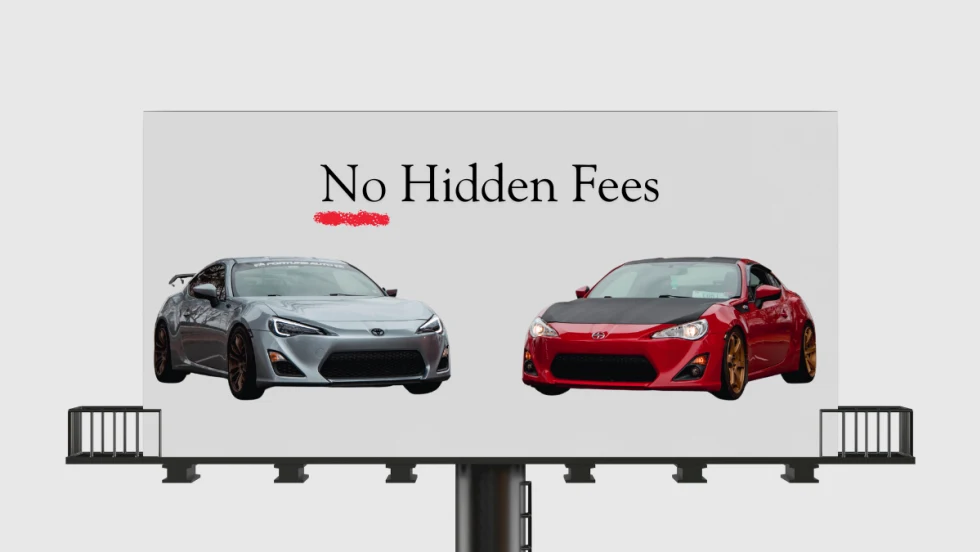
Dealer Ads and the FTC
The agency has made it clear in recent enforcement actions and warnings, in auto retail and other industries, that advertised prices must include all nonoptional costs to the consumer.
Read More →
Used Autos Supply Dwindles
The March shopping surge, despite high prices, cut into inventory by the most since the thick of the pandemic, Cox Automotive analysts calculated.
Read More →