



Controlled Foreign Corporations Generate Long-Term Profits
Kevin Day - During the 12 years I spent as a dealer, it seemed someone was always trying to sell me something. I put my “guards” in place to thwart these avid peddlers, and thus I would avoid most of their sales pitches. However, in doing this I often...

Have you ever been sold a bill of goods and found out later that it wasn’t what it was cracked up to be? I’m sure we all have at one point or another in our lives. During the 12 years I spent as a dealer, it seemed someone was always trying to sell me something. I put my “guards” in place to thwart these avid peddlers, and thus I would avoid most of their sales pitches.
However, in doing this I often missed out on quality products or opportunities because I wouldn’t give these so-called “peddlers” a chance. One of these programs I missed out on was a Controlled Foreign Corporation (CFC) program. I didn’t understand the mechanics of a CFC and missed out on one of the most profitable dealer programs available. I still regret that missed opportunity.
Simply put, a CFC is where a dealer forms an entity offshore and is able to place the reserves for his/her service contract business into it, tax deferred. This scenario has several benefits to it:
1. The dealer controls the assets and risks and his/her own destiny.
2. False claims are less likely with dealer involvement.
3. Used inventory is reconditioned better.
4. CSI improves dramatically.
5. Dealer owns 100 percent of the stock.
6. Profit increases.
7. Dealer receives all of the investment income.
8. There are tax advantages. All income derived from this entity comes back as dividend income and tax isn’t paid until the profits from the entity are taken.
There are still even more benefits to the dealer. This can be compared to buying a home instead of renting one.
Reinsurance is the transfer of risk from one insurance company to another. In the case of a CFC, the first company “cedes” or transfers business to a reinsurance company owned “offshore” by the dealer. This allows the dealer to participate in underwriting profits from his/her business. Profits stem from excesses of premiums over losses and general expenses. These profits are in addition to standard commission generated from the sale of these products in the F&I office. Studies show that dealers on reinsurance programs sell products with much higher penetration ratios versus dealers selling third-party service contracts and/or products. This higher penetration is largely due to the attention the dealer places on the sale of these products, mainly from the focus of the huge profit potential derived from this entity.
One interesting fact about “offshore” reinsurance is there is no law or requirement that company assets be held offshore. Assets can in fact be held in the U.S., making the company subject to U.S. tax kaws. With its complicated structure, it is very important to have updated records and accounting to keep compliant with all IRS requirements. There are many quality companies that provide this service with the set-up of a CFC. However (and this is a big however), there are also a lot of companies to be wary of, as they are behind on reports and lag on legal structure and fees.
If you are forming a CFC, make sure the company you have chosen to help set up the structure has sophisticated data processing systems. These systems need to process all data from the dealership to the CFC and must be able to build custom, on-time reports that analyze a company’s production, losses and other trends. Annually, these companies will provide (at an additional yearly fee) tax professionals to analyze the tax situation and file a U.S. income tax return for the reinsurance company.
I would also caution any dealer venturing into this realm to be wary of variable “ceding” fees. I liken a ceding fee to a dealer document fee. They are often a way for administration and insurance companies to make additional profit when the dealer doesn’t add up the math very carefully. I personally prefer programs that have set administrative fees that already include all ceding fees, so there are no long-term surprises. I have seen a lot of surprised dealers when they actually do the math on their fee structure.
When utilized and set up correctly, a CFC is a very useful tool to build long-term wealth for a dealership. CFC’s are eligible for special tax provisions including “effective” tax rates around 15 percent instead of the normal range (around 35 percent) for a business entity. This lower tax rate can be deferred for several years when the process is used correctly.
I want to warn dealers that a CFC is not for everyone. I was recently at a store where the dealer was only selling an average of ten 3-month/3,000-mile warranty contracts per month that he was ceding into his CFC. After he paid his admin fees, ceding fees and yearly maintenance and accounting fees (not to mention the $5,000 he paid to set up the CFC), he definitely was not coming out ahead on this deal. There needs to be a certain amount of volume associated with a CFC to make it worthwhile; I generally recommend at least 25 service contracts per month plus other ancillary products. There are many different structures available to dealers to accomplish their goals and ambitions. Make sure you are structuring your CFC to meet your needs!
I wish I’d had the knowledge of CFCs when I was a dealer. Had this been the case, I would have a nice retirement package to fall back on now. However, we all learn from our past, and I have learned from mine. Take it from me, if you are in a position to utilize this wonderful tax deferring entity, then do like the Nike commercial says and “Just Do It.”
Vol 5, Issue 12
More Dealer Ops

How to Avoid Phone Scams | Dealer Debrief 09/10/2026
Are you taking the necessary steps to protect your dealership and customer data from phone-based scams? This week's Dealer Debrief breaks down how!
Read More →
Dealer Debrief: August Auto Sales
Gas-powered engines still dominate the U.S. vehicle market, but hybrids are gaining ground as consumers look for ways to cut their gas costs.
Read More →
Dealership Profits Decline
While new and used retail sales stagnated, dealerships have been particularly supported by fixed operations and finance-and-insurance profits, according to a new report.
Read More →
Dealer Debrief: Defection Data & EV Updates
In this week's debrief, host Lauren Lawrence discusses how to use defection data to your advantage and the latest on EV sales and charging infrastructure.
Read More →
How Defection Data is Bridging the Dealership Conversion Gap
Lead volume is flat, cross-shopping is up and brand loyalty is in retreat. As confident sales teams keep losing buyers they thought they had, daily industry sales data is showing dealers exactly where their funnel is breaking and how to fix it without buying a single new lead.
Read More →
Dealer Debrief: Where are you losing customers?
In this week's debrief, host Lauren Lawrence discusses the hidden leaks in dealerships where you might be losing customers without even realizing it.
Read More →
Dealer Debrief: Improving Your Inventory Management
In this week's debrief, host Lauren Lawrence covers a new survey that shows what service technicians really want and two launches that could help improve your inventory and vehicle life cycle management.
Read More →
Ladies and Gentlemen, This Is a Dealership: Why the Fundamentals Still Decide Who Wins
A teaching moment by a legendary football coach happens to apply perfectly in the auto retail space. Learn what it is and how to use it to your store’s advantage.
Read More →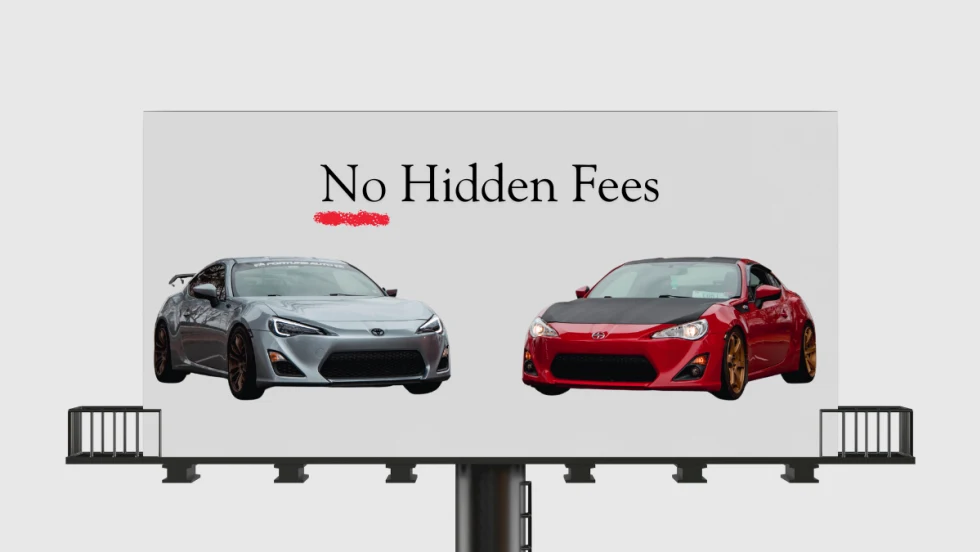
Dealer Ads and the FTC
The agency has made it clear in recent enforcement actions and warnings, in auto retail and other industries, that advertised prices must include all nonoptional costs to the consumer.
Read More →
Used Autos Supply Dwindles
The March shopping surge, despite high prices, cut into inventory by the most since the thick of the pandemic, Cox Automotive analysts calculated.
Read More →