



Dealer Sued Out-Of-State Based On Internet Transaction
Thomas B. Hudson, Esq. - In some states, only specific actions will subject someone from out-of-state to suit, while in others, very minimal contacts...

So you’ve decided that you’ll do business over the Internet, have you? Make sure, if you do, that you understand what the ramifications of that decision. One result may be that someone you sell to over the Internet can haul you into court in a state you’ve never set foot in. How so, you ask? Read on.
Taig Stewart, a Utah resident, sued John Hennesey, a Texas resident doing business in Texas at Hennessey Motorsports, Inc. Stewart brought his suit not in Texas, but in the U.S. District Court for the District of Utah.
It seems that Taig had contacted Hennessey through Hennessey’s Web site and then engaged in e-mail and telephone communications, eventually contracting with Hennessey for custom modifications to a Dodge Viper automobile. The contract was worth $122,500 initially, and the modifications were due to be completed in mid-July 2001. As of the writing of the court’s opinion, the work had not been completed.
In this decision, the court addressed Hennessey’s motion to dismiss the complaint based on lack of personal jurisdiction. Hennessey was essentially saying, “Hey, I’m a Texas business – you can’t sue me in Utah.” In response, Stewart claimed that the court had both general and specific jurisdiction based on Hennessey’s Internet presence and activities conducted over its Web site.

The district court denied Hennessey’s motion to dismiss. The court declined to find “general” jurisdiction, but it did find that Hennessey was subject to “specific” jurisdiction based on the specific transaction between the two parties.
Most states have so-called “long-arm” statutes that provide that persons outside of the state may be sued in the state under certain circumstances. In some states, only specific actions will subject someone from out-of-state to suit, while in others, very minimal contacts will suffice, although even in these states the U.S. Constitution requires that the contacts meet a minimum threshold. The Utah long-arm statute is interpreted as limited only by the due process requirements of the 14th Amendment to the U.S. Constitution.
So next, the court considered the contacts Hennessey had with the state of Utah. The court characterized the level of Hennessey’s Web site activity as falling in the middle of the spectrum between completely passive Web sites and Web sites through which business is conducted and contracts entered into. The court took into consideration the e-mail and telephone communications that culminated in the parties’ contract and ultimately concluded that Hennessey purposely availed himself of the privileges and protections of the state. As a consequence, Hennessey subjected himself to the state’s jurisdiction.
If you’re nervous about being sued out of state based on your Web site and the transactions that it generates, you better schedule an appointment with your friendly local lawyer and have the site and your related operations reviewed with this case in mind.
Stewart v. Hennesey d/b/a Hennessey Motorsports, Inc., 2002 WL 1832840 (D. UT August 2, 2002)
More Dealer Ops

How to Avoid Phone Scams | Dealer Debrief 09/10/2026
Are you taking the necessary steps to protect your dealership and customer data from phone-based scams? This week's Dealer Debrief breaks down how!
Read More →
Dealer Debrief: August Auto Sales
Gas-powered engines still dominate the U.S. vehicle market, but hybrids are gaining ground as consumers look for ways to cut their gas costs.
Read More →
Dealership Profits Decline
While new and used retail sales stagnated, dealerships have been particularly supported by fixed operations and finance-and-insurance profits, according to a new report.
Read More →
Dealer Debrief: Defection Data & EV Updates
In this week's debrief, host Lauren Lawrence discusses how to use defection data to your advantage and the latest on EV sales and charging infrastructure.
Read More →
How Defection Data is Bridging the Dealership Conversion Gap
Lead volume is flat, cross-shopping is up and brand loyalty is in retreat. As confident sales teams keep losing buyers they thought they had, daily industry sales data is showing dealers exactly where their funnel is breaking and how to fix it without buying a single new lead.
Read More →
Dealer Debrief: Where are you losing customers?
In this week's debrief, host Lauren Lawrence discusses the hidden leaks in dealerships where you might be losing customers without even realizing it.
Read More →
Dealer Debrief: Improving Your Inventory Management
In this week's debrief, host Lauren Lawrence covers a new survey that shows what service technicians really want and two launches that could help improve your inventory and vehicle life cycle management.
Read More →
Ladies and Gentlemen, This Is a Dealership: Why the Fundamentals Still Decide Who Wins
A teaching moment by a legendary football coach happens to apply perfectly in the auto retail space. Learn what it is and how to use it to your store’s advantage.
Read More →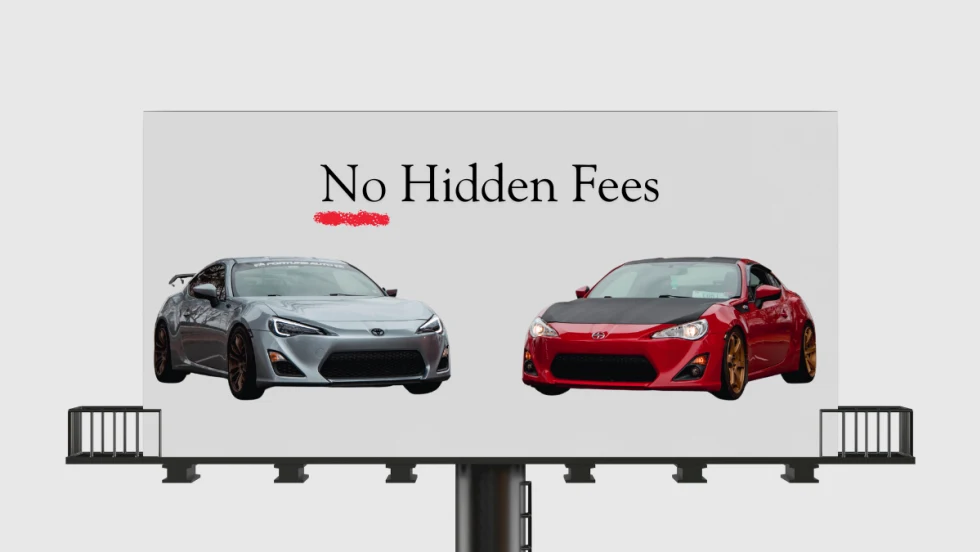
Dealer Ads and the FTC
The agency has made it clear in recent enforcement actions and warnings, in auto retail and other industries, that advertised prices must include all nonoptional costs to the consumer.
Read More →
Used Autos Supply Dwindles
The March shopping surge, despite high prices, cut into inventory by the most since the thick of the pandemic, Cox Automotive analysts calculated.
Read More →