



Drive Your Mobile Strategy to Success
Searches initiated on phones and tablets will soon overtake desktop searches. Are you prepared to deliver a relevant experience to mobile users?

Go mobile or go home! Smartphones and tablets are ubiquitous, and mobile is becoming a significant source for car shoppers’ information needs. In response, dealers are working with Web developers to optimize their mobile sites. If you still think of mobile as a test drive for your online marketing strategy, it may be time to consider a customer-focused model specifically designed for mobile shoppers.
User experience, design flexibility, underlying technology, performance and SEO have all been top of mind for dealers this year. It can be a dizzying endeavor to understand all these elements and how they contribute to delivering the best and most relevant mobile experience. But you can’t fight progress. When Matt Cutts, head of Google’s Webspam team, spoke at SMX (“Search Marketing Expo”) Advanced in Seattle this past June, he indicated that the search engine’s mobile traffic would soon surpass desktop traffic. Will you be ready?
If not, it’s time to have a conversation with your Web developer, and you will want to keep these three imperatives in mind:
1. One Size Does Not Fit All
A debate is raging among Web developers who work within and outside the dealer community. At the center are the technological underpinnings of mobile sites and how they should be engineered for optimal performance. Some have pored over Google’s developer guidelines, hoping to glean the company’s preferred solution — regardless of their client’s goals or the industry in which they work.
When it comes to mobile SEO, dealers need to keep three primary elements in mind: user experience; content quality and relevance; and site speed and performance.
To debunk the myths that surround Google’s developer guidelines, let’s start with the company’s “recommendation” to use a responsive website configuration. Simply put, a purely responsive site — one that serves the same HTML across all devices with only CSS breakpoints modifying the user experience (vs. server-side device detection serving device-specific HTML and CSS) — is not appropriate for all solutions.
Google’s directors acknowledge this. From the guidelines: “We appreciate that, for many situations, it may not be possible or appropriate to use responsive Web design. That’s why we support having websites serve equivalent content using different, device-specific, HTML. The device-specific HTML can be served on the same URL (a configuration called dynamic serving) or different URLs (such as www.example.com and m.example.com).”
Within those mobile recommendations, Google also clearly states that all three mobile site types — responsive, device-specific dynamic serving (a.k.a. “adaptive”) and completely separate desktop/mobile — are considered fully viable options.
At SMX Advanced, the same sentiment was echoed across the convention floor. Cutts clearly stated that all three approaches could absolutely be the “right” solution. The developer guidelines are written for the broadest swath of webmasters — bloggers and those who manage basic websites — and Google’s recommendations are tailored to that user set. But the company recognizes and supports a wide variety of technological solutions and in no way gives preferential treatment in terms of search.

This year’s SMX Advanced featured the head of Google’s Webspam team, Matt Cutts (right, with Mindgeek Canada’s George Konidis). Cutts said mobile searches would soon outpace desktop searches, and that responsive, adaptive and separate mobile sites are all fully viable options for Web developers.
2. Deliver a Relevant Mobile Experience
With Google’s recommendations clarified, let’s take a look at mobile SEO. There are many approaches, but the key elements are all the same: ensuring pages load quickly, creating crawl-friendly, relevant content and optimizing the user experience based on understanding their intent while navigating the mobile site. Some other key technical features include using dynamic serving of content on one set of URLs, ensuring there are no looping or erroneous redirects in place, properly using the Vary HTTP header and making sure canonicals are set up correctly.
Website providers can be successful (from an SEO standpoint) with any of the mobile website technologies, they just need to understand the intricacies of each approach.
We also must realize that the lines between technology approaches are blurring. Some Web developers are realizing the limitations of a purely responsive approach and are now including server-side logic within their responsive strategy (a technology approach known as RESS). Adaptive server-side strategies are even starting to include responsive elements within each device type, to account for the different needs of phone and tablet users.
These more sophisticated and modern approaches are walking the line between code complexity, ease of content deployment and user experience. All are designed to deliver the best and most relevant mobile (and desktop/tablet) experiences possible. Gone are the days of needing to pick one solution and live with its compromises or inefficiencies.
3. Create a Customized Strategy
In some ways, choosing between responsive and adaptive is a lot like choosing a transmission. Which one is better, automatic or manual? It all depends on the application. If you’re buying a basic commuter car, you will probably select an automatic and give up some control for ease of use through constant stops and starts. If you’re buying a high-performance car to carve up the nearest mountain road, stick shift is the way to go.
In another parallel to mobile website technology, vehicle manufacturers are blurring the lines between automatic and manual. They are developing more sophisticated clutchless and dual-clutch transmissions designed to deliver performance and efficiency while not requiring automatic drivers to learn how to drive stick.
When selecting a mobile solution, dealers should be asking questions related to user intent and how much control they have in optimizing the shopper’s experience. They should be focused on site speed and flexibility to deliver relevant mobile content and calls-to-action quickly and efficiently. Most importantly, they should be putting the needs of their business — selling cars and building customer relationships — ahead of any single technology solution.
Bob George and Pete Bruhn are director of product management and product manager, SEO, for Dealer.com. BGeorge@AutoDealerMonthly PBruhn@AutoDealerMonthly.com.
More Digital

Dealerships More Frequent Cybercrook Targets
Analysis of the past year’s activity shows attacks on stores’ networks have surged dramatically as criminals leverage AI’s tools for volume and seeming legitimacy.
Read More →
Reynolds and RockEd Team Up
Via structured learning journeys and certifications, dealership personnel can get up to speed fast, a key component for success in rapidly changing retail automotive.
Read More →
Dealer Debrief: AI is Judging Your Website
In this week's debrief, host Lauren Lawrence talks about the importance of optimizing your website for AI-powered search as well as SEO.
Read More →
Your Dealership Is Being Judged by AI Search
Car shoppers are asking the tools where to buy, service and trade. The question is whether your dealership is showing up as the answer.
Read More →
Cox Automotive Tool to Streamline Dealership Workflows
The new Navigator offering is designed to work for dealers across the company's technology solutions for time savings and more.
Read More →
DAS Technology Earns Multiple Industry Honors
The company's Power AI Search was recognized for automotive artificial intelligence as .
Read More →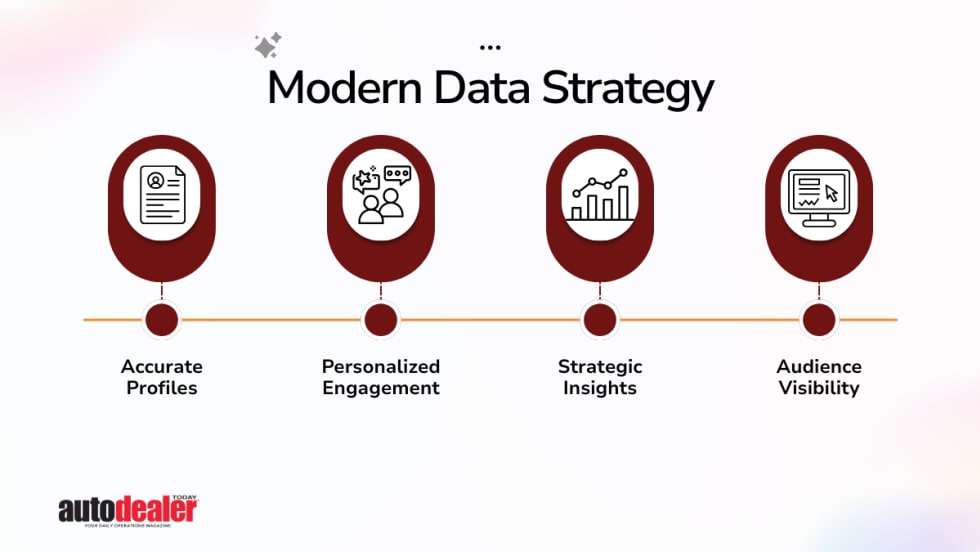
Reduce Fragmentation, Connect Customer Data
Automotive dealerships have the opportunity to reach more consumers by putting their customer data into a unified system, according to a new report.
Read More →
Dealer Debrief: Service Tech Recognition
In this week's debrief, host Lauren Lawrence covers a change to Automotive Service Professionals Month, a dealership acquisition, and a new Lexus rooftop!
Read More →
Dealer Debrief: Manufacturing Meets Demand
In this week's debrief, host Lauren Lawrence covers shifting strategies in the U.S. auto industry and how they reflect the current consumer demand.
Read More →
Trust of Autonomous Cars Not Automatic
A poll of U.S. consumers finds more awareness of the technology but no movement when it comes to relying on it for transportation.
Read More →