



Good Guys Motors Or Snake Pit Motors?
Thomas B. Hudson, Esq. - Both Goodguys and Snakepit need a legal compliance program, constant legal training and ethics workshops. But that's all Snakepit has...

What sort of sales shop do you have at your dealership? Is it the kind of place where the owner and general manager infuse a sense of ethics and decency into the personality of the place, or is it the kind of place that produces high-fives when you have managed to load up a customer with car profit and every item of potential F&I income known to man?
If it is the first sort of shop (we'll call it "Goodguys Motors"), chances are the management teaches that customers should be treated fairly and get real value for their money. There is probably a mantra based on repeat business, customer satisfaction, referral and service. When the rare customer complaint comes in, the presumption is that the customer is right until proven otherwise. Salespeople like to work at the dealership, and turnover is low.
In the second sort of shop (how about we call it "Snakepit Motors"), the emphasis is on maximizing the revenues from the deal at hand, whatever the cost. Customer pressure and even intimidation are the order of the day. Outright fraud is not unusual. Unsophisticated customers are nothing more than sheep who are in need of fleecing. Customer complaints are treated as if the customer is the enemy. If the customer never darkens the door again, so what? Salesperson turnover is high and salesperson satisfaction is low.

When we do dealer compliance reviews, the first thing we try to do is determine the philosophy of the dealership. If the place is a Snakepit Motors, compliance becomes a substantially greater challenge than it is if ethics and decency rule the roost like they do at Goodguys. That's because there's no such thing as a Truth in Lending claim.
Excuse me Tom, did you just say there's no such thing as a Truth in Lending claim?
Yes, that's what I said. It's a bit of an exaggeration, of course. Every now and again a lawyer, law student or paralegal will buy a car and review the paperwork looking for TILA claims (you really don't need to worry about the lawyer, though, since they all buy BMWs and Mercedes Benzes, and TILA doesn't apply to a car finance transaction when the amount financed exceeds $25,000). Everyone else who buys a car signs all the paperwork and goes home and throws it into a drawer.
Until there's a problem.
If the customer chats up her new car purchase at work and finds out that she paid $1,000 more for her Belchfire V-8 than her co-worker down the hall, or if she reads in Consumer Reports that credit insurance is a rip-off, or if she starts thinking that perhaps her etch protection isn't worth $995, or has a mechanical or electronic problem with the car, she will complain to the dealer. If there is no satisfactory response and she gets mad enough about whatever the issue is to see a lawyer, the first thing the lawyer requests is those papers that went into the drawer.
Then the lawyer starts dissecting the credit contract and other documents looking for every technical violation he can find, and you end up on the receiving end of a Truth in Lending claim.
Except it's not really a Truth in Lending claim. It's an "I paid too much for my car" claim, or an "I got ripped off in some other way" claim, or a "my car's not working" claim, or, maybe just an "I'm fighting mad and I'm not going to take it any more" claim. Whatever it is, the Truth in Lending claim is just the stalking horse for the real problem.
Have I digressed? Not really.
At Goodguys, the customer likely received fair treatment to start with, and problems like these are less likely to surface. In the rare case that arises that involves a customer treated unfairly, the Goodguys management fixes the problem and the customer goes away happy.
At Snakepit, all the people involved in the initial transaction with the customer have moved on to other dealerships, and those currently in charge will not give the customer the time of day. With no satisfaction of her problem, the customer caroms off the dealership into her lawyer's office.
Now, both Goodguys and Snakepit need a legal compliance program, constant legal training and ethics workshops. But that's all Snakepit has. The difference between the two shops is that at the end of the day, even the best measures are not nearly as effective as the best compliance program there is - treating customers right. Goodguys has both a compliance program and a well-deserved reputation for treating its customers right. Guess which dealership spends more time fighting off lawsuits?
Vol 2, Issue 4
More Dealer Ops
How to Avoid Phone Scams | Dealer Debrief 09/10/2026
Are you taking the necessary steps to protect your dealership and customer data from phone-based scams? This week's Dealer Debrief breaks down how!
Read More →
Dealer Debrief: August Auto Sales
Gas-powered engines still dominate the U.S. vehicle market, but hybrids are gaining ground as consumers look for ways to cut their gas costs.
Read More →
Dealership Profits Decline
While new and used retail sales stagnated, dealerships have been particularly supported by fixed operations and finance-and-insurance profits, according to a new report.
Read More →
Dealer Debrief: Defection Data & EV Updates
In this week's debrief, host Lauren Lawrence discusses how to use defection data to your advantage and the latest on EV sales and charging infrastructure.
Read More →
How Defection Data is Bridging the Dealership Conversion Gap
Lead volume is flat, cross-shopping is up and brand loyalty is in retreat. As confident sales teams keep losing buyers they thought they had, daily industry sales data is showing dealers exactly where their funnel is breaking and how to fix it without buying a single new lead.
Read More →
Dealer Debrief: Where are you losing customers?
In this week's debrief, host Lauren Lawrence discusses the hidden leaks in dealerships where you might be losing customers without even realizing it.
Read More →
Dealer Debrief: Improving Your Inventory Management
In this week's debrief, host Lauren Lawrence covers a new survey that shows what service technicians really want and two launches that could help improve your inventory and vehicle life cycle management.
Read More →
Ladies and Gentlemen, This Is a Dealership: Why the Fundamentals Still Decide Who Wins
A teaching moment by a legendary football coach happens to apply perfectly in the auto retail space. Learn what it is and how to use it to your store’s advantage.
Read More →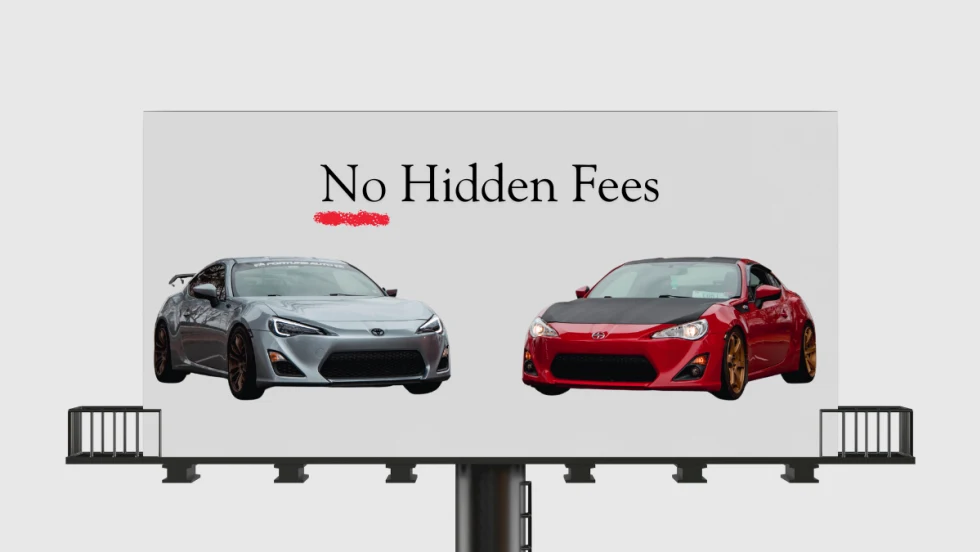
Dealer Ads and the FTC
The agency has made it clear in recent enforcement actions and warnings, in auto retail and other industries, that advertised prices must include all nonoptional costs to the consumer.
Read More →
Used Autos Supply Dwindles
The March shopping surge, despite high prices, cut into inventory by the most since the thick of the pandemic, Cox Automotive analysts calculated.
Read More →