



Let's Get Something Done
Thomas B. Hudson, Esq. - Pick up your buyers order and the retail installment sales agreements you use, and follow along...

I like mowing the lawn. I think it’s because I can actually see the result of my work as the chore progresses. Unlike the paper shuffling I do at work, I actually get a feeling of accomplishment. If you’re a dealer, I’d like to provide you with a compliance chore you can actually do yourself without a lot of effort. Pick up your buyers order and the retail installment sales agreements you use, and follow along. The Uniform Commercial Code (UCC), a version of which is the law in your state, says that when a merchant sells goods, the goods come with two “implied warranties.” Implied warranties are those that arise even when nothing is said or written regarding them. The two implied warranties are the warranty of merchantability (fit for the ordinary purposes for which such goods are used, among other things) and the warranty of fitness for a particular use (when the seller, at the time of sale, knows of a particular use and the buyer is relying on the seller’s skill and judgment to select goods that can be used in such a way).

The UCC, as enacted in most states, permits a seller to “exclude” these implied warranties. If you live in such a state, your buyers order and probably your retail installment sales contracts have language that attempts to exclude these warranties. I say “attempts,” because you have to follow the UCC’s rules if you want to exclude these warranties, and many dealers (or dealers’ lawyers) don’t follow the rules.
An exclusion of implied warranties must be in writing, an exclusion of the implied warranty of merchantability must mention merchantability, and (this is where a lot of folks do it wrong) the exclusion must be “conspicuous,” which the UCC describes, in part, as “in larger or other contrasting type or color.” The UCC says that if the exclusion is not conspicuous, it isn’t enforceable.
How does this work in real life? Let’s take a look at a recent case in which this issue arose.
Walter and Julie Schultz bought a recreational vehicle manufactured by Damon Corporation from General R.V. Center. The Schultzes financed the purchase through Fifth Third Bank.
Unhappy with their purchase, the Schultzes sued Damon, General R.V. and the bank. They alleged that Damon sold them the R.V. in a defective state, that the R.V. was out of service for various repairs on at least five occasions during the first four months of ownership and that the R.V. continued to be in a defective state. The Schultzes asserted a number of claims, including breach of express and implied warranties of merchantability under Michigan law, revocation of acceptance, breach of implied warranties in violation of the Magnuson-Moss Warranty Act and violation of the Michigan Consumer Protection Act. General R.V. and Damon moved for summary judgment.
General R.V. argued that the Schultzes’ breach of warranty, revocation of acceptance, Magnuson-Moss and Michigan Consumer Protection Act claims should be dismissed because it effectively disclaimed all express and implied warranties in the purchase agreement.
The U.S. District Court for the Eastern District of Michigan rejected General R.V.’s argument. The court found that General R.V.’s disclaimer was unenforceable because it was not conspicuous. The purchase agreement was a 2-sided document with the disclaimer language on the second page; it was single-spaced and was not entirely in capital letters. The court contrasted another case where it found a disclaimer to be sufficiently conspicuous. The court stated that the key difference between the disclaimer in this case and the disclaimer in the other case was that the buyer in the other case signed an additional document titled “AS IS DEALER WARRANTY DISCLAIMER.”
We see buyers orders frequently containing these implied warranty exclusions in a type size and font that is no different from the surrounding text. Take a look at your documents, and see whether the language excluding warranties is conspicuous. Is it in all caps if placed in a section that is otherwise “regular” type? Better yet, is it in all caps and bold-faced? If the exclusion language appears in a paragraph that is capitalized, is it distinguished from the surrounding text in any way, such as by appearing in a bold-faced type, different color, or underlined?
If your exclusion language is “conspicuous,” give yourself (or your lawyer, trade association or forms company) an “A+.” If it isn’t, get your lawyer to fix it.
There. You actually accomplished a compliance chore. Feels about as good as finishing the mowing, doesn’t it?
Vol. 3, Issue 7
More Dealer Ops

How to Avoid Phone Scams | Dealer Debrief 09/10/2026
Are you taking the necessary steps to protect your dealership and customer data from phone-based scams? This week's Dealer Debrief breaks down how!
Read More →
Dealer Debrief: August Auto Sales
Gas-powered engines still dominate the U.S. vehicle market, but hybrids are gaining ground as consumers look for ways to cut their gas costs.
Read More →
Dealership Profits Decline
While new and used retail sales stagnated, dealerships have been particularly supported by fixed operations and finance-and-insurance profits, according to a new report.
Read More →
Dealer Debrief: Defection Data & EV Updates
In this week's debrief, host Lauren Lawrence discusses how to use defection data to your advantage and the latest on EV sales and charging infrastructure.
Read More →
How Defection Data is Bridging the Dealership Conversion Gap
Lead volume is flat, cross-shopping is up and brand loyalty is in retreat. As confident sales teams keep losing buyers they thought they had, daily industry sales data is showing dealers exactly where their funnel is breaking and how to fix it without buying a single new lead.
Read More →
Dealer Debrief: Where are you losing customers?
In this week's debrief, host Lauren Lawrence discusses the hidden leaks in dealerships where you might be losing customers without even realizing it.
Read More →
Dealer Debrief: Improving Your Inventory Management
In this week's debrief, host Lauren Lawrence covers a new survey that shows what service technicians really want and two launches that could help improve your inventory and vehicle life cycle management.
Read More →
Ladies and Gentlemen, This Is a Dealership: Why the Fundamentals Still Decide Who Wins
A teaching moment by a legendary football coach happens to apply perfectly in the auto retail space. Learn what it is and how to use it to your store’s advantage.
Read More →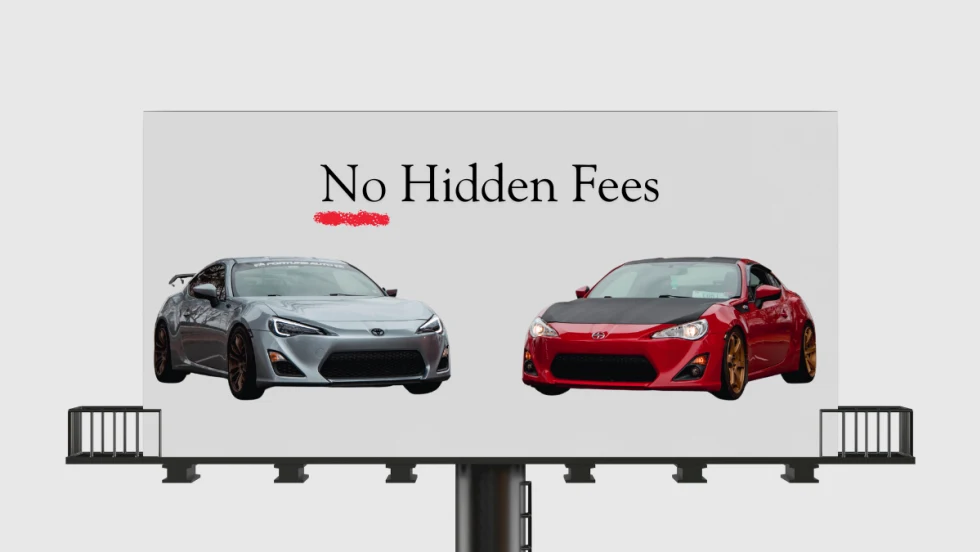
Dealer Ads and the FTC
The agency has made it clear in recent enforcement actions and warnings, in auto retail and other industries, that advertised prices must include all nonoptional costs to the consumer.
Read More →
Used Autos Supply Dwindles
The March shopping surge, despite high prices, cut into inventory by the most since the thick of the pandemic, Cox Automotive analysts calculated.
Read More →