



Managing By The Numbers
A dealership’s financial statement can reveal exactly how it’s perceived in the community. The magazine’s accounting expert identifies the metrics that tell all.


David Keller is a partner with CliftonLarsonAllen, a Top 10 nationwide accounting firm with extensive experience in serving new- and used-vehicle retailers, heavy truck and utility trailer outlets, and BHPH dealerships. Contact him at 314.925.4317. DKeller@AutoDealerMonthly.com
A dealership’s reputation can either hurt or help its financial results. As we all know, a dealership stands out in most communities, especially rural areas. If you treat your customers badly or just don’t care about them, your financial statements are eventually going to show how badly you are doing. Your sales will decrease, your low customer satisfaction scores could possibly hurt your incentive income and your service business will slowly but surely decrease as well.
When I review a dealership financial statement, I look at various expenses and cost-of-sales accounts to try and get a “pulse” of the store. One such account I like to run a detail of is policy expense for parts and service. This account can be a good indicator of how well you are taking care of your customer’s needs. If it is high, then you have some customer satisfaction concerns you need to address. It could be comebacks you had to eat because something wasn’t fixed right the first time. Maybe your diagnosis of the problem was incorrect due to lack of training, or maybe your store lacks the right equipment. Whatever the case, you should be reviewing this account activity each month to find out why you suffered a charge-back.
Pay Now or Pay Later
Another account I look at is unapplied time in cost of sales. If this is high, I try to pin down what’s included in the amount. Is it because you are not charging out your technician’s pay for the actual rate of pay, which includes their normal incentive pay? Or could it be you are just not busy enough?
I will normally look at your historical sales on prior year financial statements to see if your total sales are trending downward, or if just a certain sales segment is decreasing. I will look at the number of repair orders for each period to see if they are also decreasing or if the dollars per RO are decreasing instead. If your service department is not busy, is it because you are struggling with getting customer work fixed the first time and they stop coming back?
Sometimes, I will look at the detail for your cost of sales accounts for used vehicles for a few months. What I look for are entries from parts-and-service tickets charged after the sale of the vehicle. If I find more than a few of these types of tickets, it indicates to me you may not be reconditioning the vehicles well enough, which means customers are probably coming back complaining about something you have to fix to keep them happy. If you add up the entire year and then average it out over the number of retail vehicles you sold, you will get an average reconditioning cost you probablyshould have incurred before you sold the vehicle. Normally, when you have to fix the car after the fact, your sales people don’t share in the cost and it doesn’t reduce the gross you pay them on.
Another thing I look at is your finance chargebacks as it compares to your finance income. If it seems too high, I will review a few months of activity to see how long it took the customer to charge you back. If there are quite a few recent ones where they cancelled various contracts because of buyer’s remorse, your F&I team may be pushing too hard or aren’t explaining the protection clearly enough. Whatever the case, this can be a reputation killer if you don’t watch out.
Reputation Counts
If you aren’t paying some of your vendors in a timely manner, it’s likely your other vendors know about it. This may make them relucant to sell to you, or they may want to charge you a higher price to make up for the delay. Word normally travels very quickly in the car business, and more times than not, more than 50 percent of what is said is nowhere near the actual truth. Since some of this can be harmful to your store and your reputation in the community, you need to protect yourself as much as possible.
These days, I know most dealers go out of their way to treat their customers as a valuable commodity, but some dealers are just better at it than others. And you can tell right away which dealers are better by simply walking around the store. The atmosphere inside a dealership tells all. So, is your store a cheerful place to shop? Does it need a paint job or sprucing up in various areas? Does your service department look grungy and in disarray? Maybe some better storage shelves and workbenches can increase the productivity of the store. Remember, every minute your technicians are looking for something costs you gross profit.
Sometimes a good thorough cleaning is all it takes. Yes, I look at your repairs and maintenance accounts to see what your store is doing on a regular basis, but there is a very direct relationship to what is spent in this area vs. the condition of your store.
Have you ever tried to put on a fresh pair of eyes and walk into your service department as if you were a customer? What do you see? Is it an easy, clean and organized process you offer customers? Do the same in the showroom. Or, imagine you just bought the dealership and you’re looking around for things you’d like to change.
Next, pay your F&I department a visit. If you were sitting in with an F&I manager, ask yourself: Is the process fun or just a dreadful thing to endure? You may want to take it a step further and actually have an F&I manager take you through his or her process so you know what your customers are sitting through. As you can see, there are a lot of things about your store directly linked to your store’s reputation and status in the community. And in most cases, the best gauge for that is your financial statement. Take a look, and let me know what you find.
More Dealer Ops
How to Avoid Phone Scams | Dealer Debrief 09/10/2026
Are you taking the necessary steps to protect your dealership and customer data from phone-based scams? This week's Dealer Debrief breaks down how!
Read More →
Dealer Debrief: August Auto Sales
Gas-powered engines still dominate the U.S. vehicle market, but hybrids are gaining ground as consumers look for ways to cut their gas costs.
Read More →
Dealership Profits Decline
While new and used retail sales stagnated, dealerships have been particularly supported by fixed operations and finance-and-insurance profits, according to a new report.
Read More →
Dealer Debrief: Defection Data & EV Updates
In this week's debrief, host Lauren Lawrence discusses how to use defection data to your advantage and the latest on EV sales and charging infrastructure.
Read More →
How Defection Data is Bridging the Dealership Conversion Gap
Lead volume is flat, cross-shopping is up and brand loyalty is in retreat. As confident sales teams keep losing buyers they thought they had, daily industry sales data is showing dealers exactly where their funnel is breaking and how to fix it without buying a single new lead.
Read More →
Dealer Debrief: Where are you losing customers?
In this week's debrief, host Lauren Lawrence discusses the hidden leaks in dealerships where you might be losing customers without even realizing it.
Read More →
Dealer Debrief: Improving Your Inventory Management
In this week's debrief, host Lauren Lawrence covers a new survey that shows what service technicians really want and two launches that could help improve your inventory and vehicle life cycle management.
Read More →
Ladies and Gentlemen, This Is a Dealership: Why the Fundamentals Still Decide Who Wins
A teaching moment by a legendary football coach happens to apply perfectly in the auto retail space. Learn what it is and how to use it to your store’s advantage.
Read More →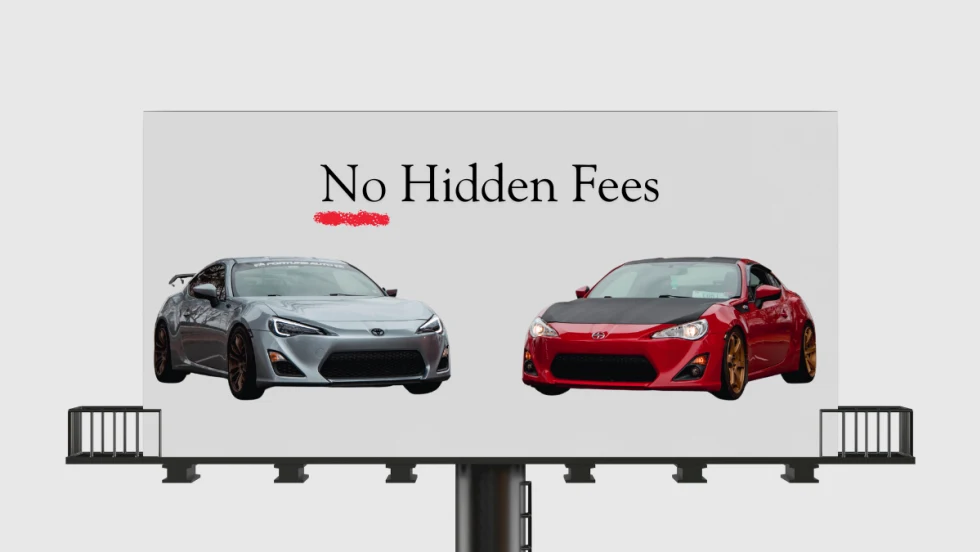
Dealer Ads and the FTC
The agency has made it clear in recent enforcement actions and warnings, in auto retail and other industries, that advertised prices must include all nonoptional costs to the consumer.
Read More →
Used Autos Supply Dwindles
The March shopping surge, despite high prices, cut into inventory by the most since the thick of the pandemic, Cox Automotive analysts calculated.
Read More →