



Price Inventory for Appropriate Gross Profits
At the conventional retail lot, everyone tries to hit a home run on every deal’s gross profit, but pricing BHPH inventory higher to gain additional gross could result in greater losses due to higher collection costs, delinquencies, repossessions and charge-offs. BHPH expert Alan Mosher discusses how to determine an inventory pricing strategy to avoid this risk, a concept he terms “hitting doubles.”

Price Inventory for Appropriate Gross Profits
When it comes to gross profit, at the conventional retail lot everyone tries to hit a home run on every deal. In the dealer-controlled finance (DCF) business, hitting doubles is your goal because gross profit must be viewed in a broader prospective in the DCF business than it is in the retail business. In retail sales, gross profit is a point-of-purchase event, and there is one risk factor associated with gross profit: not having enough of it.
In the DCF business, gross profit is a long-term event, and there are two risk factors associated with it: not having enough and having too much. The “not enough” problem occurs when the gross profits are not sufficient to sustain the company at a profitable level. The “too much” problem occurs when the amount of gross profit is offset by the additional collection expense and delinquency losses it causes. There is a point where every dollar of additional gross profit is offset by the loss of one dollar due to higher collection costs, delinquencies, repossessions and charge-offs. Your vehicles should be priced so you can be profitable, but your profits should not affect your delinquency.
The midway point between grosses that are too low and the collection suicide of excessive gross is the gross profit amount that is one dollar short of causing a contract to extend one day beyond the life of the vehicle. Finding this midway point is what we call “hitting doubles.”
To price inventory appropriately, the person responsible for establishing the selling prices of your inventory should drive the vehicle after reconditioning is completed. Without driving a vehicle, it is very difficult to accurately price it and compare it to other units in inventory. Only after driving the vehicle should its price be established. Then, price the vehicle so it earns a rate of return (ROR) between 80 to 150 percent. The expected ROR varies based on the price of inventory you stock at your dealership. Lower-priced inventory tends to be towards the higher end of the ROR spectrum, perhaps even over 150 percent, while higher-priced inventory will have a lower ROR.
The important point is you should establish an ROR policy as a starting place for your pricing strategy based upon the average inventory cost and profit requirements of your dealership. You should then consider such things as mileage, overall mechanical condition, vehicle appearance and the current market for that type of vehicle in order to make the pricing competitive in your area. Of course, the largest component in pricing a vehicle is the gross profit you need or want to earn on each vehicle. However, when considering the amount of gross profit you want to earn, keep in mind the potential domino effect that could be caused by asking for too much.
Gross profit that is too high can affect in the organization in a way that is practically irreversible. As gross profit increases, so does the amount financed. Since the customers can only afford a certain range of payments, the only way to compensate for this higher amount financed is to increase the length of the contract. At some point the length of the contract will exceed the life of the vehicle. As the vehicle nears the end of its useful life, it will require more repairs. As the repairs to the vehicle increase, delinquency will also increase, as customers will be forced to use their payment money to keep their vehicles operating.
Think back to the one element of delinquency that is never disputed: if the car stops running, the customer stops paying. If you rewrite accounts to assist customers by moving payments to the ends of loans or adding repair expenses to accounts, you’ll further extend lengths of contracts. To control delinquency in this situation, you may be forced to adopt more aggressive collection techniques.
The next alternative is to accept the higher delinquency and repossession rates as part of doing business with this segment of the market. This can cause you to develop an attitude about this kind of customer, and unfortunately, you may convey that attitude to your employees and customers. Additionally, employees may feel stress from having to be an adversary with every customer who comes in to make a payment, and the customers will begin to feel like you are hammering them for payments and have taken advantage of them. And, when the vehicle is paid off, the customer will not want to do business with your company again.
Avoid all this by pricing your inventory right so that your goal is to hit doubles instead of home runs. You can make a lot of money hitting doubles.
More Dealer Ops
How to Avoid Phone Scams | Dealer Debrief 09/10/2026
Are you taking the necessary steps to protect your dealership and customer data from phone-based scams? This week's Dealer Debrief breaks down how!
Read More →
Dealer Debrief: August Auto Sales
Gas-powered engines still dominate the U.S. vehicle market, but hybrids are gaining ground as consumers look for ways to cut their gas costs.
Read More →
Dealership Profits Decline
While new and used retail sales stagnated, dealerships have been particularly supported by fixed operations and finance-and-insurance profits, according to a new report.
Read More →
Dealer Debrief: Defection Data & EV Updates
In this week's debrief, host Lauren Lawrence discusses how to use defection data to your advantage and the latest on EV sales and charging infrastructure.
Read More →
How Defection Data is Bridging the Dealership Conversion Gap
Lead volume is flat, cross-shopping is up and brand loyalty is in retreat. As confident sales teams keep losing buyers they thought they had, daily industry sales data is showing dealers exactly where their funnel is breaking and how to fix it without buying a single new lead.
Read More →
Dealer Debrief: Where are you losing customers?
In this week's debrief, host Lauren Lawrence discusses the hidden leaks in dealerships where you might be losing customers without even realizing it.
Read More →
Dealer Debrief: Improving Your Inventory Management
In this week's debrief, host Lauren Lawrence covers a new survey that shows what service technicians really want and two launches that could help improve your inventory and vehicle life cycle management.
Read More →
Ladies and Gentlemen, This Is a Dealership: Why the Fundamentals Still Decide Who Wins
A teaching moment by a legendary football coach happens to apply perfectly in the auto retail space. Learn what it is and how to use it to your store’s advantage.
Read More →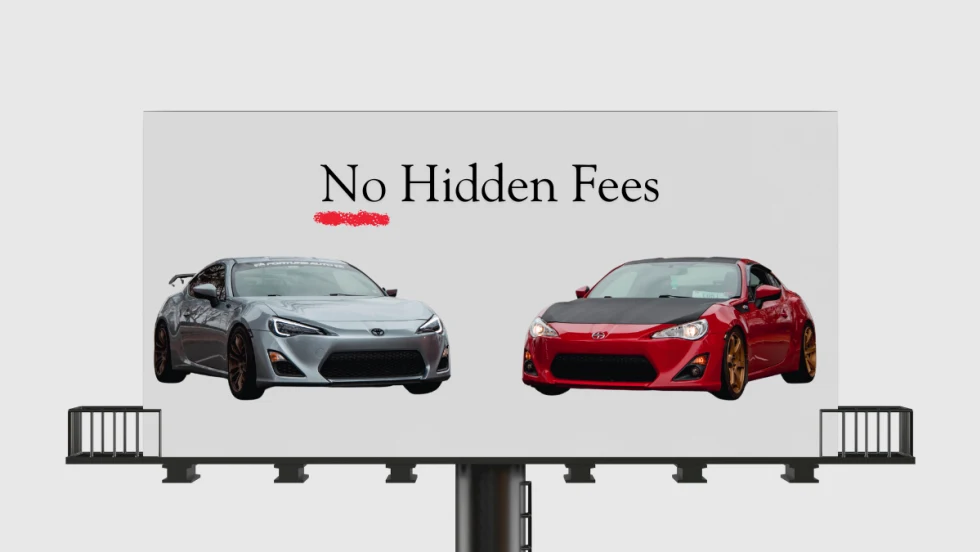
Dealer Ads and the FTC
The agency has made it clear in recent enforcement actions and warnings, in auto retail and other industries, that advertised prices must include all nonoptional costs to the consumer.
Read More →
Used Autos Supply Dwindles
The March shopping surge, despite high prices, cut into inventory by the most since the thick of the pandemic, Cox Automotive analysts calculated.
Read More →