



Removing The Roadblocks
Why do marketers keep talking about the future of auto retailing when there are old issues that have yet to be resolved?

The editor wonders why marketers keep talking about the future of auto retailing, especially when there are old issues that have yet to be resolved.
The battle Google and Facebook are waging to capture consumers’ attention and your marketing dollars is in the spotlight again this month. It’s an exciting time. Everyone is talking about the web and how it can pave the way to a new way of doing business. But let me ask this: How can dealers even consider taking transactions online when their business practices are under the microscope?
I never understood why conversations about the future of auto retailing never include a talk about the regulations that stand in the way of those visions. I guess I’m a little tired of dealers being criticized for not getting with the times.
Right now, the Consumer Financial Protection Bureau (CFPB) is regulating dealer participation through our finance sources. And several of our key partners, including Ally, have reportedly been warned that policies that allow dealers to mark up buy rates on retail installment sales transactions could be in violation of the Equal Credit Opportunity Act. Apparently, the CFPB believes our pricing policies have created a disparate impact on minorities, causing them to pay higher interest rates.
We don’t know what motivated the CFPB to act. In this issue, our back-page columnist, Kelly Wadlinger, takes a stab at how the bureau came to its determina- tion. The CFPB won’t return my calls, so I’m going to assume that consumer advo- cacy groups like the Center for Responsible Lending (CRL) finally made a compelling case against dealer reserve.
If you check the CRL’s website, you’ll see conclusions like, “Analyzing 2009 auto industry data, the average rate markup was $714 per consumer with an average rate markup of 2.47 percentage points.” Amazingly, that 2.47 percentage point average is below what California’s Car Buyer’s Bill of Rights allows for on contracts with terms of 60 months or less.
The CRL also makes this claim: “... the dealer can mark up the interest rate above what the consumer’s credit would qualify for.” If the finance source or the state in which the dealer operates doesn’t cap interest rate markups, they’re right: an F&I manager can do that. But then he or she risks a chargeback once the customer’s bank or credit union finds out what kind of rate the dealer secured for the customer. And as we all know, F&I managers don’t get paid on chargebacks.
The National Automobile Dealers As- sociation (NADA) has its own stats. It took data collected by the Federal Reserve Board and compared it to transaction data collected by J.D. Power and Associates. And according to its findings, consumers who chose dealer financing saved, on average, $635.45 in 2008, $779.40 in 2009 and $1,162.20 in 2010. In total, F&I offices saved consumers $21 billion between 2008 and 2010.
But let’s say the NADA cooked the books. And let’s pretend the CFPB announced that every finance source had to move to flat fees. Well, right now, credit is cheap, finance sources are active and new entrants are popping up every day. All those indicators point to a very competitive market. And if you force them to move to flat fees, all you’re doing is giving them another area in which to compete.
And if finance sources begin competing on dealer compensation, what’s to stop F&I managers from doing exactly what the CFPB is trying to regulate in the mortgage industry by banning certain incentives for brokers?
I also don’t understand why the CFPB hasn’t considered those lawsuits from early last decade, when a number of captives faced similar charges of discrimina- tion. The captives settled, but out of those cases came a court accepted standard for markups. It’s the same standard California adopted in its Car Buyer’s Bill of Rights: 2 percent of the purchase amount for contracts with a term of more than 60 months, and 2.5 percent for contracts with a term of 60 months or less.
Back in 2007, Sen. Elizabeth Warren (D-Mass.) made this comment when she first threw out the idea of creating a new regulator: “Many of the disclosure forms are nonsense. ... Worse yet, there is so much required fine print that most people get lost in it.”
Folks, it’s time we remind the bureau of that statement, because Sen. Warren is right: Consumers simply can’t read these disclosure-heavy contracts. Even worse, they don’t pay attention to what’s important because they’re so focused on all of that legalese.
Look, to me, financial literacy is the real problem here. It’s too bad the CFPB is focused on things that have already been questioned and scrutinized. What it needs to do now is put all of the regulations on the table, review them and figure out what’s working and what’s not. And until that happens, I really don’t want to hear another marketer pontificating about the future of auto retailing. It’s simply a waste of everyone’s time.
More Digital

TecAssured Expands Payment Capabilities
A new integration with ConnexPay is designed to give third-party administrators, agencies and dealers faster, more flexible payment options, improve efficiency and create profit opportunities.
Read More →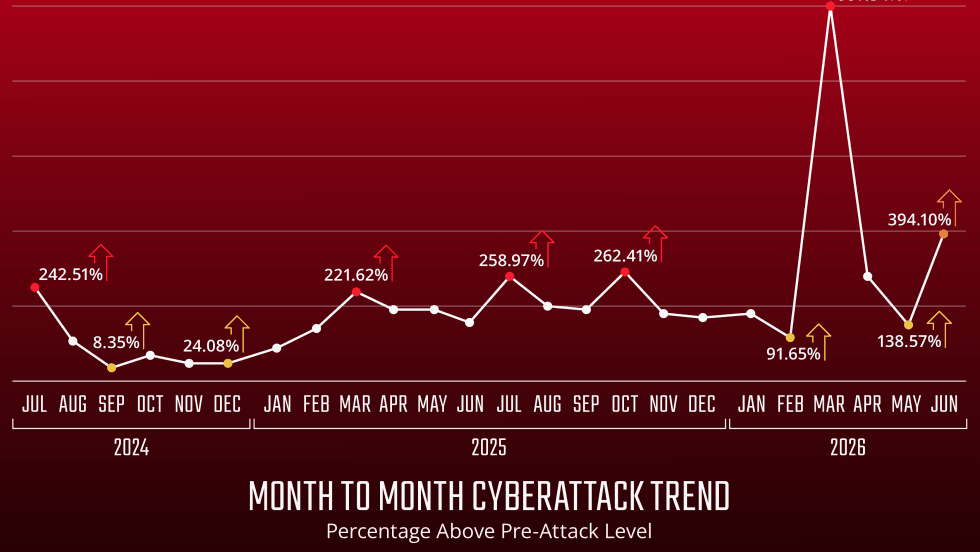
Dealerships More Frequent Cybercrook Targets
Analysis of the past year’s activity shows attacks on stores’ networks have surged dramatically as criminals leverage AI’s tools for volume and seeming legitimacy.
Read More →
Reynolds and RockEd Team Up
Via structured learning journeys and certifications, dealership personnel can get up to speed fast, a key component for success in rapidly changing retail automotive.
Read More →
Dealer Debrief: AI is Judging Your Website
In this week's debrief, host Lauren Lawrence talks about the importance of optimizing your website for AI-powered search as well as SEO.
Read More →
Your Dealership Is Being Judged by AI Search
Car shoppers are asking the tools where to buy, service and trade. The question is whether your dealership is showing up as the answer.
Read More →
Cox Automotive Tool to Streamline Dealership Workflows
The new Navigator offering is designed to work for dealers across the company's technology solutions for time savings and more.
Read More →
DAS Technology Earns Multiple Industry Honors
The company's Power AI Search was recognized for automotive artificial intelligence as .
Read More →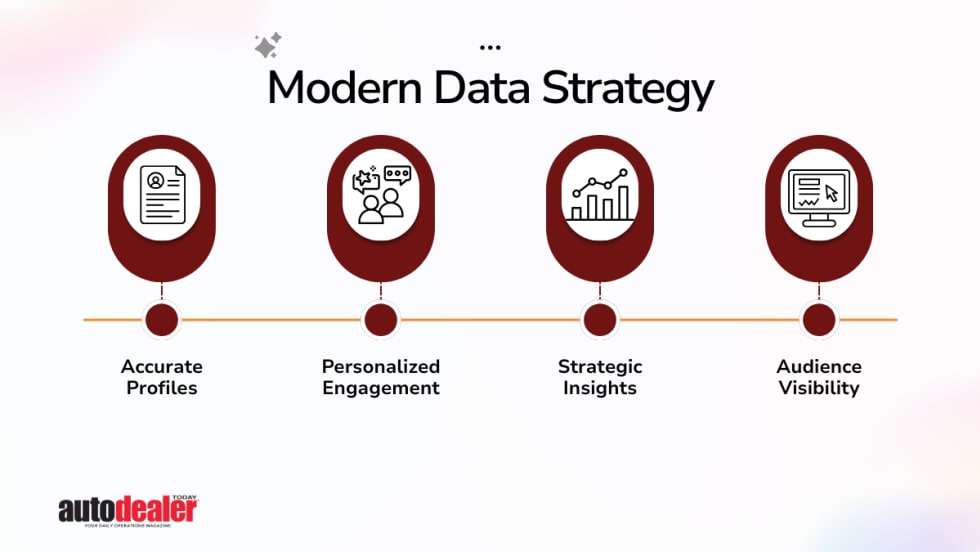
Reduce Fragmentation, Connect Customer Data
Automotive dealerships have the opportunity to reach more consumers by putting their customer data into a unified system, according to a new report.
Read More →
Dealer Debrief: Service Tech Recognition
In this week's debrief, host Lauren Lawrence covers a change to Automotive Service Professionals Month, a dealership acquisition, and a new Lexus rooftop!
Read More →
Dealer Debrief: Manufacturing Meets Demand
In this week's debrief, host Lauren Lawrence covers shifting strategies in the U.S. auto industry and how they reflect the current consumer demand.
Read More →