



Service and Parts – More Gross or Less Expense To Obtain Profitability?
Author and CPA Dave Keller examines the best way to increase profitability in the parts and service departments.

Are you wondering how you can increase your parts and service departments’ net profitability? Some of the factors that affect profitability are sales, cost of sales, management and technicians’ abilities, number of technician stalls available, number of hours each technician turns, and expenses.
Gross profit is simply sales less cost of sales. Sales are generated from customer retail, warranty, extended warranty, sublet, internal and maintenance repair orders. Cost of sales has a direct relationship to sales. In service, it is the technician’s cost per hour they are paid, either in hourly, salary or flat-rate time. In parts sales, it is the cost of the parts you purchase for the repair order.
Management’s ability plays a key part in profitability. If your technicians are not supervised, if repairs are not scheduled properly among the techs, if customer follow-up is not a high priority, etc., then service and parts will have a lower chance of being profitable.
Technician’s ability, number of stalls available and the number of hours each of your technicians produces will greatly affect your ability to be profitable. You can have too many stalls for your current sales, which increases your overhead unnecessarily. Too few stalls will result in not being able to complete all the work you have available, resulting in unhappy customers (retail and/or internal) and unnecessary expense moving vehicles in and out of the shop before the repairs are completed.
If your techs are not trained properly, or have too few years of experience in ride, drive and diagnostic capabilities, the number of hours sold will be below what would normally be produced in most profitable repair shops. If you do not concentrate on upselling, which is normally generated from inspecting the customer vehicles when they arrive at your shop for maintenance or repairs, your average hours per repair order will also suffer. Check to see how many one-line repair orders you have generated over the last three months. Most were probably oil changes, and you may have been so busy you did not have or did not take the time to perform adequate inspections of the vehicles to recommend further service while they were in your shop.
The amount of maintenance repairs is increasing because vehicles are lasting longer. With this in mind, you need to market yourself similar to the way the other maintenance shops in your town are promoting themselves. You have to have competitive, tiered pricing based on the type of repair, loss leaders, etc., if you are going to get your fair share of the business. Customers still seem to think dealerships are much more expensive places to get their vehicles maintained than the smaller shop down the street. It is up to you to dispel this thought.
Charging retail prices to yourself for all internal sales is also very important, since you are your own best customer. Your managers and salespeople will argue that it can be repaired cheaper down the street at another shop and you are cheating them out of potential gross profit. The only answer I would give them is this: When your name is on the building, you can take the vehicle down the street to repair it. Until then, retail prices from our own shop will be charged to the vehicles for reconditioning and detailing. This only makes sense, as your service and parts gross profit helps cover a tremendous amount of your total overhead.
For internal repairs, the minimum service labor gross profit should be 70 percent, sublet repair should be 15 percent and parts gross profit should be at least 40 percent. I have yet to see where increasing the internal gross profit from substandard grosses to the minimum grosses described above reduces the commissionable gross profit that sales commissions are based on. Normally, we see when internals are priced to achieve the above-minimum grosses, the average gross profit on the vehicle increases.
Now, what do you do to have profitable parts and service departments? Increasing sales, lowering cost of sales and expenses, having the right managers, and having fully-trained techs with the right number of stalls available, will all result in a higher net profit in the service and parts departments.
Expenses are a large part of your key to profitability in parts and service. You can generate all the gross you want, but if you don’t control your expenses, the gross profit can be overwhelmed, leaving you with little or no net profit.
Fixed expenses are expenses that are not directly tied to the production of sales, such as rent, utilities, telephone, administrative salaries, employee benefits, real estate taxes, data processing, legal and accounting, depreciation, owner(s) salaries, payroll taxes, insurance, etc. For example, rent would not normally increase just because you sold a few more cars or produced extra repair orders in a month.
Selling expenses are those directly related to the production of sales, such as service advisors’ pay, payroll taxes, absentee compensation, shop supplies, equipment repairs, advertising, training, data processing, uniforms, health insurance, workman’s compensation, etc. Paying your managers and techs bonuses on how well expenses are controlled can help you achieve lower expenses that may not necessarily increase as your sales increase.
Since net profit is the ultimate goal you want to achieve, then expense control is just as important as producing gross profit. Normally you should generate approximately $1 of service sales for every $1 of parts sales. The combined average gross profit will be approximately 50 percent of every dollar in total parts and service sales you generate. For example, if your total combined sales are $50,000 per month, you should generate approximately $25,000 in gross profit. To be profitable, your expenses would have to be less then $25,000. How profitable you are depends on how well you manage your expenses.
Remember, to produce $1 of gross profit you have to generate $2 in sales, while saving $1 of expense achieves the same result. Try both.
Vol. 9, Issue 7
More Dealer Ops
How to Avoid Phone Scams | Dealer Debrief 09/10/2026
Are you taking the necessary steps to protect your dealership and customer data from phone-based scams? This week's Dealer Debrief breaks down how!
Read More →
Dealer Debrief: August Auto Sales
Gas-powered engines still dominate the U.S. vehicle market, but hybrids are gaining ground as consumers look for ways to cut their gas costs.
Read More →
Dealership Profits Decline
While new and used retail sales stagnated, dealerships have been particularly supported by fixed operations and finance-and-insurance profits, according to a new report.
Read More →
Dealer Debrief: Defection Data & EV Updates
In this week's debrief, host Lauren Lawrence discusses how to use defection data to your advantage and the latest on EV sales and charging infrastructure.
Read More →
How Defection Data is Bridging the Dealership Conversion Gap
Lead volume is flat, cross-shopping is up and brand loyalty is in retreat. As confident sales teams keep losing buyers they thought they had, daily industry sales data is showing dealers exactly where their funnel is breaking and how to fix it without buying a single new lead.
Read More →
Dealer Debrief: Where are you losing customers?
In this week's debrief, host Lauren Lawrence discusses the hidden leaks in dealerships where you might be losing customers without even realizing it.
Read More →
Dealer Debrief: Improving Your Inventory Management
In this week's debrief, host Lauren Lawrence covers a new survey that shows what service technicians really want and two launches that could help improve your inventory and vehicle life cycle management.
Read More →
Ladies and Gentlemen, This Is a Dealership: Why the Fundamentals Still Decide Who Wins
A teaching moment by a legendary football coach happens to apply perfectly in the auto retail space. Learn what it is and how to use it to your store’s advantage.
Read More →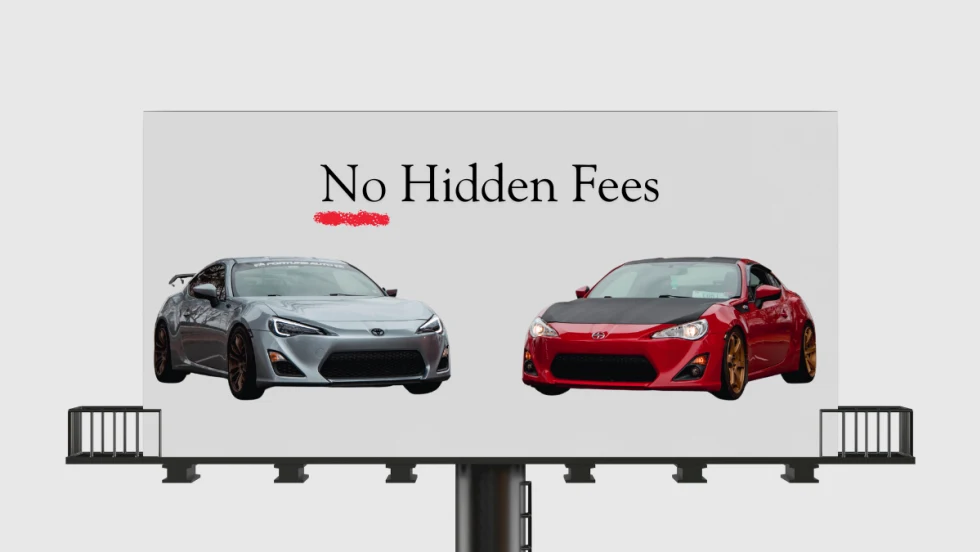
Dealer Ads and the FTC
The agency has made it clear in recent enforcement actions and warnings, in auto retail and other industries, that advertised prices must include all nonoptional costs to the consumer.
Read More →
Used Autos Supply Dwindles
The March shopping surge, despite high prices, cut into inventory by the most since the thick of the pandemic, Cox Automotive analysts calculated.
Read More →