



Signal-to-Noise Ratios: Online Employment Information Fights For Attention
Justin Spath - This ... is a fundamental problem with employee relations practices at many automotive dealerships. We lose employees and have trouble finding new ones because ...

A while back, I looked through the dealership Web sites being reviewed for Auto Dealer Monthly’s 2008 Internet Achievement Awards. Being a human resource professional, I was drawn to the employment sections particularly. Often, what I found was that the employment sections were difficult to find. On many of the Web sites, it was difficult to find any useful information. Fundamentally, it came down to a signal-to-noise problem.
“Signal-to-noise” is a term that originally came out of electrical engineering that references the power of a signal to the power of noise corrupting it. It has since been broadened to cover pretty much any measurement or transmission system. Think about tuning your radio into a station. As you turn the dial, you zero in on the music (signal) and avoid the static (noise).
In the case of Web sites, it means that the information (signal) I was looking for, the employment section, was difficult to find because of all the other information, financing section, prices, car images, etc. (noise). Of course, on a dealership Web site, all of this “noise” is necessary, but in the context of finding the employment section, it was a problem.
This example illustrates what I think is a fundamental problem with employee relations practices at many automotive dealerships. We lose employees and have trouble finding new ones because we let the signal potential employees are searching for get lost among the noise of everything else. Now, I'll admit I'm probably biased because I work in HR, but to me, getting the signal out about working for you is highly important. Simply put, good employees make for a good business, so to find and keep good employees, you’ll need a better signal-to-noise ratio.
So how can you make sure that your employment signal doesn't get lost among the noise? It can be achieved by applying a few principles.
1. Be Aware of the Environment
Commonly in scientific measurement, one of the biggest problems in getting accurate results is the environment. Wind, temperature, vibrations and contamination can all cause problems. This same thing applies to your dealership in comparison to how you treat current employees and recruit new ones.
Problems like audits, big sales, upset customers, increasing gas prices, lack of customers, etc., can all impact your employment practices. Can you control all of those things? Obviously not, but being aware of them can help you minimize their influence. Once you're aware of the environment, you can move on to number two
2. Filter the Noise
Think about sitting in a crowded restaurant or bar with some friends. In addition to you and your friends, there are 100 other people talking in the same room and yet you still manage to have a conversation. This is because you learn to filter the noise (other conversations) from the signal (your conversation). In our context, this means knowing when to focus on employees and when to focus on everything else. If it’s time for your employee’s annual review, focus on it and don’t let yourself get distracted by those new marketing reports or the shiny demo in the showroom.
By filtering out the noise and focusing on the employee’s issue, you show where your priorities are. Employees notice these kinds of actions and respond to them. When your employees know that you will give them the attention they need, you will see your retention rates improve. After filtering the noise you can start on number three.
3. Increase Signal Power
The second way to improve your signal-to-noise ratio is to increase the signal power. If you increase the power of the signal without a corresponding increase in noise, you'll have a better ratio. In the areas we are talking about, this means that you need to put more energy behind maintaining best practices in employment. For example, make sure the employment section of your Web site is easily accessible from the homepage and spend more time training employees, offering help or just listening to the things employees tell you.
Make sure your employees know that you recognize their importance, especially new hires. This could take the form of formal recognition programs, bonuses, or even just the standard “good job.” If they see you taking the time to focus on them, they’ll be much more willing to give back to you as their manager and to the dealership as a whole.
Retaining good employees and attracting new ones are complex tasks, but these three principles, applicable in almost any field where signal-to-noise is an issue, are not. We need to remember that the number-one reason an employee leaves a company is because they are having problems with their manager.
No manager tries to actively ignore his or her employees, but because the noise of everyday dealership operations can overwhelm us at times, managers can lose the employees’ signals. If you find yourself in the position of listening to more static than you do music, establishing a better signal-to-noise ratio needs be a priority.
Vol 5, Issue 9
More Dealer Ops
How to Avoid Phone Scams | Dealer Debrief 09/10/2026
Are you taking the necessary steps to protect your dealership and customer data from phone-based scams? This week's Dealer Debrief breaks down how!
Read More →
Dealer Debrief: August Auto Sales
Gas-powered engines still dominate the U.S. vehicle market, but hybrids are gaining ground as consumers look for ways to cut their gas costs.
Read More →
Dealership Profits Decline
While new and used retail sales stagnated, dealerships have been particularly supported by fixed operations and finance-and-insurance profits, according to a new report.
Read More →
Dealer Debrief: Defection Data & EV Updates
In this week's debrief, host Lauren Lawrence discusses how to use defection data to your advantage and the latest on EV sales and charging infrastructure.
Read More →
How Defection Data is Bridging the Dealership Conversion Gap
Lead volume is flat, cross-shopping is up and brand loyalty is in retreat. As confident sales teams keep losing buyers they thought they had, daily industry sales data is showing dealers exactly where their funnel is breaking and how to fix it without buying a single new lead.
Read More →
Dealer Debrief: Where are you losing customers?
In this week's debrief, host Lauren Lawrence discusses the hidden leaks in dealerships where you might be losing customers without even realizing it.
Read More →
Dealer Debrief: Improving Your Inventory Management
In this week's debrief, host Lauren Lawrence covers a new survey that shows what service technicians really want and two launches that could help improve your inventory and vehicle life cycle management.
Read More →
Ladies and Gentlemen, This Is a Dealership: Why the Fundamentals Still Decide Who Wins
A teaching moment by a legendary football coach happens to apply perfectly in the auto retail space. Learn what it is and how to use it to your store’s advantage.
Read More →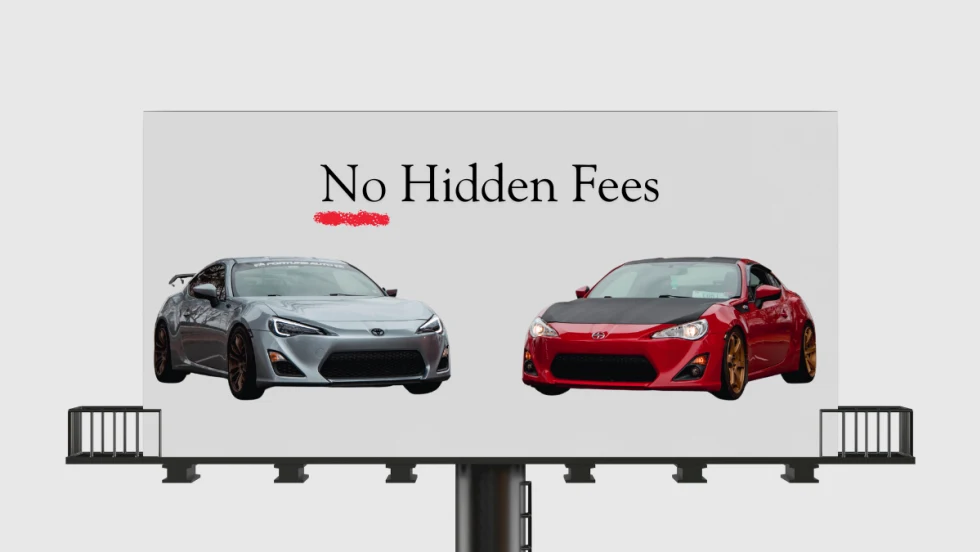
Dealer Ads and the FTC
The agency has made it clear in recent enforcement actions and warnings, in auto retail and other industries, that advertised prices must include all nonoptional costs to the consumer.
Read More →
Used Autos Supply Dwindles
The March shopping surge, despite high prices, cut into inventory by the most since the thick of the pandemic, Cox Automotive analysts calculated.
Read More →