



Sucker Pricing
Thomas B. Hudson, Esq. - With the exception of limits on the rate of finance charge in financing transactions imposed by most states ...

Pricing, especially in the used car business, generally isn’t regulated. With the exception of limits on the rate of finance charge in financing transactions imposed by most states, caps on credit insurance, and in a few states, limits on GAP, doc prep fees and service contracts, a dealer is free to price its cars, and any related goods or services, as it pleases. The sky is the limit, and the price of things is limited only by the bargaining savvy of the buyer.
A buyer who has bargaining skills and who is willing to use them might pay hundreds, and perhaps thousands, less for his or her car, and might save hundreds more on the purchase of a service contract, GAP, “etch,” and all the other “soft-adds” that some dealers push.
What about the buyer who doesn’t have those bargaining skills, or, perhaps, the willingness to use them? That buyer will end up paying $995 for the $395 service contract, $750 for the $250 GAP contract, and so on.
“So what?” you ask. It’s a free country, and a free market. The buyer was willing to pay our price. What’s the problem?
Well, consumer advocates will claim that charging way too much for a product or service – a practice that they call “sucker pricing” - violates a state’s unfair and deceptive trade practices law or the Uniform Commercial Code’s covenant of good faith and fair dealing. But, except in the most extreme cases, these tend not to be winning arguments.

So the dealer would probably prevail against these arguments, all things being equal. But there’s a chance that the dealer will not end up on a level playing field when he appears in court. In a court, there’s always the possibility that a judge will apply “Tom’s Law.” What’s Tom’s Law?
I’ve always been a cynic. In law school, the professors taught us that judges and juries apply precedents and various applicable theories of law to come to their decisions. I don’t believe it. I think that when judges and juries get a sense that one party or the other should prevail, they go searching for whatever precedents and legal theories they need to support the result that they feel is right. Tom’s Law.
Tom’s Law is what happens when the judge decides that the dealer really took advantage of the buyer by hammering him or her on the price of the car and the related goods and services. The judge may not rule that high prices, standing alone, are in violation of any law or regulation, but that’s not the point. When the judge gets that odor of “sucker pricing,” or other perceived dealer misdeeds, suddenly the rules change.
All of a sudden, the plaintiff’s arguments that the dealer has violated highly technical rules and laws begin to sound reasonable to the judge. Rulings on procedural issues and whether evidence can be admitted begin to favor the buyer. The buyer becomes the home team, and the dealer is definitely the away team. The result is sometimes obvious, sometimes subtle, but it’s there.
According to opinion polls, auto dealers are not generally held in high regard even in the best of times, so car dealers don’t need any additional handicaps when they appear in court. So you can engage in sucker pricing or other sharp practices if you want, but be prepared to pay the price if you do. Tom’s Law.
More Dealer Ops
How to Avoid Phone Scams | Dealer Debrief 09/10/2026
Are you taking the necessary steps to protect your dealership and customer data from phone-based scams? This week's Dealer Debrief breaks down how!
Read More →
Dealer Debrief: August Auto Sales
Gas-powered engines still dominate the U.S. vehicle market, but hybrids are gaining ground as consumers look for ways to cut their gas costs.
Read More →
Dealership Profits Decline
While new and used retail sales stagnated, dealerships have been particularly supported by fixed operations and finance-and-insurance profits, according to a new report.
Read More →
Dealer Debrief: Defection Data & EV Updates
In this week's debrief, host Lauren Lawrence discusses how to use defection data to your advantage and the latest on EV sales and charging infrastructure.
Read More →
How Defection Data is Bridging the Dealership Conversion Gap
Lead volume is flat, cross-shopping is up and brand loyalty is in retreat. As confident sales teams keep losing buyers they thought they had, daily industry sales data is showing dealers exactly where their funnel is breaking and how to fix it without buying a single new lead.
Read More →
Dealer Debrief: Where are you losing customers?
In this week's debrief, host Lauren Lawrence discusses the hidden leaks in dealerships where you might be losing customers without even realizing it.
Read More →
Dealer Debrief: Improving Your Inventory Management
In this week's debrief, host Lauren Lawrence covers a new survey that shows what service technicians really want and two launches that could help improve your inventory and vehicle life cycle management.
Read More →
Ladies and Gentlemen, This Is a Dealership: Why the Fundamentals Still Decide Who Wins
A teaching moment by a legendary football coach happens to apply perfectly in the auto retail space. Learn what it is and how to use it to your store’s advantage.
Read More →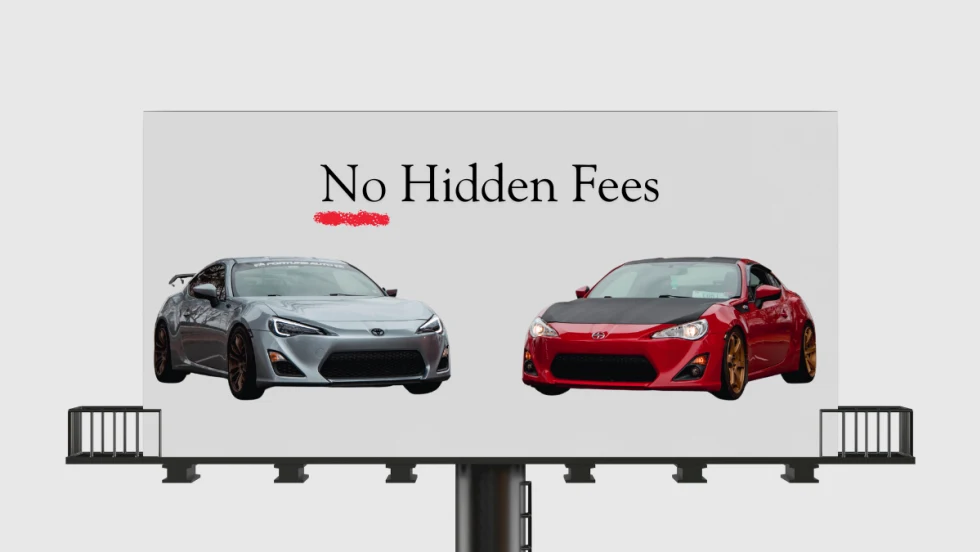
Dealer Ads and the FTC
The agency has made it clear in recent enforcement actions and warnings, in auto retail and other industries, that advertised prices must include all nonoptional costs to the consumer.
Read More →
Used Autos Supply Dwindles
The March shopping surge, despite high prices, cut into inventory by the most since the thick of the pandemic, Cox Automotive analysts calculated.
Read More →