



Tariff Tiff Examined
Some auto industry leaders are taking a relaxed view of the U.S.-Canada trade war while others worry that a dramatically adjusted playing field could mean too much collateral damage.


The Toyota RAV4 is among multiple models popular in the U.S. that are made in Canada, a Cox Automotive analyst says.
Toyota
U.S. auto dealers, with their Teflon way of slipping through one economic disaster after another, may have been more nervous than usual when President Donald Trump announced the first U.S. trade tariffs of his new presidency last year.
Now that he’s planned eye-popping 50% tariffs on Canadian imports and Canada has struck back with the same, one might think dealers’ anxieties had ticked up several notches. But they’ve actually receded.
While various corners of the auto industry on both sides of the border have decried the turn of events, saying it threatens the two countries’ economies – in particular their intertwined auto industries – others are taking a more wait-and-see approach. Many dealers in fact seem to think they’ll come out fine on the other side of the trade war.
An August Cox Automotive poll of franchised and independent dealers showed that concern about tariffs had waned and unconcern grown.
The company’s March 2025 survey found 39% of franchised dealers worried about tariffs’ effect on their business. That had dropped to 26% by this August. Meanwhile, those altogether unconcerned about tariffs grew from 25% to 44%.
“Dealers have seen this show before,” Cox said of the findings. “The calm comes from an expectation that a deal gets done.”
Tariffs’ effect on auto parts costs may be an exception, though expressed anxiety was still low. According to Cox’s survey, concern about the cost impact on parts, vehicle reconditioning and fixed operations in general rose from 7% to 11% as the only category of concern to increase year-over-year.
The Optimists
There’s some reason to agree with overall dealer sentiment, at least when it comes to the retailer’s position. The 50% U.S.-Canada tariffs aren’t scheduled to take effect until Jan. 1, and the way U.S.-imposed tariffs have evolved so far includes multiple examples of deductions and scaled-back duties following negotiations.
At least some industry watchers believe the 50% plan will crumble between now and January, despite the animosity expressed between the U.S. and Canadian executive leaderships.
“I highly doubt if these tariffs will ever go into effect, and if they do there’ll be potential ways things are introduced that would lessen the pain,” said Payam Zamani, founder and CEO of One Planet Group, which owns Autoweb, iMotors.com, car.com, UsedCars.com and other online auto-related outlets. “A difficult automotive environment is not going to benefit anyone, even politically.”
Zamani, who said his companies touch nearly 10% of U.S. new-car sales, estimates that 50% tariffs on cars and car parts would pump up vehicle prices here by 5% at the most but could cut sales by about the same amount.
“I think it would be by far more of a manageable situation than the chip shortages of a few years ago,” he said.
Such high tariffs would affect some models more than others, Zamani added, and budget-conscious consumers would shift to less expensive ones to cushion the impact.
Showing his marketing stripes, he said dealers shouldn’t wait on the tariff situation to unfold but encourage consumers to lock in today’s prices ahead of any duty-fueled increases, like they did in advance of last year’s tariffs.
Wait a Minute
While the auto retail veteran sees a manageable situation in the U.S.-Canada war, others see the potential for a lot of trouble.
“The impact of unworkable tariffs would be felt well beyond Canadian assembly plants. Some of the U.S. market’s most-popular vehicles, including the Toyota RAV4, Chrysler Pacifica, Honda CR-V and Honda Civic, are built in Canada, and suppliers throughout North America would also be affected as critical parts and components move across borders during the manufacturing process,” said Cox Executive Analyst Erin Keating.
“Keep in mind as well, any increases in tariffs on auto parts directly places further strain on every American car owner in the form of higher repair and insurance costs, regardless of whether they purchase a new vehicle.”
Meanwhile, the Michigan-based Center for Automotive Research said that doubling the tariff rates Trump placed last year on non-U.S. content in Canadian autos amounts to heading in the wrong direction.
“A prolonged U.S.–Canada trade war risks raising costs, disrupting production, delaying investment, and making North American manufacturing less globally competitive,” wrote center analyst Edgar Faler and economist Tyler Harp. “There are no winners.”
The nonprofit group said tariffs, in addition to weakening competitiveness, raise costs, disrupt supply chains and heighten investment uncertainty.
In the first half of this year, Canada represented 45% of U.S. auto and light-duty vehicle exports, 79% of its heavy-duty truck exports, and 39% of its auto parts exports, according to the organization.
“In 2025, the U.S. exported approximately $30 billion in auto parts to Canada and imported around $20 billion in Canadian auto parts – resulting in a roughly $10 billion U.S. motor vehicle parts trade surplus,” the center reported.
Though the U.S. saw a nearly four percentage-point gain in new light-vehicle market share following last year’s tariff imposition, according to the center, Canada lost about a three-point share. But the other side of that coin is that on average, more than half the content in Canadian-built autos is estimated to originate with U.S. suppliers.
A roundtable discussion among U.S. and Canadian auto industry leaders facilitated by the center before Trump unveiled this year’s tariffs outlined the drawbacks of increased duties in the sector. Those include higher costs and business uncertainty when the companies instead want to invest in technology, production capacity and talent.
The Alliance for Automotive Innovation, which represents many automakers and suppliers across the world that build or sell products in the U.S., declined to comment on the tariff climate, while the major U.S. auto dealer trade group is taking a conservative approach.
“We are closely following the tariff situation in Canada and its potential impact on the highly integrated U.S. and Canadian auto industries,” said National Automobile Dealers Association spokeswoman Amy Wright.
“The current situation underscores the importance of [United States-Mexico-Canada Agreement] and of the United States, Canada and Mexico working together to strengthen North American manufacturing, protect jobs, compete globally and keep vehicles affordable for consumers."
The Canada-based Automotive Parts Manufacturers’ Association didn’t respond to a request for comment.
Surprise Interference?
Though automakers have absorbed some of the costs of tariffs imposed last year, they’ve passed on part to consumers in destination fees and more recently sticker price increases.
The average manufacturer’s suggested retail price in the U.S. was up about 2% year-over-year in August to $51,852, according to Cox data.
Of course, consumers are facing other financial pressures from overall product and service inflation, including high gas prices resulting from the war in the Middle East, in addition to high interest rates.
But new-vehicle sales have held their own as consumers stretch payments over more years than ever and automakers rely more on discounts to keep them in the market. Many buyers are gunning for hybrids and other electrified models to manage fuel costs and are tapping lower-priced segments.
Meanwhile, auto dealers are relying more and more on finance-and-insurance product sales to meet their bottom lines. Data compiled by StoneEagle show F&I revenue now makes up nearly 80% of dealer profit per deal.
Still, the car sale itself is the entry point to all of that product sales income, and as Zamani pointed out, the last chip shortage severely hampered auto production.
An S&P Global report early this year predicted another chip shortage due to global demand for artificial intelligence. It foresaw a shortage of dynamic random access memory, or DRAM, chips this year, though it said the gap shouldn’t reach the dimensions of the pandemic-era shortfall.
If that development materializes, it would be yet another drag on the auto industry that tariffs could exacerbate via increased costs.
“This shift has already sparked panic among OEMs and tier 1 suppliers, reminiscent of the rush to secure components during the 2021 crisis,” said S&P, which recommended automakers build “buffer” chip supplies.”
More Industry

EV Consideration Climbs
Despite the loss of federal EV incentives, interest has grown in the U.S., largely thanks to charging infrastructure improvements.
Read More →
August Auto Angst
The hot month brought hot-to-the-touch vehicle prices in the U.S. as consumers dived for more affordable models but found higher price tags to go with them.
Read More →
Arizona Stores in New Hands
The two franchises bring continued growth for a homegrown automotive group in its third generation of family ownership.
Read More →
Two New Rides Earn Safety Awards
Thanks to vehicle redesigns, two more vehicles have earned IIHS’ Top Safety Pick+ award that builds on the criteria of the lower Top Safety Pick award.
Read More →
How A Simple Phone Call Can Cause a Dealership Data Breach
Despite the sophisticated techniques fraudsters often employ today to gain access to dealerships’ valuable information, they sometimes use a somewhat old-fashioned approach.
Read More →
Texas Rooftop Gets New Owner, Name
Family-owned Lumos Auto Group acquired Acura of the Rio Grande Valley from Bill Bird and will operate the dealership as Lumos Acura.
Read More →
Hyundai Feeling Electric
As the automaker looks to the balance of the decade, it plans to significantly boost its electrified powertrain lineup, including more hybrids and its first extended-range EVs.
Read More →
Dealer Debrief: Luxury Brands are Losing Ground
The quality gap between luxury and mass-market auto brands is narrowing. Today, Lauren is discussing why.
Read More →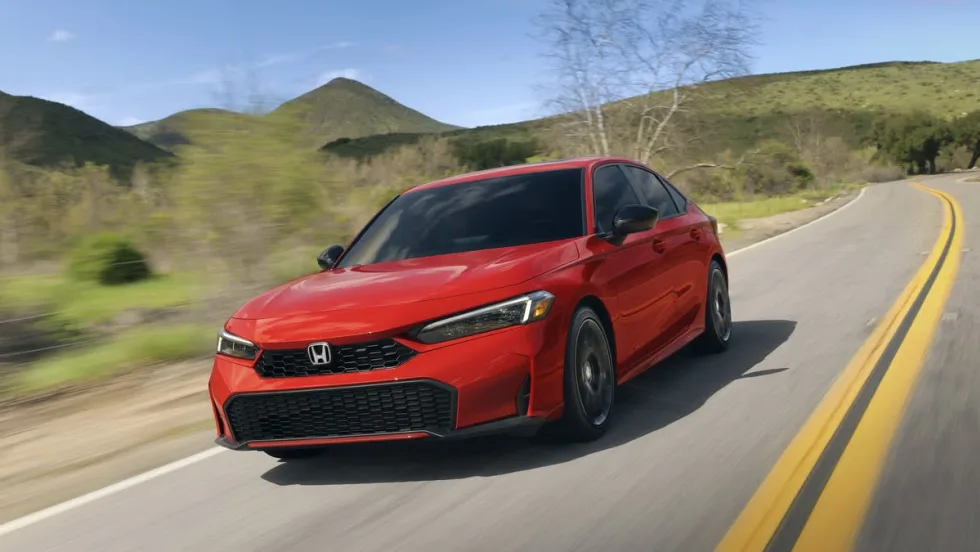
August Auto Sales a Mixed Bag
An early forecast shows strong business despite consumer hurdles, and hybrids are a big piece of their affordability coping strategy.
Read More →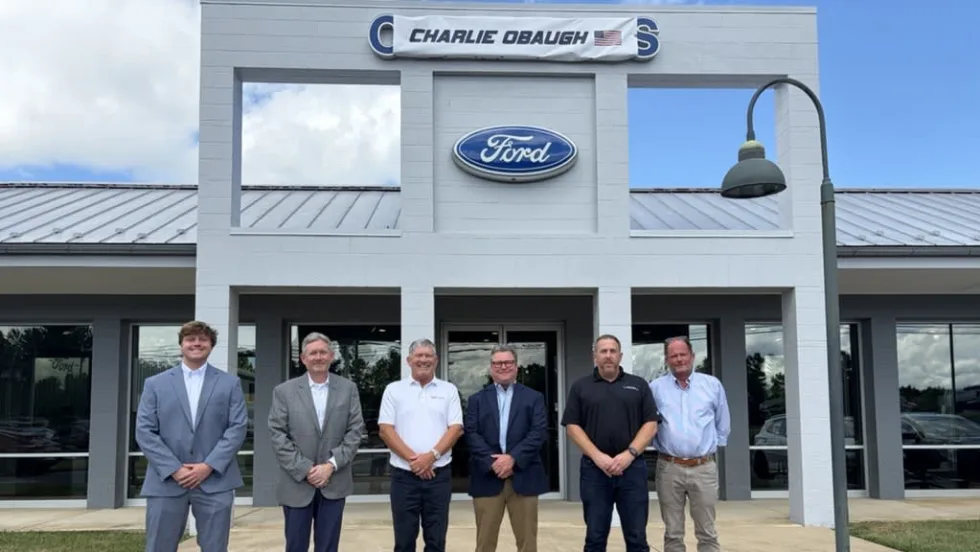
Longtime Ford Store Changes Hands
The Virginia dealership joins a small area automotive group in a one-dealership transaction, moving from one family franchisee to another.
Read More →