



The Gust Monitor
Thomas B. Hudson - I’ve done a bit of sailboating on the Chesapeake Bay, and the current mess in Washington brought back a memory from those sailing days.

I’ve done a bit of sailboating on the Chesapeake Bay, and the current mess in Washington brought back a memory from those sailing days.
We decided one Saturday that we’d make an entire day of it, leaving our slip in Middle River, north of Baltimore, and sailing down the bay to the mouth of the Patapsco River then up to the beautifully-redone Inner Harbor in the heart of Baltimore. It turned out, however, that we’d bitten off more than we could chew, and so in the early afternoon, at the mouth of the Patapsco, we reluctantly headed home, trying to beat the sunset.
Our wind was fair—a beam reach, for you sailors—and fairly strong, perhaps 15 knots (I love to talk that sailing talk). But it was gusty, with puffs of perhaps 25 knots, maybe even a bit more.
Given my level of experience (not a lot) and my boat (a Catalina 22 with a swing keel that weighed only 500 pounds), the conditions were a bit challenging. We had the mainsail and jib up. We didn’t reef the main or furl the jib, but I kept a hand on the main sheets (those ropes that let me slack off of the mainsail, spilling air from it, in the gusts).
We also had company. On the same course, and making about the same speed, was a Cal 25. It was maybe 300 yards ahead of us, but closer to the wind. It took me a minute to figure out that he was a perfect “gust monitor” for me. He’d take a puff, heel over, and a few seconds later I’d take the same puff, by which time I would have loosened up the main sheets, spilling some wind and easing our heeling action.
On we went for several miles in this fashion—puff, heel, slacken and then tighten up again—when suddenly the Cal 25 took nearly a knockdown. A big gust hit, and it heeled over hard. As he corrected, he was “backwinded.” The bow had swung through the point of the wind, and the wind now pressed on the other side of his sails. The boat did a violent 360-degree turn, scattering gear everywhere, but the captain got her under control again.
I immediately loosed the main sheets and the jib sheets, just in time for the gust to tear by us. Thanks to my friendly “gust monitor,” we hardly heeled at all and were back under way, perhaps a bit more cautiously, in no time.
I thought of that experience as I pondered the administration’s health care and financial institutions initiatives in Congress (the Asylum on the Hill). It occurred to me that the health care debates and maneuvers are serving the purpose of “gust monitor” for the financial institutions industry.
The health care initiative started with several proposed grand schemes, but has been pared down to a smaller program as proposals that make it less likely to pass have, one-by-one, come off the table.
On the financial institutions side, several initiatives are pending before Congress at the moment. They include bank regulatory reform, a proposal to create a “Consumer Financial Protection Commission,” a proposed national consumer credit usury limit (one bill proposes a clear limit, while another tries to do the same thing by trying to prevent creditors from filing secured claims in bankruptcy in connection with obligations that bear a rate exceeding certain limits), attempts to replace the familiar “APR” with the so-called and completely unworkable “FAIR” (Fair and Accurate Interest Rate) calculation, proposals to ban consumer arbitration, and several other measures on the shopping lists of the consumer advocates.
Several weeks ago, I’d have said that several of these measures would be enacted in the form proposed, but that was before Congress started dancing the Potomac Waltz, with industry forces bringing their strength to bear against the consumer special interest groups. I think that it is pretty clear now that some of the measures, probably the interest rate caps, aren’t likely to end up in whatever final legislation rolls out of the sausage factory. The ban on arbitration in consumer contracts is likely to pass, and we’ll have a commission of some sort, but it won’t be nearly as powerful as the one initially proposed.
Perhaps the health care proposals won’t serve as our “gust monitor,” but I’m willing to bet that they will. We’ll revisit this one deeper into the legislative session.
Vol. 6, Issue 11
More Dealer Ops

How to Avoid Phone Scams | Dealer Debrief 09/10/2026
Are you taking the necessary steps to protect your dealership and customer data from phone-based scams? This week's Dealer Debrief breaks down how!
Read More →
Dealer Debrief: August Auto Sales
Gas-powered engines still dominate the U.S. vehicle market, but hybrids are gaining ground as consumers look for ways to cut their gas costs.
Read More →
Dealership Profits Decline
While new and used retail sales stagnated, dealerships have been particularly supported by fixed operations and finance-and-insurance profits, according to a new report.
Read More →
Dealer Debrief: Defection Data & EV Updates
In this week's debrief, host Lauren Lawrence discusses how to use defection data to your advantage and the latest on EV sales and charging infrastructure.
Read More →
How Defection Data is Bridging the Dealership Conversion Gap
Lead volume is flat, cross-shopping is up and brand loyalty is in retreat. As confident sales teams keep losing buyers they thought they had, daily industry sales data is showing dealers exactly where their funnel is breaking and how to fix it without buying a single new lead.
Read More →
Dealer Debrief: Where are you losing customers?
In this week's debrief, host Lauren Lawrence discusses the hidden leaks in dealerships where you might be losing customers without even realizing it.
Read More →
Dealer Debrief: Improving Your Inventory Management
In this week's debrief, host Lauren Lawrence covers a new survey that shows what service technicians really want and two launches that could help improve your inventory and vehicle life cycle management.
Read More →
Ladies and Gentlemen, This Is a Dealership: Why the Fundamentals Still Decide Who Wins
A teaching moment by a legendary football coach happens to apply perfectly in the auto retail space. Learn what it is and how to use it to your store’s advantage.
Read More →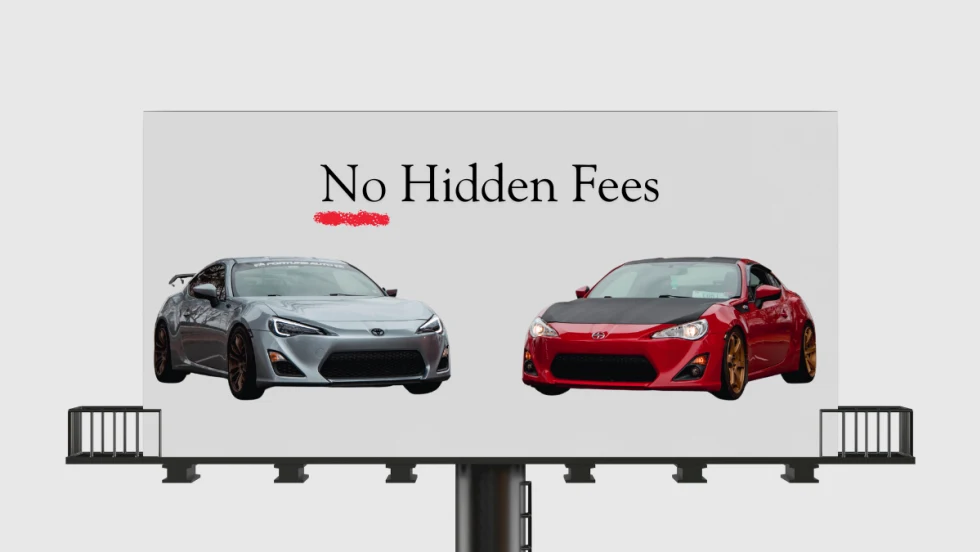
Dealer Ads and the FTC
The agency has made it clear in recent enforcement actions and warnings, in auto retail and other industries, that advertised prices must include all nonoptional costs to the consumer.
Read More →
Used Autos Supply Dwindles
The March shopping surge, despite high prices, cut into inventory by the most since the thick of the pandemic, Cox Automotive analysts calculated.
Read More →