



The "Repairs After The Sale" Dilemma
If you find a way to eliminate all repossession and charge off that stems from mechanical failure ... you will be more profitable...

As I travel the country conducting seminars, workshops and moderating Buy Here-Pay Here and Auto Finance 20 Groups, the question of what to do when a customer’s cars break down after the sale always comes up in discussions. Dealer’s policies range from doing absolutely nothing for the customer, to doing all mechanical work as a free service. There are also a multitude of policies that fall in between these two extremes. What is the right answer? What is the most cost effective? What makes good business sense?
Some dealers take the position that their cars are sold “as-is”. They offer no assistance to their customers after the sale. Other dealers offer a very short-term warranty. This is a shortsighted approach to the long-term relationship you have consummated with your customer. Customers do not pay their loans for three reasons: customers can’t pay, customers won’t pay or they experience mechanical breakdown but you take applications, investigate credit and interview customers to reduce the probability of the first two events. If your customer’s lives change, you can still lose. That is the risk you must be willing to take to be successful Buy Here-Pay Here dealers. The third reason customers quit paying is mechanical breakdown. You control that event completely. If you find a way to eliminate all repossession and charge off that stems from mechanical failure of vehicles, you will be more profitable.

Some dealers do side notes for customer repairs. These dealers have to collect payments on repair accounts as well as the original account. You are now competing with yourself for the customer’s very limited cash. Most dealers do not collect side notes very well, if at all. There is also a legal issue to consider when contemplating side notes. A side note is by definition a direct loan of cash, falling under different regulations than installment contract lending. In many states, you cannot legally charge the same APR without usury violations. There are also different licensing in most states for direct cash loans.
There is a “50/50” program where the dealer will pay half of the repair expense if the customer will pay the other half up front. Many dealers will mark the repair up to “retail” so that the customer’s 50 percent will cover the actual expense of the repair. This is a better program than side notes but, keep in mind, if you ask your customer to come up with large sums of cash now, they probably are neglecting other financial commitments. This will start the customer’s downward spiral of not keeping up with all their financial obligations. This can potentially lead to repossessions and charge-offs down the road.
Some dealers create reserves for “policy” work. Policy work is defined as all goodwill repairs done after the sale to keep good customers in their cars and paying. This is a good practice for two reasons. The first is that the dealer can monitor the amount of policy work incurred and review the mechanical issues. The second reason dealers want to do all policy work is so that they can control all major repairs to the vehicle. When these dealers close loans they inform the customer that certain major repairs will be covered over the life of the loan as long a customer is current on their account. This will enforce the idea that the customer should come to them with any mechanical issues and cement the importance of keeping their account current. To administer this policy correctly and uniformly, dealers must employ a repair order system and account for these repairs and parts differently than retail work or reconditioning of inventory.
Some dealers sell or provide Vehicle Service Contracts (VSC) for their customers. It does not make much sense to sell (finance) a VSC to a customer. Selling gives your customer the ability to say no to the VSC. You want to offer every customer a VSC that has no cost to them. You want a VSC to cover the majority if not the entire life of the loan. Six month and twelve month contracts don’t have value when you write 30 month terms. Avoid the temptation to offer long-term contracts that do not offer mileage limits that coincide with their customer’s driving habits.
The drawback of buying a VSC product from an outside source is that the service contract company controls the premium, the actual cost, the deductible, the repair facility network and the claims adjusting, taking the dealer out of the loop. When there is a claim denial or claim dispute (and there always is), the customer and the dealer ultimately lose. The second consideration when hiring an outside service contract company is the dealership cash flow. New dealers are typically strapped for cash and the additional $400-$800 per vehicle outflow is more than they can handle. Many dealers are turning to P.O.R.C.’s (Producer Owned Reinsurance Companies) so that they can administer the contracts and claims and manage the risk. Any dealer considering these options should spell out coverage limits, deductibles and the claims process prior to vehicle delivery.
Remember that when vehicles break down, customers stop paying. You are in the business of providing transportation. When the vehicles breakdown you are no longer providing that service. If your customers can’t get to and from work, they won’t get paid and in turn will be unable to pay you. The irony is that most dealers repair these broken vehicles after repossession to make them ready to remarket. The end result is that the repairs will be done no matter who owns the vehicle. Also, keep in mind that you will never keep people from driving by taking their vehicles. The dealer across the street from you will sell them a vehicle today. The choice is actually quite simple. Just ask yourself if you want to keep this customer or if you want your competition have them. The answer to that question will make the decision to help your customer very easy.
More Dealer Ops
How to Avoid Phone Scams | Dealer Debrief 09/10/2026
Are you taking the necessary steps to protect your dealership and customer data from phone-based scams? This week's Dealer Debrief breaks down how!
Read More →
Dealer Debrief: August Auto Sales
Gas-powered engines still dominate the U.S. vehicle market, but hybrids are gaining ground as consumers look for ways to cut their gas costs.
Read More →
Dealership Profits Decline
While new and used retail sales stagnated, dealerships have been particularly supported by fixed operations and finance-and-insurance profits, according to a new report.
Read More →
Dealer Debrief: Defection Data & EV Updates
In this week's debrief, host Lauren Lawrence discusses how to use defection data to your advantage and the latest on EV sales and charging infrastructure.
Read More →
How Defection Data is Bridging the Dealership Conversion Gap
Lead volume is flat, cross-shopping is up and brand loyalty is in retreat. As confident sales teams keep losing buyers they thought they had, daily industry sales data is showing dealers exactly where their funnel is breaking and how to fix it without buying a single new lead.
Read More →
Dealer Debrief: Where are you losing customers?
In this week's debrief, host Lauren Lawrence discusses the hidden leaks in dealerships where you might be losing customers without even realizing it.
Read More →
Dealer Debrief: Improving Your Inventory Management
In this week's debrief, host Lauren Lawrence covers a new survey that shows what service technicians really want and two launches that could help improve your inventory and vehicle life cycle management.
Read More →
Ladies and Gentlemen, This Is a Dealership: Why the Fundamentals Still Decide Who Wins
A teaching moment by a legendary football coach happens to apply perfectly in the auto retail space. Learn what it is and how to use it to your store’s advantage.
Read More →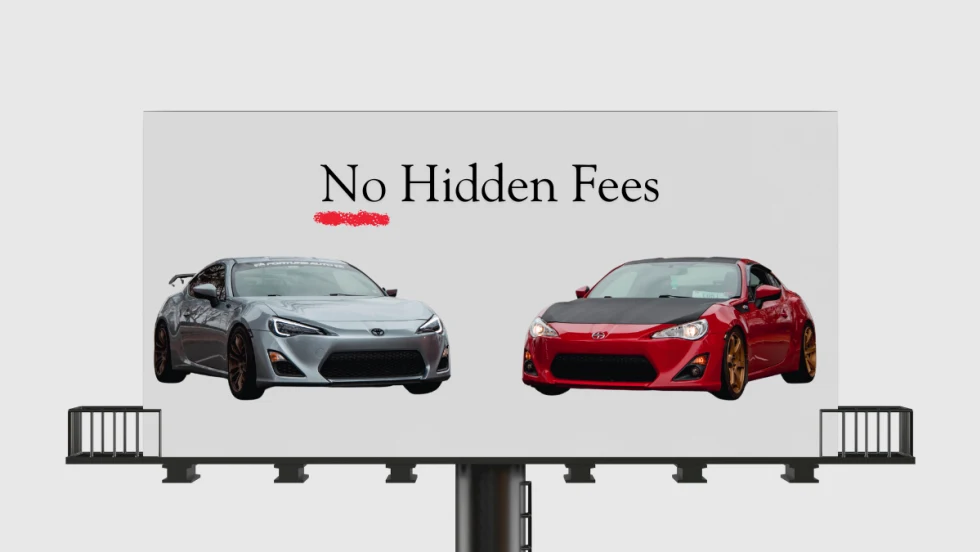
Dealer Ads and the FTC
The agency has made it clear in recent enforcement actions and warnings, in auto retail and other industries, that advertised prices must include all nonoptional costs to the consumer.
Read More →
Used Autos Supply Dwindles
The March shopping surge, despite high prices, cut into inventory by the most since the thick of the pandemic, Cox Automotive analysts calculated.
Read More →