



Web Site Statistics
Jason Ezell - I have always been mesmerized with the amount of information the Internet has provided, both on the Web itself and through the data being produced by millions of people using the Web. Oh, the power we would gain from harnessing this data and molding it into usable knowledge with which to make solid business decisions.

Are You Using the Right Yardstick?
After attending a recent automotive Internet conference, I was very encouraged, yet a bit overwhelmed, with all of the emphasis on Web statistics, shopper data and inventory software to help price/sell/buy/turn pre-owned stock. I have always been mesmerized with the amount of information the Internet has provided, both on the Web itself and through the data being produced by millions of people using the Web. Oh, the power we would gain from harnessing this data and molding it into usable knowledge with which to make solid business decisions.
The concern I have is that with so much data and information from so many sources, it is difficult to make decisions based on a certain piece of information if that information doesn’t apply to your region, your market or your dealership. Of all the information available, what info is really pertinent to your strategy and the way you measure success? You don’t want to spend a year developing a custom yardstick, only to find out you were trying to measure the wrong thing.
For example, in Web statistics, we have always looked at unique visitors, page views and lead conversion rate or LTV (lead-to-visitor ratio, which is the number of leads divided by total visitors). However, do you include ALL visitors, including be-backs to the Web site, or just first-time visitors? Knowing be-backs send more leads, you would want to measure the two separately—lead percentage from unique visitors versus lead conversion from be-backs.
It’s important to know how well your Web site converts shoppers, but it’s more important that your overall Web strategy, including follow-up, increases be-backs to the site. So what do we gain from this? You focus not just on increasing the four percent of first-time shoppers who send leads, but more importantly, the 26-plus percent of return shoppers who send more leads.
Also, as good as Google analytics are for single Web site traffic statistics, let’s be sure we are using the right yardstick and measuring the right item in the first place. We used to think that more page views per shopper meant more time on a Web site, thus the higher likelihood a shopper would send a lead. The fact is, there is no real correlation to number of pages views, number of leads, or page views to actual buyers. In fact, too many page views per shopper can result in a higher bail-out rate simply because they are not easily finding what they came looking for. Remember, for every click it takes a shopper to find specifically what they came looking for, about 24 percent of shoppers will bail out. That’s per click, so increased page views may not necessarily be a good thing.
Google analytics give good Web site load statistics and usability stats (load times, total page loads, most clicked pages, dead links, broken page loads, etc.). What it’s not good for is actual user stats and behavioral data. In other words, don’t assume that because you have a huge amount of traffic on a certain vehicle, this signals a buying trend. It might be that the car was priced too low, or you have more of that vehicle than most so the odds of hitting it are greater. Perhaps it’s an older unit that has been online longer and on more third-party Web sites. You would want to better determine what the situation is before you base a large inventory decision on this seemingly obvious piece of data.
We will explore better reports and data usage in future articles, but as an example, let’s look at some data that can have an immediate impact. Recently we were looking for the most-clicked car before a lead was sent on a particular model. For all people who sent a lead on a Honda Accord, the most commonly-searched car by these people, prior to sending a lead on an Accord, was a pre-owned Mercedes.
Now for your own dealership, look at your Web site stats and find the most common second choice of vehicles. This is called a “bait” car, meaning that people who look at pre-owned Mercedes would most likely be interested in an Accord. So now we can arrange our street-facing inventory to include the most likely “bait” cars to help attract competitive shoppers. This can be done with any model you sell new, and can be a great way to target-market to shoppers you didn’t think would cross-shop. Cool idea? We’ll explore how to find the right yard stick for your dealership more in the months to come.
Vol. 7, Issue 7
More Digital
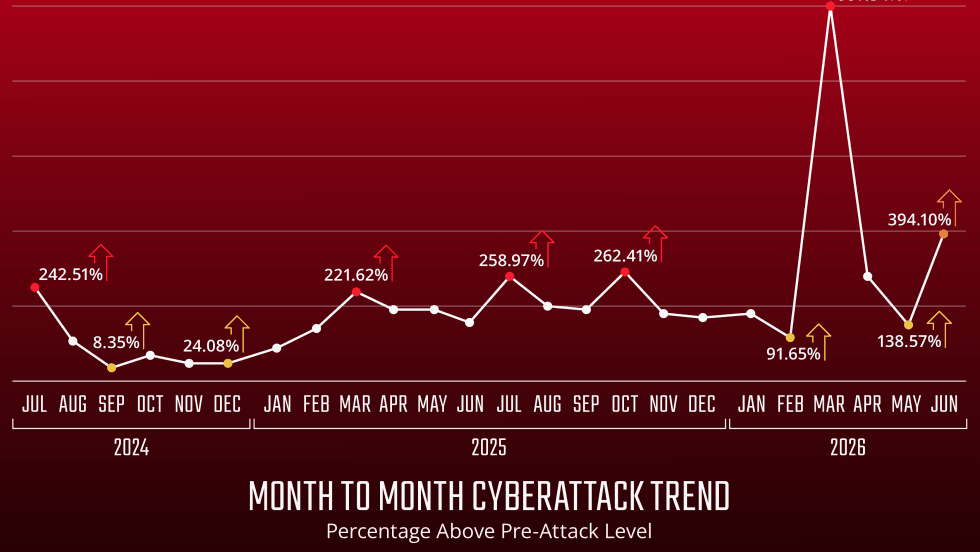
Dealerships More Frequent Cybercrook Targets
Analysis of the past year’s activity shows attacks on stores’ networks have surged dramatically as criminals leverage AI’s tools for volume and seeming legitimacy.
Read More →
Reynolds and RockEd Team Up
Via structured learning journeys and certifications, dealership personnel can get up to speed fast, a key component for success in rapidly changing retail automotive.
Read More →
Dealer Debrief: AI is Judging Your Website
In this week's debrief, host Lauren Lawrence talks about the importance of optimizing your website for AI-powered search as well as SEO.
Read More →
Your Dealership Is Being Judged by AI Search
Car shoppers are asking the tools where to buy, service and trade. The question is whether your dealership is showing up as the answer.
Read More →
Cox Automotive Tool to Streamline Dealership Workflows
The new Navigator offering is designed to work for dealers across the company's technology solutions for time savings and more.
Read More →
DAS Technology Earns Multiple Industry Honors
The company's Power AI Search was recognized for automotive artificial intelligence as .
Read More →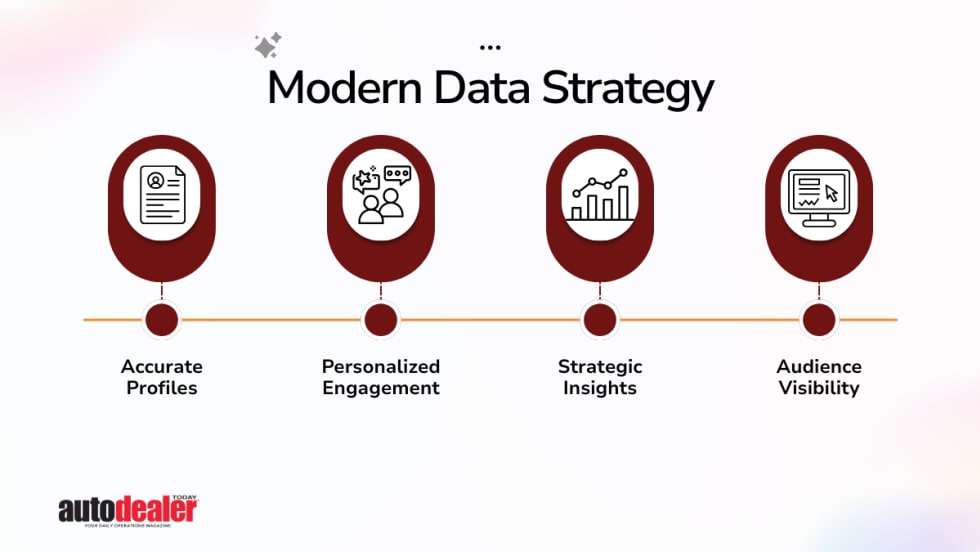
Reduce Fragmentation, Connect Customer Data
Automotive dealerships have the opportunity to reach more consumers by putting their customer data into a unified system, according to a new report.
Read More →
Dealer Debrief: Service Tech Recognition
In this week's debrief, host Lauren Lawrence covers a change to Automotive Service Professionals Month, a dealership acquisition, and a new Lexus rooftop!
Read More →
Dealer Debrief: Manufacturing Meets Demand
In this week's debrief, host Lauren Lawrence covers shifting strategies in the U.S. auto industry and how they reflect the current consumer demand.
Read More →
Trust of Autonomous Cars Not Automatic
A poll of U.S. consumers finds more awareness of the technology but no movement when it comes to relying on it for transportation.
Read More →