



Wrong Assumption on Dealer Participation Leads to Faulty “Study”
Thomas Hudson of Hudson Cook LLC, discusses the Center of Responsible Lending’s report entitled, "Under the Hood: Auto Loan Interest Rate Hikes Inflate Consumer Costs and Loan Losses."

Car dealers sell stuff. First, of course, they sell cars. When they sell cars, they charge more to some buyers than to others. A buyer with good bargaining skills who has done his or her homework, doesn't fall in love with the smell of the leather and has patience will pay less than a person who doesn't bargain well, hasn't bothered to do any research, has fallen in love with the car and has a bad case of "I've gotta have it today." Those additional amounts paid to the dealer are called “profit.”
Anything wrong with that? Unless it is a credit transaction and a dealer discriminates on a prohibited basis in setting the price of the car, I think not.
Dealers sell other stuff, like GAP, credit insurance, service contracts and the like. Some car buyers will buy anything a good salesperson offers, while others have a high level of sales resistance and won't buy a thing other than the car.
Anything wrong with that? Again, absent prohibited discrimination in credit contracts, I don't think so.
One of the “other stuff” services that dealers sell is financing. Do these same general principles apply to the cost of financing? I think so. Absent prohibited discrimination, a dealer can charge customer Jones an 8-percent APR and can charge customer Smith an 8.5-percent or 9-percent APR.
Consumer advocates don't believe that dealers should be able to charge different finance charge rates to different buyers. They assert that dealer participation ought to be prohibited or limited. They need a pejorative term, of course, so they call dealer participation "the markup" or a "dealer kickback," conveniently forgetting that in a retail installment sales contract, the dealer by contract is entitled to keep the entire finance charge if the dealer decides not to assign the RISC to a finance company or bank.
The consumer advocates believe that credit grantors should be like utilities, offering credit to all comers at the same cost. And they believe that should be the case even in the absence of any statute or regulation prohibiting such varying pricing.
Consumer advocates also believe that consumers should be told that the dealer keeps part of the finance charge and should be told the amount of the dealer's participation, notwithstanding the fact that nearly every RISC in use today discloses that the dealer keeps part of the finance charge and that the rate of finance charge is negotiable with the dealer. Additionally, the Federal Reserve Board has twice rejected the suggestion that the amount of dealer participation should be a required disclosure under Reg. Z, wisely concluding that the APR, which is a required federal disclosure, provides the best information to the consumer and that the disclosure of dealer participation would not benefit the consumer. The consumer advocates, however, claim to know better than the Feds.
If you think we’re exaggerating the positions of the consumer advocates, take a gander at a publication issued by the Center of Responsible Lending (CRL) in April 2011. The report, "Under the Hood: Auto Loan Interest Rate Hikes Inflate Consumer Costs and Loan Losses," concludes that consumers who financed cars through dealerships in 2009 paid more than $25.8 billion in extra interest over the lives of their loans because of dealer interest rate markups, an increase of 24 percent from 2007. CRL also found that undisclosed markups “increase the odds that a subprime borrower will default by 12 percent and odds that he or she will end up having their car repossessed by 33 percent.”
The report starts off with one fatal assumption, however, and that fatal assumption renders the rest of the report fit for nothing other than the round file. What is CRL’s fatal error?
CRL assumes that in auto financing, a consumer can somehow bypass the dealer and go directly to Ford Motor Credit Company, AmeriCredit, Chase or other buyers of retail installment contracts and obtain financing directly from those companies at the so-called “buy rates” (rates the companies announce to dealers as the minimum rates for the contracts that they require for retail installment contracts they buy). In effect, CRL’s position is that consumers are entitled to get their financing at the dealer’s wholesale cost of money. That isn’t so.
If the so-called “report” compared the auto finance rates available from direct lenders like banks, credit unions and finance companies to rates available through dealer financing, what would their conclusions be? We don’t know, because we aren’t favored with such an “apples-to-apples” analysis. Comparing “retail” to “retail” might explain why consumers are glad to get their financing at dealerships.
And if the report asked consumers whether the convenience and time saving advantages of dealer financing were worth paying something more than the rate available from the car buyer’s bank or credit union (a number that I’m assuming is readily available), would that affect the “study?”
And if the report noted that nearly all auto financing in the U.S. is done on so-called “simple interest” retail installment contracts (the industry incorrectly calls “interest-bearing” contracts “simple interest” contracts) that don’t contain any sort of prepayment penalties, leaving car buyers free to obtain dealer financing at, say, an 8-percent APR and refinance a week later at a 6-percent APR rate from a bank or credit union, wiping out any dealer participation and evaporating that $25.9 billion, would that affect the study?
Oh, yeah. One more thing. The Center for Responsible Lending describes itself as a nonprofit, nonpartisan research and policy organization dedicated to protecting homeownership and family wealth by working to eliminate abusive financial practices.
They’re nonpartisan, and I’m the Easter Bunny.
Vol. 8, Issue 6
More Dealer Ops
How to Avoid Phone Scams | Dealer Debrief 09/10/2026
Are you taking the necessary steps to protect your dealership and customer data from phone-based scams? This week's Dealer Debrief breaks down how!
Read More →
Dealer Debrief: August Auto Sales
Gas-powered engines still dominate the U.S. vehicle market, but hybrids are gaining ground as consumers look for ways to cut their gas costs.
Read More →
Dealership Profits Decline
While new and used retail sales stagnated, dealerships have been particularly supported by fixed operations and finance-and-insurance profits, according to a new report.
Read More →
Dealer Debrief: Defection Data & EV Updates
In this week's debrief, host Lauren Lawrence discusses how to use defection data to your advantage and the latest on EV sales and charging infrastructure.
Read More →
How Defection Data is Bridging the Dealership Conversion Gap
Lead volume is flat, cross-shopping is up and brand loyalty is in retreat. As confident sales teams keep losing buyers they thought they had, daily industry sales data is showing dealers exactly where their funnel is breaking and how to fix it without buying a single new lead.
Read More →
Dealer Debrief: Where are you losing customers?
In this week's debrief, host Lauren Lawrence discusses the hidden leaks in dealerships where you might be losing customers without even realizing it.
Read More →
Dealer Debrief: Improving Your Inventory Management
In this week's debrief, host Lauren Lawrence covers a new survey that shows what service technicians really want and two launches that could help improve your inventory and vehicle life cycle management.
Read More →
Ladies and Gentlemen, This Is a Dealership: Why the Fundamentals Still Decide Who Wins
A teaching moment by a legendary football coach happens to apply perfectly in the auto retail space. Learn what it is and how to use it to your store’s advantage.
Read More →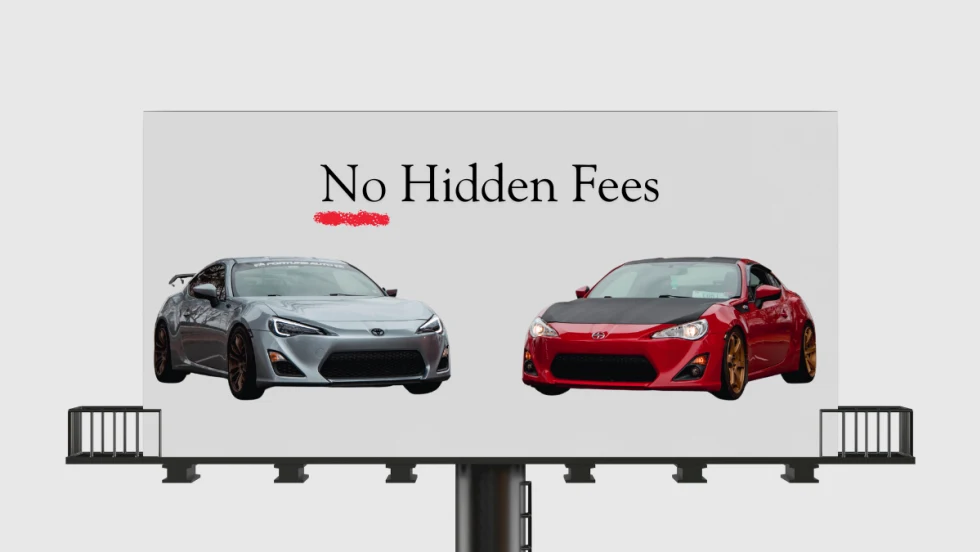
Dealer Ads and the FTC
The agency has made it clear in recent enforcement actions and warnings, in auto retail and other industries, that advertised prices must include all nonoptional costs to the consumer.
Read More →
Used Autos Supply Dwindles
The March shopping surge, despite high prices, cut into inventory by the most since the thick of the pandemic, Cox Automotive analysts calculated.
Read More →