



Fed Cuts Interest Rates Again, Stock Market Responds
Stock are on the rise following the second quarter-point reduction to the federal funds rate in less than two months. No further cuts are planned for this year or next, guaranteeing further pressure from the White House.

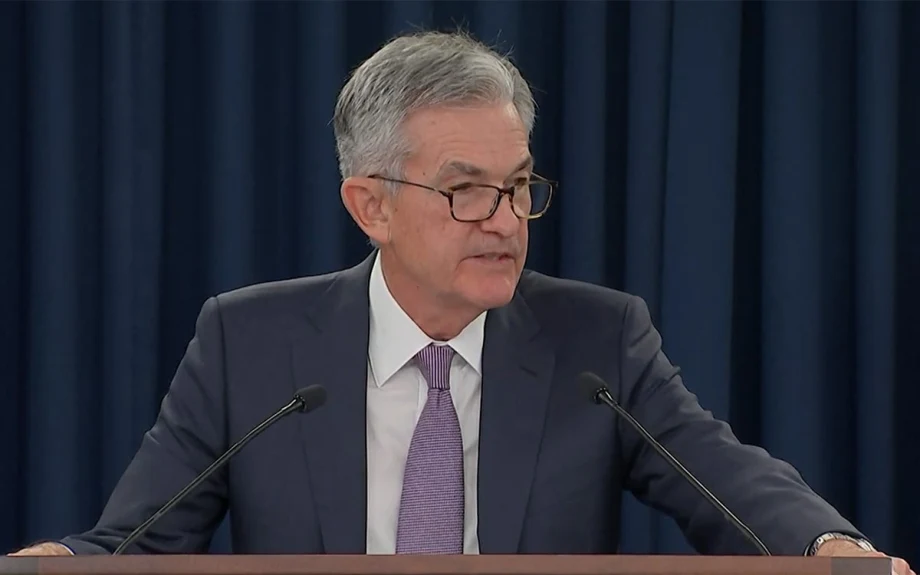
Federal Reserve Board Chairman Jerome Powell announced a quarter-point reduction to the federal funds rate Wednesday.
WASHINGTON — The Federal Reserve reduced the target federal funds rate to 1.75% Wednesday, its second quarter-point reduction since late July. The July cut was the first since 2008, but neither was unexpected. The Fed and its chairman, Jerome Powell, have pledged to take all appropriate steps to maintain consumer confidence in the face of economic uncertainty.
“There may come a time when the economy weakens and we would then have to cut more aggressively,” Powell said Wednesday. “We don’t know. We’re going to be watching things carefully, the incoming data and the evolving situation.”
Read: Cornered Fed Announces First Rate Cut Since 2008
President Donald Trump has pushed for a cut to zero or negative interest rates. In a tweet, he berated the chairman he appointed in 2017.
“Jay Powell and the Federal Reserve Fail Again,” Trump wrote. “No ‘guts,’ no sense, no vision! A terrible communicator!”
Stocks fell yesterday before rebounding to end slightly higher. Thursday morning, encouraging gains were reported by the Dow (0.3%), S&P 500 (0.3%), and Nasdaq Composite (0.5%) indices.
“We’re going to be highly independent; as always, our decisions are going to depend on the implications of incoming information.”
The official report that followed the announcement forecasted no further cuts in 2019 or 2020, but it is difficult to predict the Fed’s next move. Market watchers agree officials will likely hold further cuts in reserve as inflation remains below the central bank’s 2% target, global manufacturing rates continue to slide, and hot spots flare up in Britain (Brexit uncertainty), Germany (urgent recession fears), and China (trade war).
“We are committed to making the best decisions we can based on facts and objective analysis. Today, we decided to lower interest rates,” Powell said at a press conference. “… We’re going to be highly independent; as always, our decisions are going to depend on the implications of incoming information for the outlook. And I would also say, as we often do, that we’re not on a preset course.”
Read: Escalating Finance Costs Drive 24% Spike in TCO
Cox Automotive’s chief economist, Jonathan Smoke, said he didn’t expect the Fed’s latest move to match the impact of the July cut for auto manufacturers or dealers.
“Short-term rate policy does not directly impact longer-term rates on consumer loans like mortgages and vehicle loans,” Smoke wrote in a statement, noting a “risk premium” accounts for the divergence between auto finance and the mortgage and bond segments. “About 20% of auto finance is subprime. While the 10-year Treasury yield was dropping in August, subprime auto loan rates increased on average by more than 20 basis points.”
Originally posted on F&I and Showroom
More Dealer Ops

How to Avoid Phone Scams | Dealer Debrief 09/10/2026
Are you taking the necessary steps to protect your dealership and customer data from phone-based scams? This week's Dealer Debrief breaks down how!
Read More →
Dealer Debrief: August Auto Sales
Gas-powered engines still dominate the U.S. vehicle market, but hybrids are gaining ground as consumers look for ways to cut their gas costs.
Read More →
Dealership Profits Decline
While new and used retail sales stagnated, dealerships have been particularly supported by fixed operations and finance-and-insurance profits, according to a new report.
Read More →
Dealer Debrief: Defection Data & EV Updates
In this week's debrief, host Lauren Lawrence discusses how to use defection data to your advantage and the latest on EV sales and charging infrastructure.
Read More →
How Defection Data is Bridging the Dealership Conversion Gap
Lead volume is flat, cross-shopping is up and brand loyalty is in retreat. As confident sales teams keep losing buyers they thought they had, daily industry sales data is showing dealers exactly where their funnel is breaking and how to fix it without buying a single new lead.
Read More →
Dealer Debrief: Where are you losing customers?
In this week's debrief, host Lauren Lawrence discusses the hidden leaks in dealerships where you might be losing customers without even realizing it.
Read More →
Dealer Debrief: Improving Your Inventory Management
In this week's debrief, host Lauren Lawrence covers a new survey that shows what service technicians really want and two launches that could help improve your inventory and vehicle life cycle management.
Read More →
Ladies and Gentlemen, This Is a Dealership: Why the Fundamentals Still Decide Who Wins
A teaching moment by a legendary football coach happens to apply perfectly in the auto retail space. Learn what it is and how to use it to your store’s advantage.
Read More →
Dealer Ads and the FTC
The agency has made it clear in recent enforcement actions and warnings, in auto retail and other industries, that advertised prices must include all nonoptional costs to the consumer.
Read More →
Used Autos Supply Dwindles
The March shopping surge, despite high prices, cut into inventory by the most since the thick of the pandemic, Cox Automotive analysts calculated.
Read More →