



Final Fuel-Economy Rule Sets Lower Bar
Automakers must now achieve less-ambitious average for passenger cars, light trucks.

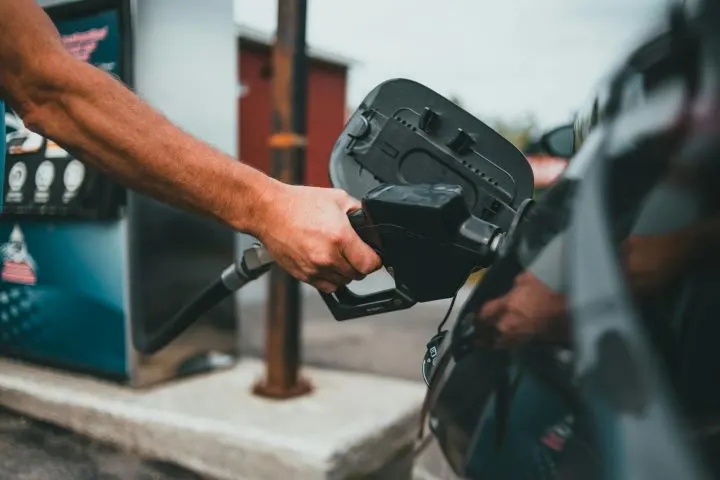
The new targets stand in stark contrast to the 13 miles per gallon the average U.S. vehicle got when Congress introduced fuel-economy standards in the 1970s.
Pexels/Erik McIean
The Biden administration finalized updated fuel-economy standards that are looser than proposed last year so that automakers can now achieve a lower bar over the next decade on new models’ fuel consumption.
Instead of an average fuel economy of about 58 miles per gallon for their fleets, companies must now achieve about a 54 miles per gallon threshold by 2032.
The bar-raising comes after demand for purely electric vehicles flattened in the U.S. following early adoption, failing to meet automakers’ ambitious estimates.
The new targets stand in stark contrast to the 13 miles per gallon that the average U.S. vehicle got when Congress introduced fuel-economy standards in the 1970s, the Department of Transportation said.
The final updated rule requires passenger cars’ fuel economy to increase 2% per year for model years 2027 to 2031 and light trucks’ to increase by the same measure for model years 2029 to 2031. The department said the gradual change will save owners more than $600 in fuel costs over their vehicles’ lifetimes and nealrly 70 billion gallons of gas by 2050.
“Not only will these new standards save Americans money at the pump every time they fill up, they will also decrease harmful pollution and make America less reliant on foreign oil,” U.S. Transportation Secretary Pete Buttigieg said in a press release.
The new rule complements a similarly scaled-back Environmental Protection Agency regulation of tailpipe emissions. Automakers can comply with the new standards with a mix of power train technologies, including hybrids and alternative-fuel vehicles.
LEARN MORE: EV Consideration Falls Further
More Industry
Automaker Advances Safety for All
A new report by Volvo Cars Safety Centre analyzed the impact of 50 years' worth of research in automotive safety development
Read More →
Kentucky Store Leaves Family
An auto group stretched across three states picked up the Lexington-area Ford fixture as its second store for the brand in the state.
Read More →
U.S. Auto Brands Falling Behind
Asian auto brands are outpacing U.S. brands in stateside new-vehicle sales. Learn more in this week's Dealer Debrief with Lauren!
Read More →
U.S. EV Market Update | Dealer Debrief
The U.S. electric vehicle market is slowly recovering from the loss of the federal EV tax credit last fall. Learn more in this week's Dealer Debrief!
Read More →
Auto Finance Numbers Set Records
Third-quarter data show how consumers are adapting to ongoing affordability challenges facing the new- and-used-vehicle markets.
Read More →
Auto Dealerships Can’t Afford to Ignore the 50+ Consumer
Younger generations may be all the buzz today when it comes to product marketing targets, but their older cohorts command a sizable share of purchasing power.
Read More →
Savings Seekers Boost U.S. Automakers’ Rivals
As consumers here look for ways to curb inflation’s affect on their budgets, brands offering plenty of alternative powertrains are closing in on home-grown OEMs.
Read More →
The Slow Electric Ascent
Second-quarter data show that the electric-vehicle market in the U.S. is inching up, the majority of states seeing a month-over-month increase.
Read More →
Safer Rides & Cyberattacks
Vehicle crash testing is getting a virtual boost, but auto dealerships are facing increased cyberattacks. Learn more in this week's Dealer Debrief!
Read More →
Affordability Angst | Dealer Debrief
August saw little relief for car buyers, whether they were shopping new or used. Take a look at the month's breakdown in this week's Dealer Debrief!
Read More →