



Fixed-Ops Specialist Issues Warning
A visit of service departments across the nation revealed that 25% of service lifts are out of compliance with the OSHA’s vehicle lift maintenance and inspection standards. Fixed-ops expert issues a warning and offers four recommendations for maintaining worker safety.
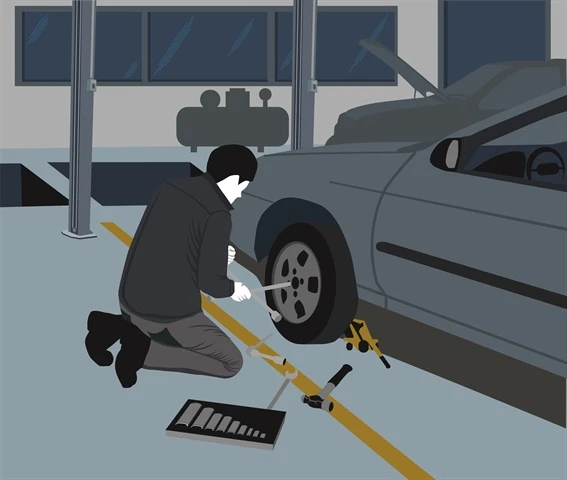
CRYSTAL LAKE, Ill. — A visit of dealership service departments left fixed-ops specialist Ed Gibbons with one conclusion: 25% of service lifts are out of compliance with the Occupational Safety and Health Administration (OSHA)’s vehicle lift maintenance and inspection standards.
Most common mechanical failures are loose nuts on floor anchor bolts and broken or missing pins on two-part extension arms, either of which put workers’ safety at risk, Gibbons said. These are not complicated or costly repairs to perform, he added, but often go unnoticed. OSHA’s required annual inspect for vehicle lifts are designed to catch and correct such maintenance.
“I recently inspected lifts at a large dealership, and I failed 60% of them,” he said.
Frustrating and costly OSHA inspections are often triggered by ex-employees who act out against the dealer, Gibbons said. “Lift maintenance and inspection compliance is a primary target for OSHA when they receive a complaint from a dealership employee,” Gibbons says.
Most dealers make sure these inspections are performed as required. However, many remain at risk for failing to have the proper lift maintenance documentation.
“That paperwork is the first thing OSHA will ask to review if there’s a complaint or injury, even if the injury that brought them there isn’t related to the lifts,” Gibbons says.
Lifts are to be inspected according to their manufacturers’ standards. Manufacturers require this inspection be performed on each lift annually. OSHA paperwork includes inspection sheets and logs and certificates and stickers on the lifts stating the lift is ready for use or that it is locked out until the problem is fixed.
“Unfortunately, disgruntled former employees know to contact OSHA about a real or perceived safety violation at the dealership they’d left, and they know OSHA goes after those complaints with zeal,” Gibbons says.
And lift fines can be substantial.
Gibbons, with completed lift inspection and maintenance schooling to better understand and evaluate lift maintenance issues, noted that OSHA is specific about who can inspect lifts — a qualified inspector, which means your maintenance man is not qualified unless trained.
“The essential component is to have a qualified inspector, and the compliance documentation they provide,” he says.
For example, a dealer Gibbons consulted shared that his lift manufacturer’s maintenance person had inspected the lifts and scribbled “Inspected Lifts” and the day’s date on the work receipt. That was not acceptable to OSHA, The dealer was fined. Gibbons cautions.
Automotive Compliance Consultants provides its clients’ documentation as downloads to the dealer’s CompliantNow dashboard; for non-clients, Gibbons provides a hard copy — a copy of which he retains at his office.
To maintain worker safety, workflow through the service department, and prevent worker injury, dealers should:
Review lift maintenance documents
Conduct your own inspection by the tech using the lift daily.
Inspect hydraulic systems, valves, hoses, cables, chains, pins, spindles, the electrical system, ramps, runway stops, locks and safety features.
Provide lift operators with refresher maintenance and safety training. People who operate lifts must be trained on the lift they use. Keep records of all training, too.
For more information on lift safety and inspections, contact Gibbons at egibbons@compliantnow.com or visit www.compliantnow.com
Originally posted on F&I and Showroom
More Fixed Ops

The Fixed Ops Blind Spot | Dealer Debrief
Customer-pay repair orders only make up about 5% of a service department’s repair orders. Is your dealership missing out on this profitable service?
Read More →
The Fixed Ops Blind Spot
Customer-pay repair orders are profitability drivers for service departments, but many dealerships don't know how much of their business goes to them.
Read More →
ASE Invites Service Centers to Benchmark Performance
ASE Connects is gathering the data for its quarterly service snapshot report, which provides a comparison of service drives across the country.
Read More →
More Cars Recalled in First Half
The six months that kicked off the year saw an extended surge of the number of vehicles recalled, electrical issues leading the way again.
Read More →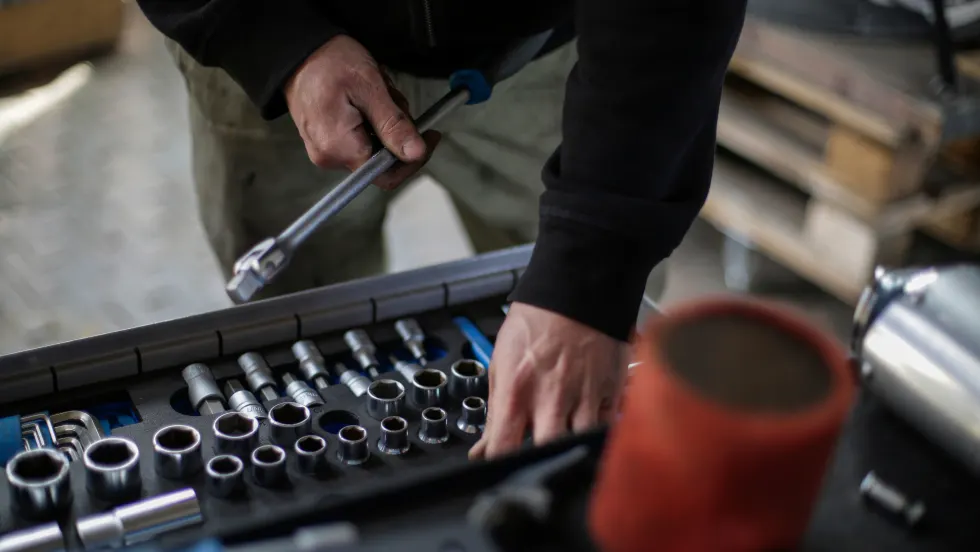
California Dealer Group Foundation Partners With ASE
CNCDA Foundation and ASE Connects collaboration is intended to build California's automotive technician workforce.
Read More →
Dealer Debrief: Fixed-Ops Opportunities
In this week's debrief, host Lauren Lawrence discusses maximizing your dealership's profitability with a focus on fixed operations.
Read More →
Dealer Debrief: Technician Apprenticeships
In this week's debrief, host Lauren Lawrence discusses a new grant for service tech apprenticeships and more industry workforce news.
Read More →
ASE Acquires WrenchWay
The auto technician certification nonprofit said the deal expands its role in workforce-development and support for current and future service professionals.
Read More →
TraXtion Introduces TireSpec Website Solution
The company says the offering enables consumers to snap a photo of their tire with a smartphone and receive an instant replacement quote, capturing 90% of tire shoppers who start their shopping online.
Read More →
UVeye Launches Same-Day Vehicle Listings for Car Dealers
New 'Scan to Sold' offering turns the service lane into a website-ready merchandising photo booth designed to help dealerships reduce turnaround time from days to minutes.
Read More →