



Why Look For Hard Answers When There Are Easy Ones?
Thomas B. Hudson, Esq. - ... federal laws sometimes carve out businesses and commercial transactions as exempt, as do some state laws...

A couple of months back, I used this space to scream and shout about a plaintiff’s lawyer who sued a dealer for violation of the Truth in Lending Act. The dealer defended the TILA claim, and the court concluded that the dealer’s practices did not violate the federal Act. The only problem with this decision was that the amount financed in the transaction exceeded $25,000, making the transaction exempt from TILA. The “amount financed” exemption isn’t the only exemption available. Transactions that are “primarily” (over 50 percent) for business or commercial purposes are also exempt from TILA. However, TILA isn’t the only consumer protection law where you’ll find such exemptions. Other federal laws sometimes carve out businesses and commercial transactions as exempt, as do some state laws. Let’s look at a state law example – this one from Ohio: Madeline Lecso bought a vehicle from Motorcars of Toyota. Lecso used the vehicle primarily for business purposes and reported the vehicle as a deduction on her tax returns. Lecso took the car to Motorcars on several occasions for service under her warranty. Lecso claimed that Motorcars overfilled the oil on one occasion, and on another occasion charged her for brake repairs when it should have been covered by her warranty. Lecso eventually sold the vehicle, but claimed it sold for less than NADA book value due to the oil overfill. Lecso sued Motorcars for violating the Ohio Consumer Sales Practices Act, alleging, in addition, theories of negligence and fraudulent misrepresentation.

The trial court granted Motorcars’ motion for summary judgment on all three of Lecso’s claims. The Ohio Court of Appeals affirmed the trial court’s decision. The appellate court concluded that because Lesco bought and used the vehicle primarily for business purposes, she could not maintain a claim under the Ohio CSPA, which applies only to the sale of goods or services for primarily personal, family or household purposes. The appellate court also affirmed summary judgment on the negligence and misrepresentation claims based on lack of proof that Motorcars’ actions injured Lecso and that Motorcars misrepresented the nature of the brake repairs.
I frequently get calls from dealers who have been sued, asking me to come up with some brilliant, intricate and stunningly technical theory of defense. I’m not that smart, so I ask a few quick questions:
Is the buyer a corporation or partnership?
Is the buyer an individual who bought the vehicle for business or commercial purposes (some hints are usually available here, such as lettering of a business name on the truck, repair payments by a business credit card or checking account, occupation statements on a credit application and other documents in the credit file, etc.)?
Is the buyer claiming the vehicle expense as a tax deduction?
Did the amount financed exceed $25,000?
Did the buyer sign an arbitration agreement?
You’d be amazed how often the answers to these questions will knock the plaintiff out of court. And that’s a whole lot easier than having to think hard. ˜ADM˜
Lecso v. Toyota of Bedford, 2005 WL 3475769 (Ohio App. December 20, 2005)
Vol 3, Issue 3
More Dealer Ops

Ladies and Gentlemen, This Is a Dealership: Why the Fundamentals Still Decide Who Wins
A teaching moment by a legendary football coach happens to apply perfectly in the auto retail space. Learn what it is and how to use it to your store’s advantage.
Read More →
Timing the Market Can Hurt Long-Term Program Performance
For dealer-owned reinsurance entities, avoiding volatility entirely can mean falling behind inflation and missing market rebounds that drive long term surplus growth. Missing just a handful of strong market days can materially impact cumulative returns—an important reminder for long horizon trust and investment strategies.
Read More →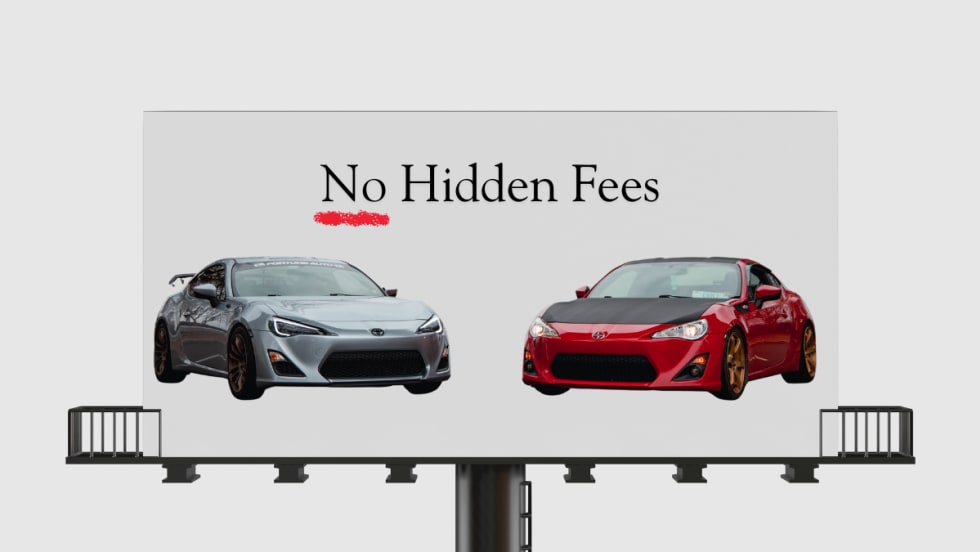
Dealer Ads and the FTC
The agency has made it clear in recent enforcement actions and warnings, in auto retail and other industries, that advertised prices must include all nonoptional costs to the consumer.
Read More →
Used Autos Supply Dwindles
The March shopping surge, despite high prices, cut into inventory by the most since the thick of the pandemic, Cox Automotive analysts calculated.
Read More →
Managing Risk Effectively Through Changing Times
The variables influencing risk pricing have changed significantly over the past five years. Being proactive and responsive to emerging trends is not optional but essential.
Read More →
Survey Reveals What Won't Fix What's Breaking Car Sales
AutoPayPlus says extra-long auto loans are trapping consumers and threatening the dealer trade-in cycle, and that the industry is leveraging the wrong tools to combat high MSRPs.
Read More →
IA American Appoints Two Execs
Senior vice presidents of the company's agent and dealer channels chosen to support general agents and help auto dealers with sales and performance.
Read More →
Cox Automotive Acquires Inspection Firm
Full ownership of Alliance Inspection Management, or AiM, meant to unlock growth for Manheim inspection capabilities
Read More →
Assurant Expands Partnership With Holman
Extended collaboration delivers training, products and performance development to 30 newly acquired Holman dealerships
Read More →
Franchises, Throughput Down in First Half
A handful of states see franchise growth through June, while EV sales per store boost overall business in U.S.
Read More →