



Are You Structured To Achieve Benchmark Gross Profits?
Greg Goebel - Let’s look at the benchmarks for labor gross profit ... will vary from a low of 70 percent to a high of 74 percent...

As you look at your monthly financial statement and compare your results to the benchmarks and other dealers in your 20 Group, sometimes we fail to look at the opportunity provided in the service/mechanical departments. Some of our stronger clients finished 2002 with net profits in the high six-figure range for their fixed operations. Those are obviously results that should not be ignored.
If your dealership is a long way from those results, you must crawl before you walk, before you run. Where do start? The first place is to look at your gross profit structure. Is your dealership set up to produce the gross profit from labor and parts sales?
Let’s look at the benchmarks for labor gross profit. Depending whether you have a domestic, import or independent service department, the benchmarks for gross profit on labor will vary from a low of 70 percent to a high of 74 percent. The obvious place that dealers generally focus is the labor rate charged along with their weighted average cost of labor (average hourly rate of all technicians, based on their average hours turned). For example, if you are charging $60 per labor hour, and your weighted average labor cost is $20 per hour, your gross profit structure – at best – will be $40 per hour, or just 66.7 percent of labor sales. Obviously, to change the labor gross structure you must either raise the labor rate or lower your labor costs.
The second step is to determine what your effective labor rate really is. Many times dealers lose sight of what the actual labor rate they charge really is. What I mean by that is often, due to the need to discount some labor rates in order to be competitive in the market place so as to attract customer pay business, our average labor rate is lower (sometimes much lower) than what our stated rate is. How do we calculate it? First, total all labor sales from the repair orders that were written for the previous month. Then total the number of hours that were booked (or flagged) by the technicians to produce those sales. Yes, we count no charge tickets. Then we divide the total of the labor sales by the total number of hours booked. The result is your effective labor rate. An example would be if a service department had a Stated Labor Rate of $60 per hour, $10,000 in total labor sales and 200 hours booked, the resulting math would produce an Effective Labor Rate of $50 per hour. ($10,000 / 200 = $50.00) In the above example, if the department had a weighted average labor cost of $20 to begin with, the best they can now hope for is 60 percent gross profit as a percentage of labor. This is a typical example of how dealers and department managers get a surprise when they see their end of month statement and see a much smaller gross profit percentage than what they were expecting. Your choices again are to raise your labor rate, discount less, or lower your cost of labor. Finally, here are two notes to the dealers that are still paying their technicians and mechanics by the clock hour and are not using book time. First, to determine your actual labor gross profit, you must include all wages paid to technicians and mechanics paid during the month as your cost of labor. In other words, they should not show up as “technician wages” on your income statement, but rather as a reduction to the gross profit booked. Second, if you don’t wish to switch the way you pay your technicians to book time, at least make your department manager book the time to the tickets just as if the technicians were being paid that way. It is the only way to truly see how productive your technicians are, and it will show you why your labor gross profit is averaging in the 50 percent range or lower. In my 23 years as a franchise dealer and independent service shop owner, I always found that the service department was the foundation for profits and the key to lifetime customers.
More Fixed Ops
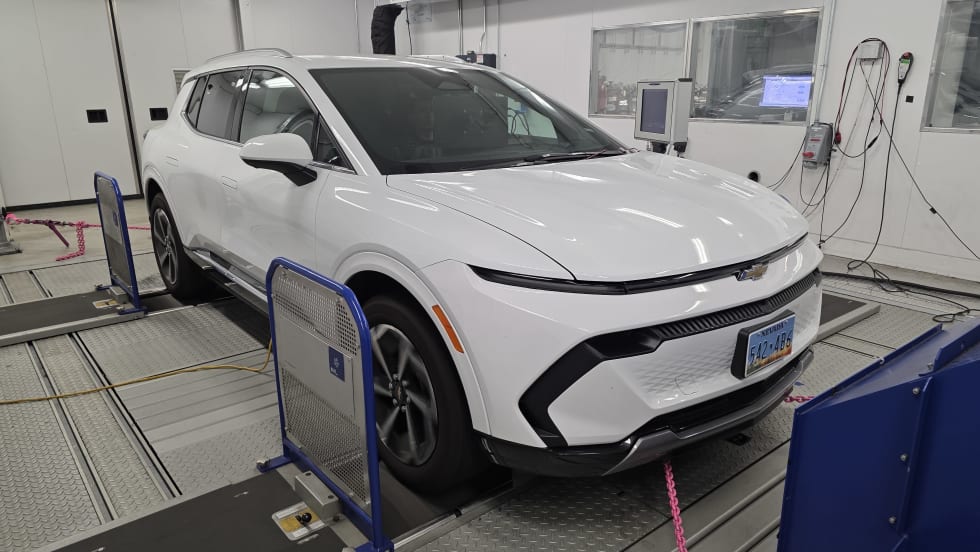
Extreme Temps Hinder EV Efficiency
American consumers might be happy to know that their preferred hybrids are slightly less impacted by extreme temperatures than fully electric vehicles, according to a new study.
Read More →
Ban on Air Bag Inflators by Chinese Maker Proposed
NHTSA blames 10 deaths and two serious injuries on what its investigators believe were illegally imported air bag inflators. It’s taking public comments before deciding whether to ban them outright.
Read More →
Fix It Forward Program Helps Man Regain Mobility
Albuquerque consumer who suffered a life-changing injury regains the use of his vehicle after Fiesta Volkswagen's service team shared his story with DOWC Cares.
Read More →
ASE Connects Partners With Worldpac to Build Technician Numbers
The collaboration is intended to help auto dealerships, automakers and after-market shops further develop the technician pipeline.
Read More →
Not as Tickled With Tires
U.S. consumers are finding less satisfaction with the rubber that meets their roads, though their loyalty to tire brands has lately inched up.
Read More →
Auto Recalls Sank Last Year
2025 Sedgwick data indicate that the number of vehicles affected fell to its lowest point in more than a decade.
Read More →
ASE Winter Registration Now Open
The deadline to register for the industry standard certification testing is March 31.
Read More →
U.S. Drivers Overdue for Major Services
Data shows dealers have ample opportunity ahead of the holiday travel season.
Read More →
Auto Dealers Losing Service Customers
Study finds that though overall service drive revenue is up, loyalty is eroding
Read More →
Jeeps Can Catch Fire
Hundreds of thousands recalled, some for second time, to address battery flaw
Read More →