



The Long View
Hudson explains why the regulation of auto sales and finance is less like a battle and more like the Hundred Years War.

People think that the wave of federal and state regulation of the credit industry is something new. It ain’t so.
I gave a presentation a couple of weeks ago in which I tried to convey to the audience the historical sweep of the struggle between the U.S. consumer credit industry and the country’s pro-consumer protection advocates. The narrative I came up with reminded me of the Hundred Years’ War.
The first thing to note about The Hundred Years’ War is that it wasn’t. It lasted through a series of conflicts for 116 years — from 1337 to 1453. The fight, between the rulers of England and the rulers of France and their respective allies, was about who would control France.
The battle over the regulation of credit has not yet gone on for 100 years, much less 116 years, but it’s beginning to get a bit long in the tooth.
I’m sure that other credit scholars could identify earlier points at which the battle was joined, but I’ll pick the point after World War II, when the combination of returning soldiers, high demand for household formation (they had to put us “Boomer” babies somewhere) and suddenly idled industrial war capacity led to the increasing production of cars, washing machines, furniture and those “enormous” 12-inch-screen TV sets. The modern credit movement arguably can be traced to companies who rushed to make it possible for people to buy the things they needed and pay for them over time.
The regulation of credit law at the time was not exactly what you’d call robust. The Uniform Law Commission first promulgated the Uniform Commercial Code in 1952. (The effort began in 1942.) The UCC supplanted the Law Merchant, which was a system of rules and customs and usages generally recognized and adopted by traders as the law for the regulation of their commercial transactions and the resolution of their controversies. Neither the original UCC nor the Law Merchant was particularly long on consumer protection.
But someone always spoils the party, and it wasn’t long before creditors, including car dealers, behaved badly. Onerous credit terms, high finance charge rates, a mishmash of ways to calculate and disclose interest and finance charge rates, collection and repossession abuses and other sorts of misbehavior led to a wave of state laws regulating consumer lending and the credit sale of goods to consumers. These state laws were, for the most part, a mishmash of responses to the abuses emerging in the marketplace.
The uneven response of the states to consumer protection led the Uniform Law Commission to promulgate the Uniform Consumer Credit Code in 1968. The “U3C” was intended as a comprehensive regulation of consumer credit in any state which chose to enact it. Later issued in modified versions, the U3C was not exactly a flop, but it didn’t take the nation by storm, either. Today it, or parts of it, can be found in the laws of a double handful of states.
The same forces that propelled the development of the U3C were at work at the federal level as well. Sen. William Proxmire’s introduction of the Truth in Lending Act in the late ’60s was followed by a tidal wave of federal consumer credit regulation, including the Equal Credit Opportunity Act, the Fair Credit Reporting Act and the Consumer Leasing Act, to mention a few.
After the mid-’70s, things quieted down a bit. The industry actually scored a modest victory in 1980 with federal legislation that “simplified” the Truth in Lending Act. But the quiet was only a relative quiet — the consumer advocates pressed their agendas in other places, including before the drafting committees of the various articles of the Uniform Law Commissioners, trying to turn the UCC into a nationwide pro-consumer body of law.
But the consumer advocates went down in flames occasionally, as well. As an example, after several years of development, the Uniform Law Commissioners’ Uniform Consumer Leasing Act, a veritable Christmas tree on which the consumer advocates had hung every “gotcha” anti-lessor provision they could dream up, ended up being adopted only in one state.
The pendulum is never still, though, and now we have Dodd-Frank, the CFPB and Elizabeth Warren. The consumer advocates are pretty much in the driver’s seat at the moment, and many industry folks spend a lot of time railing about the “overregulation” of the credit industry.
No doubt the pendulum will eventually swing back in the other direction. After all, we’re only 60 years into this particular war.
More Dealer Ops

Ladies and Gentlemen, This Is a Dealership: Why the Fundamentals Still Decide Who Wins
A teaching moment by a legendary football coach happens to apply perfectly in the auto retail space. Learn what it is and how to use it to your store’s advantage.
Read More →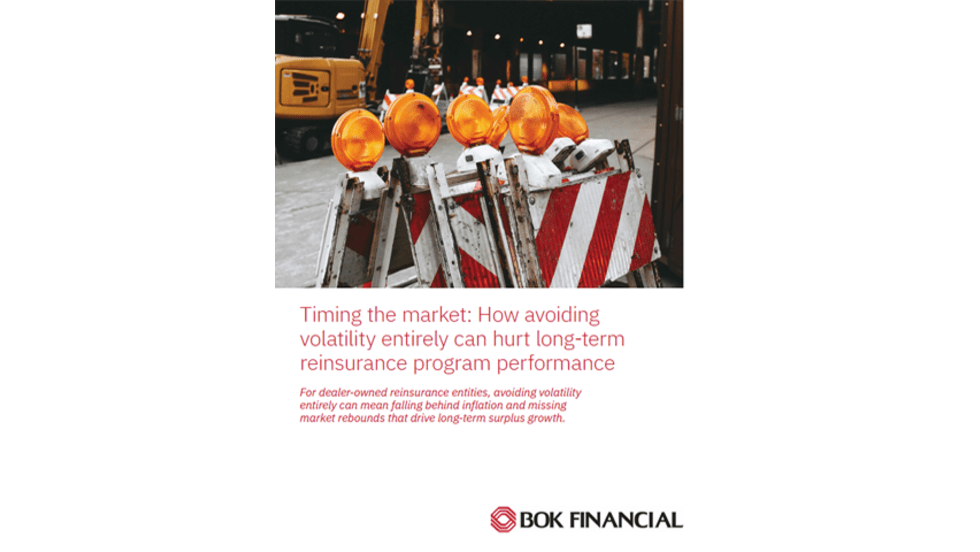
Timing the Market Can Hurt Long-Term Program Performance
For dealer-owned reinsurance entities, avoiding volatility entirely can mean falling behind inflation and missing market rebounds that drive long term surplus growth. Missing just a handful of strong market days can materially impact cumulative returns—an important reminder for long horizon trust and investment strategies.
Read More →
Dealer Ads and the FTC
The agency has made it clear in recent enforcement actions and warnings, in auto retail and other industries, that advertised prices must include all nonoptional costs to the consumer.
Read More →
Used Autos Supply Dwindles
The March shopping surge, despite high prices, cut into inventory by the most since the thick of the pandemic, Cox Automotive analysts calculated.
Read More →
Managing Risk Effectively Through Changing Times
The variables influencing risk pricing have changed significantly over the past five years. Being proactive and responsive to emerging trends is not optional but essential.
Read More →
Survey Reveals What Won't Fix What's Breaking Car Sales
AutoPayPlus says extra-long auto loans are trapping consumers and threatening the dealer trade-in cycle, and that the industry is leveraging the wrong tools to combat high MSRPs.
Read More →
IA American Appoints Two Execs
Senior vice presidents of the company's agent and dealer channels chosen to support general agents and help auto dealers with sales and performance.
Read More →
Cox Automotive Acquires Inspection Firm
Full ownership of Alliance Inspection Management, or AiM, meant to unlock growth for Manheim inspection capabilities
Read More →
Assurant Expands Partnership With Holman
Extended collaboration delivers training, products and performance development to 30 newly acquired Holman dealerships
Read More →
Franchises, Throughput Down in First Half
A handful of states see franchise growth through June, while EV sales per store boost overall business in U.S.
Read More →