


Auto Consumer Affordability Brightens
Average payment at two-year low while income needed to buy the least in three-plus years.


The average new-vehicle payment fell about 2% in August to $737, the lowest level in two years.
Pexels/Negative Space
Though new-vehicle prices still aren’t what anyone would consider low, buying new is getting more affordable, according to Cox Automotive data that shows it's the most accessible for consumers in more than three years.
Affordability has improved despite the fact that many models on the market are on the high end of the vehicle price scale, Cox said.
“The affordability story is complex,” explained Cox Economist Jonathan Smoke. “When analyzing the data, we observe that affordability is becoming less of a macroeconomic issue and more of an automotive industry issue. Automakers are opting to manufacture higher-priced vehicles, so further declines in interest rates will not significantly reduce payments. Instead, income growth will have a greater impact than interest rate changes in the auto industry.”
The Federal Reserve is expected to lower interest rates this week, which can’t hurt from the consumer’s perspective, at least overall.
Cox estimates that the average automotive loan rate already fell last month by 41 basis points to 9.95%, its lowest level in over a year and the first time in two years that it fell year-over-year.
Meanwhile, the average new-vehicle price fell nearly 1% (0.6%), while incomes increased by about 4% year-over-year and incentives grew, Cox said.
Consequently, the average new-vehicle payment fell about 2% to $737, the lowest level in two years, according to Cox, which said the number of median weeks of income required to buy the average new vehicle fell from about 37 weeks to 36 weeks, the lowest point since May 2021 and down about 9% year-over-year after peaking at $795 in December 2022.
More Industry

Automaker Advances Safety for All
A new report by Volvo Cars Safety Centre analyzed the impact of 50 years' worth of research in automotive safety development
Read More →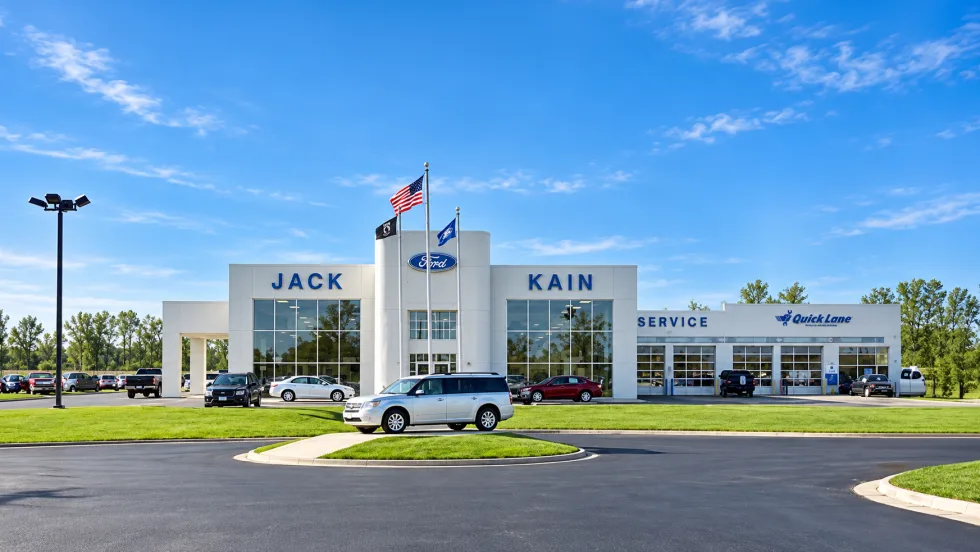
Kentucky Store Leaves Family
An auto group stretched across three states picked up the Lexington-area Ford fixture as its second store for the brand in the state.
Read More →
U.S. Auto Brands Falling Behind
Asian auto brands are outpacing U.S. brands in stateside new-vehicle sales. Learn more in this week's Dealer Debrief with Lauren!
Read More →
U.S. EV Market Update | Dealer Debrief
The U.S. electric vehicle market is slowly recovering from the loss of the federal EV tax credit last fall. Learn more in this week's Dealer Debrief!
Read More →
Auto Finance Numbers Set Records
Third-quarter data show how consumers are adapting to ongoing affordability challenges facing the new- and-used-vehicle markets.
Read More →
Auto Dealerships Can’t Afford to Ignore the 50+ Consumer
Younger generations may be all the buzz today when it comes to product marketing targets, but their older cohorts command a sizable share of purchasing power.
Read More →
Savings Seekers Boost U.S. Automakers’ Rivals
As consumers here look for ways to curb inflation’s affect on their budgets, brands offering plenty of alternative powertrains are closing in on home-grown OEMs.
Read More →
The Slow Electric Ascent
Second-quarter data show that the electric-vehicle market in the U.S. is inching up, the majority of states seeing a month-over-month increase.
Read More →
Safer Rides & Cyberattacks
Vehicle crash testing is getting a virtual boost, but auto dealerships are facing increased cyberattacks. Learn more in this week's Dealer Debrief!
Read More →
Affordability Angst | Dealer Debrief
August saw little relief for car buyers, whether they were shopping new or used. Take a look at the month's breakdown in this week's Dealer Debrief!
Read More →