



Tariffs’ Impact on Auto Market Weighed
North American trade partners make up sizable share of cars sold here.


China represents a much smaller share of U.S.-sold vehicle production than do Canada and Mexico, especially the latter.
Pexels/Tom Fisk
Trade tariffs on goods from Canada, China and Mexico would affect almost 20% of new vehicles sold in the U.S., according to an industry watcher.
So far, the Trump administration has imposed a 10% tariff on goods from China but put on hold for 30 days 25% tariffs on North American trade partners Canada and Mexico. If Trump changes his mind on the latter two, tariffs would significantly impact the U.S. auto retail sector, where inflated prices are still a stretch for many consumers.
Canada and Mexico are the fifth- and second-biggest originators of vehicles sold in the U.S. after those made in American factories, according to a study by London-based automotive industry data provider Jato Dynamics.
Canada contributed about 5%, or 717,000 units, and Mexico 14%, or 2.2 million units, of the new light vehicles sold here last year.
China is the eight-largest originator, representing 57,000 units, or about a half percent.
Together, the countries accounted for 18% of the U.S. new auto sales market, Jato said.
“While the situation is constantly evolving, the imposition of tariffs on the United States’ closest trade partners will have a major impact on the automotive industry in North America,” said Jato Global Analyst Felipe Munoz in a press release on the data.
Mexico alone is home to many foreign automakers’ manufacturing operations, and U.S. sales of units made there rose 13% last year, Jato said, which indicated that the country is Volkswagen’s largest manufacturing base for vehicles sold in the U.S. It was the second-biggest source of U.S.-sold vehicles for Ford, Honda, Mazda, Nissan and Jeep-maker Stellantis.
“With four of its top five best-selling models in the U.S. last year manufactured in Mexican factories, Volkswagen Group is the automaker most exposed to the imposition of tariffs on Mexican goods,” Munoz said.
Though a significant portion of U.S.-sold vehicles are made in Canada – in fact all vehicles manufactured in the Great White North are sold here – its share has been waning, according to Jato, which said more U.S.-sold units are now being made in Europe. That begs the question of whether Trump will impose tariffs on the European Union and how that might further affect the U.S. auto retail market.
“While difficult to predict what the Trump administration will do next from a trade perspective, the measures taken so far in the administration’s first month in office are a sign of things to come,” Munoz said. “Importing cars into the U.S. will become more difficult across the board, and the European Union should be prepared for future restrictions on trade.”
Cox Automotive, which said it's "confident that compromises will be worked out in due time and any tariff pain will be the short-lived, not long-term, policy," said half of the 50 top-selling models in the U.S., or about 60% of market volume, would be affected by tariffs on Canada and Mexico.
"No mainstream automaker will be immune to the pain, which will almost certainly be transferred to buyers in the form of higher prices," Cox said.
More Industry
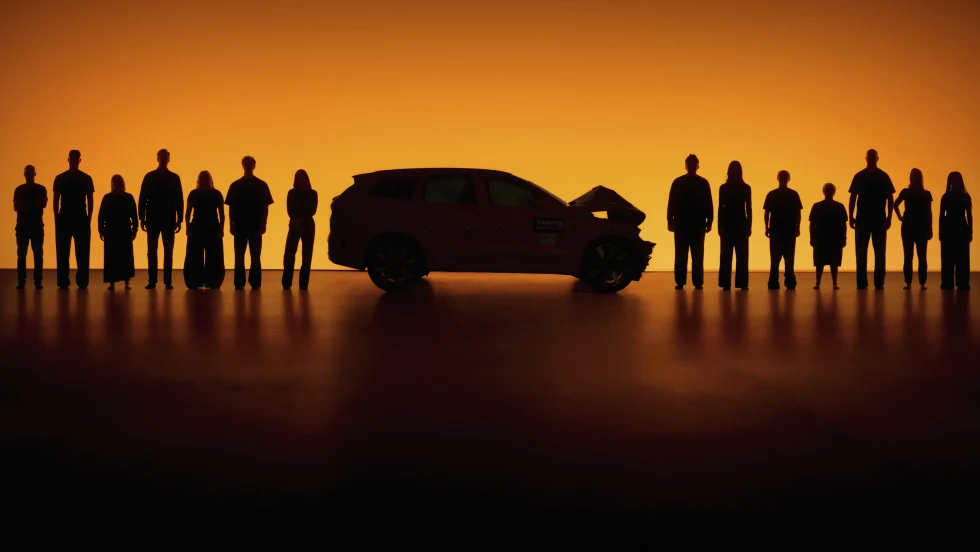
Automaker Advances Safety for All
A new report by Volvo Cars Safety Centre analyzed the impact of 50 years' worth of research in automotive safety development
Read More →
Kentucky Store Leaves Family
An auto group stretched across three states picked up the Lexington-area Ford fixture as its second store for the brand in the state.
Read More →
U.S. Auto Brands Falling Behind
Asian auto brands are outpacing U.S. brands in stateside new-vehicle sales. Learn more in this week's Dealer Debrief with Lauren!
Read More →
U.S. EV Market Update | Dealer Debrief
The U.S. electric vehicle market is slowly recovering from the loss of the federal EV tax credit last fall. Learn more in this week's Dealer Debrief!
Read More →
Auto Finance Numbers Set Records
Third-quarter data show how consumers are adapting to ongoing affordability challenges facing the new- and-used-vehicle markets.
Read More →
Auto Dealerships Can’t Afford to Ignore the 50+ Consumer
Younger generations may be all the buzz today when it comes to product marketing targets, but their older cohorts command a sizable share of purchasing power.
Read More →
Savings Seekers Boost U.S. Automakers’ Rivals
As consumers here look for ways to curb inflation’s affect on their budgets, brands offering plenty of alternative powertrains are closing in on home-grown OEMs.
Read More →
The Slow Electric Ascent
Second-quarter data show that the electric-vehicle market in the U.S. is inching up, the majority of states seeing a month-over-month increase.
Read More →
Safer Rides & Cyberattacks
Vehicle crash testing is getting a virtual boost, but auto dealerships are facing increased cyberattacks. Learn more in this week's Dealer Debrief!
Read More →
Affordability Angst | Dealer Debrief
August saw little relief for car buyers, whether they were shopping new or used. Take a look at the month's breakdown in this week's Dealer Debrief!
Read More →