



Automakers’ Exposure to Tariffs Compared
Report shows some are more vulnerable due to greater share of sales in the U.S.


Mary Barra, CEO of General Motors, which imported the highest percentage of its U.S. sales last year of the 'big three' Detroit-area automakers and the third most of all OEMs, according to Jato Dynamics.
General Motors
Some automakers will be more affected by U.S. tariffs on vehicle imports than others due to the greater volume of their output they sell in the states.
Of the 16 million new light vehicles sold here last year, about six million, or 39%, were imported, largely from Mexico, Canada, the European Union, the United Kingdom, Japan and Korea, auto data provider Jato Dynamics estimates.
President Donald Trump has cited increased domestic auto production, along with national security, as the reasons for the tariffs, but at least in the short term, the duties would increase U.S. automakers’ costs along with their international competitors’.
The Jato report ranks Japanese automaker Mazda as the most exposed to the new 25% tariff, as 27% of its 2024 sales came in the U.S., followed closely by in-country competitor Subaru, with 26% of sales in the states.
But General Motors ranked third due to 18% of its 2024 sales imported to the U.S. Jeep maker Stellantis was less, but still significantly, exposed at 10% of U.S. sales imported, and Ford at 9%, the same as Japanese automaker Toyota.
The exposure doesn’t include U.S. tariffs on auto parts not made here. Those duties are scheduled to take effect on May 3 and will likely also have big impacts on U.S. carmakers’ operating costs.
When considering what are known as the “big three” Detroit-area automakers, about 13% of their U.S. sales were imported last year, Jato calculated. That compares to the “big three” Japanese competitors – Toyota, Honda and Nissan – at about 9% of collective sales made in the U.S., and the leading three German automakers – Volkswagen, BMW and Mercedes, which made 7% of their sales here.
“The rollout of these tariffs is yet another problem for the industry to navigate,” said Jato Global Analyst Felipe Munoz. “The US is the world’s second-largest vehicle market, and it will now be more difficult than ever for the vast majority of non-Chinese automakers around the world to trade.”
More Industry
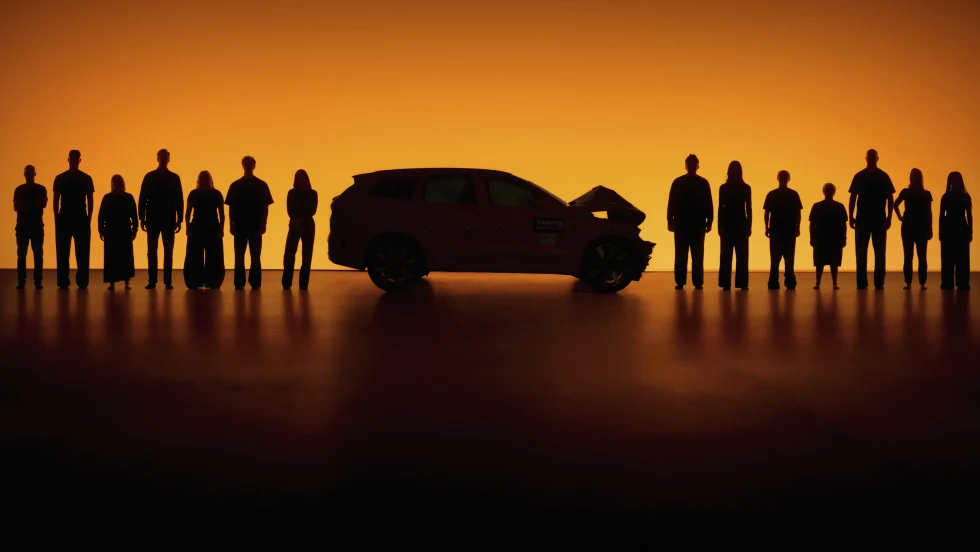
Automaker Advances Safety for All
A new report by Volvo Cars Safety Centre analyzed the impact of 50 years' worth of research in automotive safety development
Read More →
Kentucky Store Leaves Family
An auto group stretched across three states picked up the Lexington-area Ford fixture as its second store for the brand in the state.
Read More →
U.S. Auto Brands Falling Behind
Asian auto brands are outpacing U.S. brands in stateside new-vehicle sales. Learn more in this week's Dealer Debrief with Lauren!
Read More →
U.S. EV Market Update | Dealer Debrief
The U.S. electric vehicle market is slowly recovering from the loss of the federal EV tax credit last fall. Learn more in this week's Dealer Debrief!
Read More →
Auto Finance Numbers Set Records
Third-quarter data show how consumers are adapting to ongoing affordability challenges facing the new- and-used-vehicle markets.
Read More →
Auto Dealerships Can’t Afford to Ignore the 50+ Consumer
Younger generations may be all the buzz today when it comes to product marketing targets, but their older cohorts command a sizable share of purchasing power.
Read More →
Savings Seekers Boost U.S. Automakers’ Rivals
As consumers here look for ways to curb inflation’s affect on their budgets, brands offering plenty of alternative powertrains are closing in on home-grown OEMs.
Read More →
The Slow Electric Ascent
Second-quarter data show that the electric-vehicle market in the U.S. is inching up, the majority of states seeing a month-over-month increase.
Read More →
Safer Rides & Cyberattacks
Vehicle crash testing is getting a virtual boost, but auto dealerships are facing increased cyberattacks. Learn more in this week's Dealer Debrief!
Read More →
Affordability Angst | Dealer Debrief
August saw little relief for car buyers, whether they were shopping new or used. Take a look at the month's breakdown in this week's Dealer Debrief!
Read More →