



Dealer Credit Insurance Practices Withstand Class Action Challenge
Thomas B. Hudson, Esq. - Many dealers have formed separate insurance companies to permit them to earn commissions on the sale of credit insurance and other products...

Many dealers have formed separate insurance companies to permit them to earn commissions on the sale of credit insurance and other insurance products. Often, these companies are owned by the dealer principals, have no separate staff or offices, and exist only on paper. Attributes like these drive plaintiffs’ lawyers nuts, and they look for ways to attack the arrangements. Here’s how one such attack came out. Elise Webb brought a class action against Westborn Chrysler Plymouth Jeep, Inc. on behalf of individuals who bought credit life insurance in connection with car purchases from Westborn. Webb alleged that Westborn violated the federal Truth in lending Act, the Michigan Credit Reform Act, the Michigan Credit Insurance Act and the Michigan Motor Vehicle Sales Finance Act and claimed that the dealer’s Momma wore army boots (just kidding).
The court’s opinion recited the following facts: The credit insurance transactions of the class were standard and representative of the way in which credit insurance is bought and sold in Michigan. That is, Westborn’s principal owner, Doug Moore, established and owned the “Susan Agency” solely to sell credit insurance to Westborn’s customers because Michigan law requires credit insurance to be sold by a separate entity. The Susan Agency is the only agency a consumer can buy insurance from when buying a car from Westborn. The Susan Agency has no employees, does not do commission work, and does not solicit any outside business. It sells credit insurance exclusively to Westborn customers. Westborn’s finance managers sell the credit insurance policies on behalf of the Susan Agency and Westborn retains a 45 percent commission on the policies issued. The State of Michigan’s insurance commissioner approved the Susan Agency’s policy documents and calculation methods. The Susan Agency uses a Reynolds & Reynolds computer program to calculate consumers’ insurance rates. It sells only “gross” credit life insurance coverage, which is coverage that includes the total interest accrued through the entire duration of the retail installment contract.

Webb alleged three claims. First, she claimed that Westborn violated the TILA by disclosing commissions paid to a third party as an “amount financed” rather than as a “finance charge.” Webb asserted that her TILA disclosure did not identify the Susan Agency on the form, nor did it disclose that Westborn received a commission or the amount of the commission.
Second, Webb claimed that Westborn violated Michigan law by charging premiums, disclosed as an “amount financed,” at an unlawful rate and including excessive commissions. She argued that Westborn’s practice of selling gross coverage instead of “net balance decreasing term coverage” violated the CIA because gross coverage involves a method of calculating the amount of coverage which results in an amount that exceeds the amount of unpaid indebtedness on the date of death. Specifically, Webb contended that by using the gross coverage method, Westborn charged a premium for amounts that were scheduled and would become due and payable in the future and, thus, were “not yet earned by the creditor.” She argued that because this method violates the CIA, it also violates the TILA, the MVSFA, and the CRA because it, in effect, allowed Westborn to impose unearned finance charges at the commencement of the contract.
Third, Webb claimed that the Susan Agency was an illegal sham corporation and that Westborn and its personnel were using it to benefit from indirect commissions in violation of Section 492.131(c) of the MVSFA. Webb claimed that because the commissions are unlawful under Michigan law, Westborn violated the TILA by improperly disclosing unlawful commissions as part of the “amount financed.”
Westborn moved for summary judgment, arguing that its practices complied with both federal and state statutes. Webb also moved for summary judgment. The U.S. District court for the Eastern District of Michigan granted Westborn’s motion.
As to Webb’s first TILA claim, the court found that Westborn met the exceptions in 12 C.F.R. § 226.4(d)(1), which allowed Westborn to exclude charges for voluntary credit insurance premiums from the finance charge. Although Moore admitted the Susan Agency was the only agency from which Westborn customers could purchase credit insurance, the court concluded, based on language in the retail installment contracts, that Westborn did not require Webb or any customer to buy credit insurance from the Susan Agency as a “condition to the extension of credit.”
As to Webb’s second TILA claim, the court found that Westborn’s sale of gross coverage credit life insurance was permitted under Michigan law and, therefore, Westborn did not violate federal law. The court based its decision in large part on the fact that the sale of gross coverage insurance has been the prevailing practice in Michigan for decades; there are a great number of such policies outstanding; and the fact that the Office of Financial and Insurance Services, the agency charged with enforcing the statutes at issue, condones the practice. With regard to the prevailing practice in the industry and in Michigan, the court deferred to the amicus briefs filed by the Detroit Auto Dealers Association and the Michigan Automobile Dealers Association in support of Westborn’s position.
As to Webb’s third TILA claim, the court determined that there was no prohibition barring Moore from either receiving commissions or owning both Westborn and the Susan Agency. The court based its decision on the Michigan Financial Institutions Bureau’s December 1996 declaratory ruling which endorsed the operation of dealer-related insurance agencies for the purpose of selling credit life insurance in Michigan. Since the commissions paid to Westborn were not unlawful, Westborn did not violate the TILA by disclosing them in the “amount financed.”
So, at least Michigan dealers can take a deep breath, but how about dealers in other states with similar arrangements? We suggest that they show this article to their lawyers and ask how their insurance arrangements would withstand an attack like this. We also couldn’t help but wonder as we read this account whether this lawsuit would ever have been filed if the dealership required its customers to sign arbitration agreements.
Webb v. Westborn Chrysler Plymouth Jeep, Inc. Civil Action No. 03-CV-71077-DT (E.D. Mich. May 11, 2005)
Vol 2, Issue 8
More Dealer Ops
How to Avoid Phone Scams | Dealer Debrief 09/10/2026
Are you taking the necessary steps to protect your dealership and customer data from phone-based scams? This week's Dealer Debrief breaks down how!
Read More →
Dealer Debrief: August Auto Sales
Gas-powered engines still dominate the U.S. vehicle market, but hybrids are gaining ground as consumers look for ways to cut their gas costs.
Read More →
Dealership Profits Decline
While new and used retail sales stagnated, dealerships have been particularly supported by fixed operations and finance-and-insurance profits, according to a new report.
Read More →
Dealer Debrief: Defection Data & EV Updates
In this week's debrief, host Lauren Lawrence discusses how to use defection data to your advantage and the latest on EV sales and charging infrastructure.
Read More →
How Defection Data is Bridging the Dealership Conversion Gap
Lead volume is flat, cross-shopping is up and brand loyalty is in retreat. As confident sales teams keep losing buyers they thought they had, daily industry sales data is showing dealers exactly where their funnel is breaking and how to fix it without buying a single new lead.
Read More →
Dealer Debrief: Where are you losing customers?
In this week's debrief, host Lauren Lawrence discusses the hidden leaks in dealerships where you might be losing customers without even realizing it.
Read More →
Dealer Debrief: Improving Your Inventory Management
In this week's debrief, host Lauren Lawrence covers a new survey that shows what service technicians really want and two launches that could help improve your inventory and vehicle life cycle management.
Read More →
Ladies and Gentlemen, This Is a Dealership: Why the Fundamentals Still Decide Who Wins
A teaching moment by a legendary football coach happens to apply perfectly in the auto retail space. Learn what it is and how to use it to your store’s advantage.
Read More →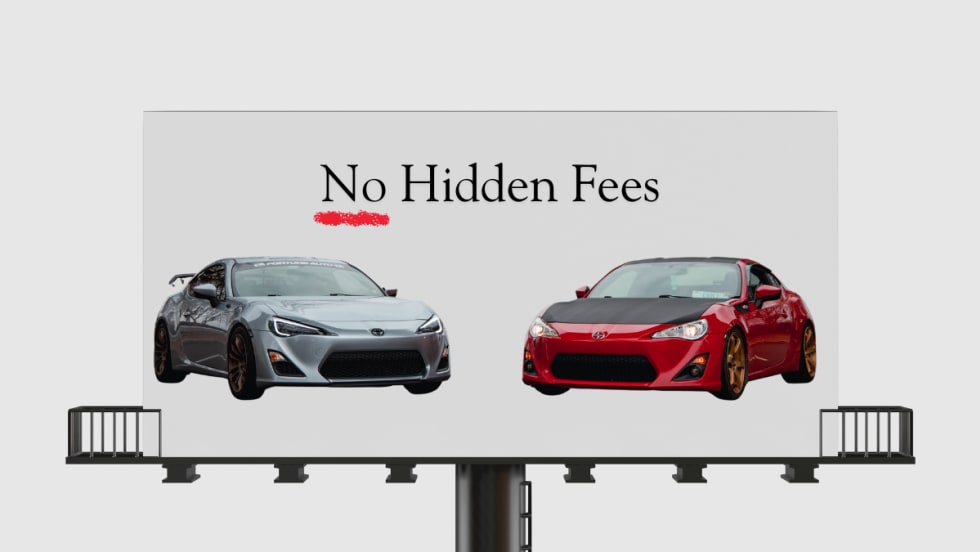
Dealer Ads and the FTC
The agency has made it clear in recent enforcement actions and warnings, in auto retail and other industries, that advertised prices must include all nonoptional costs to the consumer.
Read More →
Used Autos Supply Dwindles
The March shopping surge, despite high prices, cut into inventory by the most since the thick of the pandemic, Cox Automotive analysts calculated.
Read More →